Showing posts with label Burgundy. Show all posts

Saturday, December 2, 2023

Shades of Red for the Holidays


These very light-colored Kir Royales had only a teaspoon of Cassis

Hello, December!   This article is the first in the month's trio of "Seeing Red" in honor of the traditional red color of the Holidays.  December's blog will cover Spain's neon-red piquillo peppers, as well as two popular scarlet red liqueurs, Cassis and Chambord.   Today's posting is about the red colored liqueur made of black currants from the hills of Burgundy in France.  Commonly called Cassis, it's proper name is actually Creme de Cassis.

             Typically a Kir's ratio is 1 part of Cassis to 4 parts of white wine for a much deeper red

Open a bottle of Creme de Cassis and you'll find it's like dipping your nose into a jar of berry jam at a farmer's market.   Sip a taste and you'll find that Cassis is sweet, but not cloyingly so.  With an alcohol level of 15% (not much higher than wine), Cassis is now a popular ingredient in aperitifs and cocktails.  In fact, two of France's most famous pre-dinner drinks use Cassis: both Kir Royale (made with Champagne) and Kir (made from a still white wine), contain Creme de Cassis.

                                    Priest Kir was an active participant in the French Resistance

Kir and Kir Royale are named after the inventor of the drinks, a priest who was mayor of Dijon during the Nazi occupation of France.  During this period it was required that Burgundy's top wines be handed over to the Nazis which left little available for the locals.  The step-sister white Aligote wine wasn't wanted by the Nazi.   Mayor Kir came up with the brilliant idea of mixing Aligote with Creme de Cassis (the Nazis didn't want it either).  The "kir" drink pale red color mimicked the color of Burgundy's purloined Pinot Noir.  And, as they say, the rest is history. 

                                    The hills of the Cote D'or are the Rodeo Drive of Burgundy
            

Creme de Cassis has been made in Burgundy for nearly 200 years.  While some of the world's most famous wine (think Romanee Conti) is produced in Burgundy, the higher elevations of the legendary Cote D'or ("hills of gold") is black currant territory.  The recipe for Cassis is simple:  black currants are macerated with an odorless and flavorless alcohol and a little sugar is added.   


Wine-Knows will be visiting Burgundy during the September grape harvest next year.  We still have 3 spaces available.  Why not join the group and have a Kir Royale at its birthplace?

Wine-Knows Travel – For the Discerning Traveler (wineknowstravel.com)


Saturday, April 15, 2023

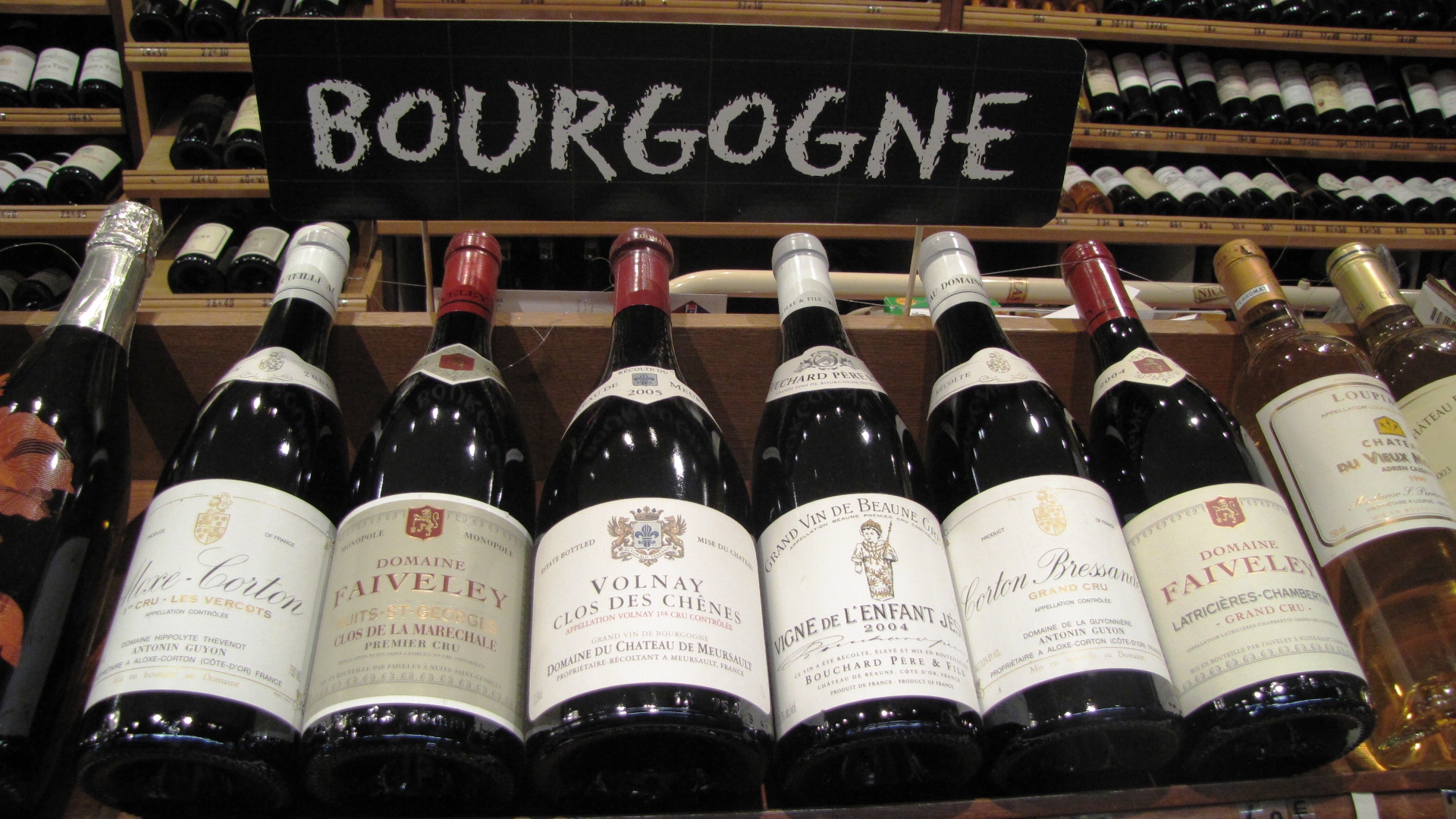
Decoding Burgundy’s Strange Wine Labels


This is the second in a three-part series on Burgundy (Bourgogne). 


It sounds unthinkable to Americans, but Burgundy does not mention the grape variety anywhere on their wine labels.   If it’s a white wine in Burgundy, then it’s a Chardonnay; if the wine is red, the variety is Pinot Noir.   So, if the grape isn’t listed what is printed on the label to tell the consumer what is inside this bottle pricey wine?   

The parcel of land (Corton-Charlemagne) & its hierarchy (Grand Cru) inform the consumer 

The most important prerequisite to Burgundian winemakers is the plot of earth in which the grapes are grown.   In the last blog, the concept of terroir was discussed in terms of the Middle Ages' monastic orders who analyzed every vineyard to determine which plots of earth produced the best grapes and why.   A thousand years later, the concept of terroir is the most important thing on Burgundy's wine labels, hence, the grapes’ birthplace is often front and center on labels.

 The wine's birthplace (Clos Mouches vineyard) is often the 1st thing a consumer sees

The parcels which medieval monks determined consistently produced the best wines are now the Grand Cru vineyards of Burgundy.  For Burgundy lovers, Grand Crus such as Clos Vougeot, La Tâche, Romanée Conti, and Corton-Charlemange are the pinnacles.  Premier Cru, the second tier on Burgundy's quality ladder, is also displayed on labels.  With both Grand Cru and Premier Cru, however, the name of the actual vineyard takes center stage.

The last tidbit about Burgundy's different system of labeling, is that the name of the producer takes a back seat to the terroir and the wine’s hierarchy.  The star of the show is the terroir, and the winery is less important.

To learn more about Burgundy and its wines, we have a few spaces available for our harvest tour next year, September 2024.    Burgundy & Champagne – Wine-Knows Travel (wineknowstravel.com)


Thursday, April 6, 2023

Burgundy’s Wine Trade Was Invented by Monks

      The Cisterian Abbaye Citeaux had vast vineyards in some of Burgundy's most prized areas
 

The month of April this blog will be devoted to the Burgundy wine district.  The inaugural three-part series discusses the critical importance of Burgundian monks in developing the wine industry in France.


Hundreds of years before Bordeaux was even a wine region, the 10th century monks of Burgundy were honing the craft of wine production.  These Burgundian wine-making clergy were not only vinifying wine but they were actually selling it.  Think of these monks as the first full service wine company:  they grew the grapes, made the wine, bottled and stored it in the church cellar, marketed the wine during church service, and finally sold it to the congregation.  They actually invented the wine business.

              The Cluny Abbaye, founded in 909, still owns some of Burgundy's best vineyards

During the Middle Ages Christianity was on the rise across all of France.   It didn’t take long before red wine became a sacred drink, symbolizing the blood of Christ.   With religion becoming important in French culture, bishops and monks had a prominent role in French society.  The Dukes of Burgundy (the reigning nobility) began gifting churches with large parcels of land.   By 1098, monks controlled much of the best vineyards of Burgundy.  By the 1400’s, the wine of these Burgundian monks was recognized throughout Europe as top quality.

             Monks analyzed each vineyard & surrounded the best plots by "clos" (rock walls)

By far the biggest contribution of Burgundy’s wine-making monks was their diligence in mapping out each plot of earth in their vast estates.  The clergy studied each parcel and created a patchwork quilt map.  They identified which part of their vineyards produced the best grapes and why.  Their analysis took into account all of the elements that we know today produce great wines:  soil, drainage, exposure to the sun, wind, topography, humidity, pests etc.   The monks then built stone walls around the best vineyards.  These parcel defining walls were called “clos.”   (Clos means wall in French).   These clos remain today and are responsible for producing Burgundy’s Grand and Premier Cru (top quality) wines.

                     The monks' detailed mapping identified the best vineyards centuries ago

In effect, Burgundy’s clergy were the first to develop the concept of terroir.  For winemakers around the globe, terroir is everything in producing a quality wine.  Although there is no literal translation into English because terroir is not a word but a conecpt, terroir can be defined as the sum of ingredients in the environment that effect grape-growing conditions.   Every one of the elements the monks used to map out their vineyards is intimately involved in producing a great wine and have become part of the Bible of wine production.


Friday, January 19, 2018

Burgundy & Champagne Awarded UNESCO

                                               Burgundy's unique Cote d'Or ("golden slope")

Now joining the ranks of the world’s most notable wine regions, Burgundy and Champagne have been granted World Heritage status by the United Nations.  Others include Hungary’s Tokaj region, the Douro in Portugal, Bordeaux and the Loire of France, Piedmont in Italy, the Rhine in Germany, along with Sicily’s Pantelleria Island.

While UNESCO lists several criteria for selection, the one criteria that all must have is an “outstanding universal value.”   Burgundy’s wines have had a cult following for some time.  Champagne has long been considered as the world’s best sparkling wine.  So, some may be asking what’s the big deal?  The World Heritage status matters, even for those already-in-the know wine lovers.  It ups the ante for difference.  After all, if there were no differences in wines then why should some cost so much more money?

                       Deep limestone soil has an impact on the nuances of Champagne's taste

A World Heritage wine region reinforces the concept of uniqueness.  It’s a distinction of place.  While there are killer Pinots and Chardonnays produced in California, Oregon, New Zealand and Australia, Burgundian versions of these varietals are incapable of being reproduced anywhere else.  Similarly, the Franciacorta district of Northern Italy is making absolutely jaw-dropping sparkling wines, but they are just a little different from Champagne. The voice of the land speaks.  While wine styles can be copied, the differences from terroir cannot be replicated.   Differences matter, and thus the UNESCO award.

Wine-Knows will be visiting both Burgundy and Champagne in June 2019.  At this time there are a few seats remaining.  


Viva la différence!  


Friday, November 10, 2017

Red Burgundy in Your Glass

                  Burgundy is all about Old World winemaking where“less is more”

Before we delve into how wines of France’s northeast Burgundy translate into what one experiences in the glass, let’s start with other differences in Burgundian reds.  Before one even opens the bottle there are differences to note.  First, notice that the Burgundian bottle is distinct with feminine, sloping shoulders.  In contrast, the Bordeaux bottles have harder edged, masculine shoulders.

Bordeaux (L), Burgundy (R)

Next, we need a glass.  A Burgundy glass.  The Burgundian glass has a large bowl which tapers in at the top, designed to enhance Pinot's delicate aromas.

Bordeaux (L), Burgundy (R)

Now, pour the Burgundy.  Reds in Burgundy are made from Pinot Noir, one of the lightest colored wines.  (Burgundian Pinots are generally lighter in color than their American counterparts).  That being said, Pinots as a group are pale raspberry or cranberry shades, and are transparent.   Bordeaux, on the other hand, is composed of dark grapes such as Cabernet and Merlot.  Syrah (Shiraz), from the Rhone Valley is the darkest of all wine grapes in the glass.  Bordeaux and Rhone wines also differ from Burgundy in that they are opaque.

                                                  Pinot Noir is the lightest red wine

Before we move on to aromas and taste profiles, let’s first discuss the differences in Old World vs. New World techniques in producing Pinot Noir.  Burgundy (Old World) is all about “less is more.”  Less manipulation in the wine-making process.  Less extraction of fruit.  Less oak.  Wild yeasts vs. cultured yeasts.

Aromas and flavors in Burgundian wines are very influenced by this less is more philosophy.  The area’s terroir also plays a huge role.   Unlike California or Chile  where sunshine is abundant, grapes in Burgundy are typically less ripe because of the weather.  This means Burgundian reds are not jammy like their super ripe New World counterparts.  Since high sugar levels also translate to high alcohol, this means that Burgundian wines have traditionally lower alcohol levels and therefore pair better with most foods.   It also means that Burgundy’s Pinots are less fruit-forward, and instead are more about earth profiles (think the scent of the forest), as well minerals (think the smell of wet stones).

Red Burgundy, in general, is quite expensive due to the phenomena of supply and demand.  There are, however, some good buys regarding price/quality to be found.  Try Jadot's Marsannay ($40), or Latour's Santenay ($30).  Both are excellent and readily available in the US.

Wine-Knows will be visiting the creme de la creme producers of Burgundy on their 2019 tour.  There are 4-5 spaces remaining.   www.WineKnowsTravel.com.


Friday, October 20, 2017

A Burgundy Primer

                       Burgundy's Cote D'Or is home to some of the priciest cult wines on earth

Many serious wine lovers believe that some of the world’s greatest wines come from Burgundy.   Others would argue that Bordeaux is the pinnacle.  I don’t think you can compare the two.  Burgundy’s production is miniscule;  Bordeaux’s is mammoth.  Burgundy is boutique producers;  Bordeaux is large-scale chateaux.  Burgundy’s wines are quietly elegant;  Bordeaux’s are bold and massively-structured.  

History
The famous Cluny Abbey played an important role in Burgundy 


The Catholic monks, abbeys, and the monasteries have played an enormous role in shaping Burgundy’s wine history.  From 900 A.D., the clergy were actively involved in not only making and selling wine, but actually developing the notion of terroir (soil, microclimate, slant of the hill, drainage, wind, environmental pests, etc.).  Early on they learned that different plots of earth made consistently different wines.  

    Centuries ago monks surrounded vineyards with special characteristic with walls               

The monks mapped out an intricately complex quilt of vineyards throughout Burgundy which today are the basis for the region's Cru’s.  They built walls around each plot.  Wall in French is “clos,” thus many of Burgundy’s vineyards begin with the word “clos.”

Location

                                           In French Burgundy is known as Bourgogne

Burgundy begins just 120 miles south of Paris.   The actual wine part of the region is a long, narrow area that runs about 150 miles in length.  Burgundy is composed of these five distinct sub-districts (north to south):
1)    Chablis
2)    Cote D’Or
3)    Cote Chalonaise
4)    Maconnaise
5)    Beaujolais

Two Great Grapes of Burgundy

Reds in Burgundy are made from Pinot Noir (the only exception is Beaujolais which uses the Gamay grape).  Difficult to grow, fickle Pinot Noir thrives in a narrow band of soil and climate parameters.  Red Burgundy is mecca for many oenophiles.  In fact, many in-the-know consumers feel that Pinot Noir is at its very best in Burgundy.

White Burgundy is made a 100% from the Chardonnay grape.  The Chardonnay varietal is actually is native to the Burgundian region of France.  While Chardonnay is a now a universal grape, white Burgundies are some of the most divine wines on planet earth---complex layers with a long finish.

Burgundy is Terroir-Driven
Every plot of earth has been painstaking rated for the quality of its terroir


Unlike Bordeaux where the pecking order is established by a chateau’s land holdings, Burgundy’s hierarchy is purely terroir based.   For example, Mouton Rothchild in Bordeaux owns many parcels in different parts of the huge wine region.  All of them may be used in the making Rothschild's wine as Bordeaux wines are all about blending.  In Burgundy, vineyards have been carefully mapped out into very small plots based on their unique terroir.   In contrast to Bordeaux, Burgundy "Cru" cannot be blended as their intent is to showcase the specific single vineyard and its terroir.

Stay tuned for future articles on Burgundy, including Pinots and Chardonnays that won’t break your bank, pairing Burgundy's wine with foods, and many other favorite experiences of mine awaiting you in Burgundy.


Saturday, May 27, 2017

Cassis

    View of Cassis's harbor from my apartment

Many folks know Cassis…the black currant liqueur that is used to make a Kir (or a Kir Royale when made with sparkling wine).  A few may even know the tony village on the French Riviera by the name of Cassis.   Those worldly gourmands who know both the drink and the seaside town often think that the liqueur is so named because it comes from the village of Cassis.  Wrong.

Crème de Cassis is actually made in Burgundy, 300 miles north.  As of 2015, this black-colored liqueur is protected by France’s geographical laws.  Cassis is now officially referred to as Crème de Cassis de Bourgogne (Burgundy).  The new designation guarantees the Burgundian origin of the fruit, as well as the minimum quantity of berries that is required.   Like France’s other food and wine laws, it guarantees the authenticity of what’s in the bottle so that the consumer knows that the product is not a knock-off from another part of France, or Europe, or for that matter, China.

Now, back to the village of Cassis where I arrived today.  If you’re looking for a heavenly spot to recover from jet lag, look no further.  But, Cassis beckons for many reasons.  Cassis is not on the radar screen for most Americans.  Reason one.   Next, Marseille’s airport is only 30 miles away making it an easy-to-get-to first stop.  Reason two.  Another attractive feature is that Cassis is small and quaint….without the crowds and noisy discos of St Tropez or Cannes.  Reason three.  But one of the most compelling motives to visit, is for its breathtaking beauty. A big reason four.

                                          The calanques can be reached by foot or boat.

Cassis is drop-dead gorgeous.  A large part of its magnificence is due to the “calanques.”  It is thought that the calanques were formed by ancient streams that dried up a millennium or two ago. Today, the remnants are narrow, fjord-like inlets carved into steep white limestone cliffs, France’s highest sea cliffs.  While there are many organized boat tours to view these calanques, I prefer to go by foot for several reasons.  Most importantly, boats are not allowed to enter the calanques so boat visitors can only appreciate them from afar.   While walking to the farthest calanque requires a good hour from the village (and some parts of the trail are a little difficult), one can opt for a 20 minute walk from Cassis to the first calanque.  As there are spectacular panoramas around every bend, walkers to any of the calanques should allow extra time to take photos and soak up the splendor.


Tonight I’m celebrating my week’s stay in this sweet fishing village by ordering a Kir Royale----Cassis in Cassis!

Sante.


Sunday, February 19, 2017

Presidents & Wine

                                           The birthplace of American Wine
                       
Tomorrow is President’s Day.   Did you know that several Presidents were instrumental in shaping the course of wine in our country?  Several of our founding fathers were not only involved in efforts to ensure life, liberty and the pursuit of happiness, but were real bon vivants with deep appreciation of fine wines. 

Let’s start at the beginning.   George Washington drank 3 glasses of wine after dinner. While this wine was a Portuguese Madeira (a very “in” wine at the time), he was also quite interested in French wine with dinner.  Washington’s wine cellar included many chateaux still famous today, such as Mouton-Rothschild and Yquem.  Way to go, George!

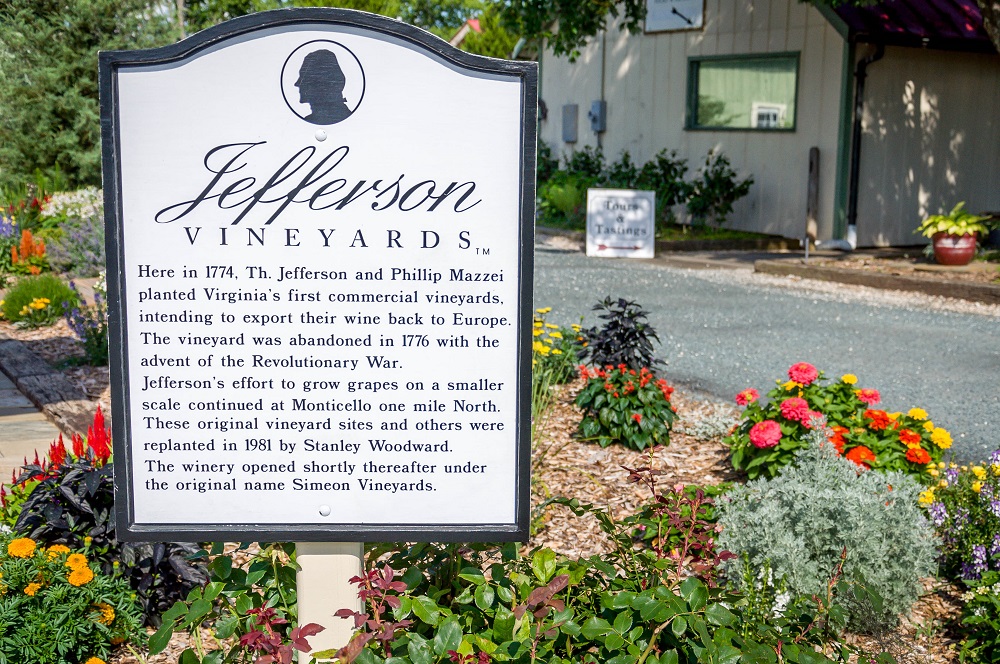
Thomas Jefferson had a profound influence on the American wine industry.  Out of all the Presidents, Jefferson was certainly the most passionate about wine.  As the Ambassador to France, Jefferson toured many of the country’s most illustrious chateaux---his favorites were Burgundy and Bordeaux.  I was recently at Chateau Haut-Brion in Bordeaux and in the entry way of the chateau was an oil painting of Jefferson.  According to records, Jefferson sent home thousands of bottles from the area for him and his friends, one of whom was George Washington.  

Jefferson, however, was much more than a consumer of French wine.  A definite wine geek, he took copious notes on the different French terroirs (soil types, drainage etc.). Moreover, he was the first American to attempt wine-making.  Jefferson brought home cuttings from France and began growing grapes for his own wine-making at Monticello.  He was certainly a dude with whom I would want to hang-out.

Fast forward >150 years to the Presidency of Richard Nixon.  While Nixon’s ethics and politics don’t leave one with a warm and fuzzy feeling, he was undeniably a wine aficionado.  At a time when jug wine and cocktails were the norm, Nixon drank the real-deal Champagne and Bordeaux.  Fine wines apparently put a big dent in his entertainment budget.  Considering it was tax payer dollars funding this, however, this may be another nail in his coffin.

Ronald Reagan loved wine.  Prior to Reagan, mostly French wines were served at White House special dinners.  But Reagan, who was especially crazy about wines from his home state of California, changed all of that.  At a time when the California wine industry was beginning to shine, Reagan helped further promote it on a more global scale by serving it to some of the world’s most prominent leaders.   BV Private Reserve was served to Prince Charles, while a Jordan Cabernet was on the menu at another dinner honoring Queen Elizabeth.  Nancy Reagan, on the other hand, was wild about Kendall-Jackson Chardonnay and it frequently was served at White House events.

Have a Presidential Day.


Friday, June 24, 2016

Bucket List Wine Destinations

There are hundreds of wine producing regions in the world, but some are far more compelling than others to visit.   Here are my “Top 10” (listed in alphabetical order by country) which I have based on the following two criteria:  quality of wines and natural beauty.   If you've not been, they are serious contenders for any wine lover's bucket list.

Mendoza, Argentina

                Wines from this area have the highest levels of antioxidants of any wine.

Located at the base of the breathtaking Andes, Mendoza is home to the world’s highest vineyards....and some killer value Malbecs and Torrontes.  


Yarra Valley, Australia    
                                   The Yarra is reminiscent of Napa in the early 1970's

What's not to love about a stunning, bucolic valley of boutique family wineries?  Located a few hours drive from Adelaide, the Yarra should definitely pull at the strings of your heart for a grape escape.


 Wachau Valley, Austria
                                 Storybook villages & Gruner Veltliner await you in the Wachau

The Wachau Valley is a UNESCO world heritage wine region along the banks of the stunning Danube River. 


Burgundy, France   
            The Cote d'Or ("golden hills") produce some of the world's priciest Pinot & Chars

Burgundy is mecca for oenophiles.   It's also home to the world's most famous annual wine auction (the Hospice de Beaune), and one of the world's most famous wine societies (Tastevin du Chevaliers).


Champagne, France  
                There are hundreds of miles of limestone cellars---this one is at Veuve Clicquot's

Much of Champagne was a quarry for Paris' magnificent buildings, resulting in a plethora of underground caves...perfect for storing and aging the region's famous bubbly.


The Rhone Valley, France   
                This Hermitage is ground zero for some of the Rhone's most famous wines

The Rhone Valley is composed of some serious wine real-estate:  L'Hermitage, Chateauneuf du Pape and Cote Rotie.  Provence, also part of the Rhone, is another reason to pack you bag!


Queenstown (Otago), New Zealand   
                                  One of the many out-of-this world vistas in the region

They say that the Otago wine district has some of the world's most beautiful landscapes and I agree.  Think majestic alpine lakes, drop-dead gorgeous vistas and some beautifully crafted whites and reds.


Douro Valley, Portugal  
                              The entire Douro wine region is protected by UNESCO

The Douro Valley is a jaw-dropping area of vertical slopes that were terraced by back-breaking work hundreds of years ago.  Formerly known for Port, the Douro is now producing some world-class table wines at a terrific quality price ratio.


Piedmont, Italy
                  Every hilltop in Piedmont boasts a castle & village for as far as the eye can see

It's hard to believe that the home of Barolo and Barbaresco is also the home of such magnificent scenery.  Piedmont has it all, including one of the world's most famous culinary items, the white truffle.


Tuscany, Italy  
                  Tuscany's scenery has been captivating the hearts of wine lovers for centuries

It's hard for the countryside to compete with such formidable tourist sights as the cities of Florence or Pisa; however, Tuscany steps right up to the plate serving up mesmerizing delights for the eyes and soul.


Friday, April 29, 2016

UNESCO: Burgundy & Champagne


The United Nations Education, Science and Cultural Organization (UNESCO) has awarded the vineyards of Burgundy and Champagne special status.  These wine areas, now join other World Heritage Sights such as Egypt’s Pyramids, Australia’s Great Barrier Reef and many of Europe’s greatest cathedrals, along with the wine districts of Bordeaux, Port and the Hungary’s Tokaj.

Cellars such as Veuve Cliquot's in Reims are now protected


In addition to Burgundy & Champagne’s vineyards, several of the cities in these wine districts have been granted UNESCO World Heritage status.  Both Reims and Epernay’s underground Champagne cellars are now protected by UNESCO.  Similarly, Beaune’s magical medieval downtown and its miles of underground wine cellars in Burgundy are now UNESCO.  Nearby, Dijon’s historic downtown has also been granted UNESCO protection.

                                           Beaune's architectural gems are UNESCO

UNESCO World Heritage is awarded to sights that are deemed of “outstanding value, to humanity.”   The organization provides resources in the form of technical assistance as well as moneys to ensure that these cultural masterpieces are preserved for future generations.

Merci, UNESCO!


Friday, June 20, 2014

Red China


For the first time in history, a country other than France is now the number one consumer of red wine.  The country?  China.  The Chinese drank nearly 1.9 billion bottles of red wine during 2013.  France, whose consumption of red wine fell by nearly 20% from 2007 – 2013, is now the second largest consumer.  The huge popularity of red wine by China is attributed in part to their cultural norms about color:   red signifies good luck and prosperity, while the color white suggests death and mourning.

The increasing consumption of red wine by China is reflective in the upsurge of French wineries that have been purchased recently by the Chinese.  Both Burgundy and Bordeaux have seen dramatic increases in vineyard purchases by investors from China.  In January, 2014 it was estimated that in Bordeaux alone there were at least 60 chateaux owned by Chinese---the actual figure is somewhat difficult to nail down as many of the transactions are shrouded in secrecy.  It’s not unusual for holding companies outside of China to purchase a chateau on behalf of Chinese investors, only later to reveal that the buyers were Chinese.

All of this has created controversy in France. According to the Wine Spectator, a Beijing businessman recently placed on offer of $164.2 million for a classified-growth in the Medoc.  The French seller pulled out at the last minute.  The reason for this is unknown, however, it is a fact that many French have mixed feelings about selling to foreigners….many feel the French heritage is under threat, while others welcome the increased demand for French wine in Asia.  Further adding to the chasm is the vast cultural differences, as well as the divergent business norms of the French and Chinese.


Now, for the good news.  The United States remains the largest consumer of all types of wine.