Showing posts with label Bordeaux. Show all posts

Sunday, July 17, 2022

Seductive Sarlat

               Sarlat is located in the Dordogne river valley only 100 miles inland from Bordeaux


France's medieval village of Sarlat, a tangle of pedestrian-only cobblestoned lanes, secret squares and beautiful honey-colored stone buildings, is sure to seduce.
  It’s no wonder why this enchanting town is a favorite location for film directors (>20 movies have been made here including Chocolat).   Sarlat is just the right size for travelers in that there are a host of services available for visitors, but small enough that it still offers the feel of a romantic getaway, especially after day trippers return home and twinkling lights appear in this Hollywood-set city.

                                 Sarlat is France's epicenter for goose & duck products

Although I have visited Sarlat at least 10 times, it’s the kind of place that one never tires of returning.   Located a few hours inland from Bordeaux in the area of the Cro Magnon caves, Sarlat is the perfect spot to unwind from jet lag.  The town is a stroller’s dream with all kinds of nooks and crannies---ancient alleyways wind throughout town and beg for exploration.  While the beautiful main street is usually filled with visitors, the equally charming back streets are often empty.   

          Sausages come in every flavor (L to R): pheasant, nuts, mushrooms, & duck


Sarlat is a gourmand’s paradise.  The region surrounding Sarlat (Perigord) is one of the epicurean centers for French gastronomy:   foie gras farms, walnut orchards, and forests filled with truffles & wild mushrooms.  The area’s many culinary treasures are palpable during the city’s outdoor markets on Wednesdays and Saturdays.  Local cheeses, honey, a cornucopia of fresh produce, sausages, foie gras of both ducks and geese in every conceivable preparation, endless walnut confections, and bottles of earthy walnut oil all compete for hungry shoppers’ attention.

             Rotisserie chickens are accompanied by potatoes cooked in duck fat with onions & fresh herbs

I've timed by upcoming September visit to Sarlat so that my stay includes Saturday, their largest outdoor market.  I intend to fill my suitcase with Perigord's tantalizing delicacies.  But, I'm equally looking forward to Sarlat's mid-week nights when the village feels its most alluring.


Friday, September 13, 2019

10 Things You Should Know About Merlot


  1.  Its name means "little blackbird" in French dialect.  
     2.  Merlot can be both a blending grape, or can be made as its own varietal.

     3.  This grape is one of the 5 varieties allowed by law in red Bordeaux wine.

     4.  Merlot's parent is Cabernet Franc and an obscure old varietal from Brittany called Magdeleine Noir de Charentes.

     5.  Merlot's relatives include Cabernet Sauvignon---a step-sibling.

     6.  Merlot wine falls in the medium-bodied spectrum for red grapes.  Its moderate tannin structure allows it be be drunk younger than the full-bodied wines like Cab Sauvignon.

     7.  The Merlot grape does well in several types of soil, from clay to limestone.

     8.  Merlot also can do well in both cool and warm climates.

     9.  Merlot's flavor can vary depending upon the terroir in which it is grown.  That being said, Merlot is usually characterized by a lush texture and plum is often the dominant flavor.  Cherries and raspberries are also very common.

    10.  Merlot is food friendly due to its mild tannin structure.  It is a good pairing with poultry, as well as pork and lighter red meats.


Friday, April 20, 2018

How the US Destroyed Europe’s Vineyards

                           Phylloxera, introduced by America, annihilated Europe's wine industry

Many of you reading this Blog have been on Wine-Knows wine and food tours.  You have heard the stories at chateaux in Bordeaux, domaines in Burgundy, bodegas in Spain, cantinas or tenutas in Italy, and houses in Port regarding how nearly every square meter of vineyards in Europe was destroyed by the deadly bug Phylloxera.   Rarely was it mentioned, however, that Phylloxera was introduced into Europe by American grape vines > 150 years ago.

The year was 1863.  The Civil war was underway and the Union forces had overtaken the Confederate city of Vicksburg.   Across the Atlantic another hellish event was brewing as American grape vines were being unloaded from ships.   

In the mid-1800’s, the railroad from Paris to Bordeaux was completed.  In anticipation of the opportunities that rail service would bring to Bordeaux, many Paris financiers rushed to Bordeaux to purchase land between 1840 and 1850.  Among them were two different segments of the Rothschild family (Lafite and Mouton).   Close behind them were a cadre of other immensely wealthy bankers who smelled opportunity in the wine business.  In 1860 Bordeaux held a World’s Fair to commemorate the opening of the railway.   Wines were a critical piece of the marketing for this event (in fact, the sacred Bordeaux wine classification which still stands today, was birthed special for this momentous occasion).


                      By the time the vine shows signs of disease the root system is beyond repair

Now, back to 1863 and those American vines.  A winery in the Rhone Valley had decided to conduct an experiment with vines they imported from California.  What the French winery didn’t know was that the Cali vines contained a louse called Phylloxera.  As the American grape vines were resistant to Phylloxera, the Americans never dreamed there would be an issue in sending their vines to France for research.  Unfortunately, France’s vines had no resistance to this destructive pest, and soon Phylloxera spread throughout all the wine regions of France, then on to Italy, Germany, Spain, Portugal, Austria, Hungary, Greece, Croatia etc.  Essentially, all of Europe’s vineyards were wiped out.   But, America did come back to save the day.

American root stock was used to graft what was left of the European vines.  As the Phylloxera bug attacks roots thereby destroying the plant, the only solution was to stop the destruction of the root.  Phylloxera resistant root stock from the US was imported and all wineries urgently complied with the grafting.  The few remaining European vines were now safe on grafted American root stock.


Friday, February 2, 2018

How Did a Cold Rainy Island Invent Modern Wine?


Perhaps the title of this article should have been the British Paradox?  No other country in the world has had more influence over modern wine than Britain.  For those of you who are scratching your head, let me explain. 

Bordeaux

It all began in the late 12th century when Britain’s King Henry married France’s Eleanor of Aquitaine.  Eleanor’s family was extremely wealthy and her dowry included the entire Southwest of France, including Bordeaux and all of its vineyards.  Now that this entire area was under British rule, Bordeaux wine was granted preferential tariffs by the British monarchy and an export boom ensued.  For nearly a century, hundreds of ships traveling together in massive fleets filled with wine began the journey north to London.

Many Brits moved to Bordeaux to manage their wine export or shipping business.  Chateaux such as Lynch-Bages, Palmer, and Talbott reflect this British heritage.  But, the 100 year war between France and Britain brought it all to a halt.  The Southwest of France passed back into French hands in 1453.

Port

The British were hooked on red wine and after Bordeaux reverted back to the French the Brits needed to look elsewhere for wines.  The Brits sailed further south and discovered the wines of Northern Portugal.  Getting these wines, however, back to London proved challenging as the wines often arrived spoiled. To stabilize the wine, brandy was added and this fortified wine became known as Port.  Today in Portugal many of these British families still have a firm hold in the wine industry.   Names such as Symington, Grahams, and Taylor reflect Port’s close ties to Britain several hundred years later.

Sherry, Madeira & Marsala

The British were responsible for the invention of the fortified wine industry.  Not only did they birth Port, but also Sherry, Madeira and Marsala.   Fortifying these wines with brandy enabled them to be shipped without spoilage to London.   Britain had an insatiable thirst for fortified wines, especially Sherry.  By the 19th century it is estimated that Sherry accounted for 60% of wine sales within Britain.

Madeira was very fashionable with the British Royalty who would voyage to the verdantly green “Garden Island” for a holiday of sunshine.  With the nobility came British merchants who set up wineries and shipping companies to bring a little slice of Madeira back to Britain.  The Brits monopolized the Madeira wine industry for generations and still to this day have a strong presence on the island.

The Brits sailed as far south as Sicily looking for their next new wine.  On the west coast they found the town of Marsala.  Having had great success in fortifying Portugal’s and Madeira’s wine for the long, arduous voyage back to London, they did the same with the table wine from Marsala.  Britain created Marsala as we know it today.

Glass Bottles

Our modern wine industry relies on glass bottles to prevent spoilage of the wine due to oxygen exposure.  While the Brits did not invent the glass wine bottle, they were the first to figure out how to mass produce them.  In 1821 a patent was issued to a chap from Bristol for his machine to bottle wine in a glass.  The rest is history.

Today, after centuries of influencing the development of the modern wine industry, Britain is finally producing its own wines.  While wine has been made for decades in England, the worldwide wine stage is now taking notice of English wines, especially the sparkling wines.  These “fizz” wines (as they are called) have out scored several well respected French Champagnes in blind tastings and have been given very high scores by international judges. 

Wine-Knows is heading to England this summer but the group is completely filled.  There are one or two openings, however, on the 2019 trip to the English countryside.


Cheerio!

Friday, January 19, 2018

Burgundy & Champagne Awarded UNESCO

                                               Burgundy's unique Cote d'Or ("golden slope")

Now joining the ranks of the world’s most notable wine regions, Burgundy and Champagne have been granted World Heritage status by the United Nations.  Others include Hungary’s Tokaj region, the Douro in Portugal, Bordeaux and the Loire of France, Piedmont in Italy, the Rhine in Germany, along with Sicily’s Pantelleria Island.

While UNESCO lists several criteria for selection, the one criteria that all must have is an “outstanding universal value.”   Burgundy’s wines have had a cult following for some time.  Champagne has long been considered as the world’s best sparkling wine.  So, some may be asking what’s the big deal?  The World Heritage status matters, even for those already-in-the know wine lovers.  It ups the ante for difference.  After all, if there were no differences in wines then why should some cost so much more money?

                       Deep limestone soil has an impact on the nuances of Champagne's taste

A World Heritage wine region reinforces the concept of uniqueness.  It’s a distinction of place.  While there are killer Pinots and Chardonnays produced in California, Oregon, New Zealand and Australia, Burgundian versions of these varietals are incapable of being reproduced anywhere else.  Similarly, the Franciacorta district of Northern Italy is making absolutely jaw-dropping sparkling wines, but they are just a little different from Champagne. The voice of the land speaks.  While wine styles can be copied, the differences from terroir cannot be replicated.   Differences matter, and thus the UNESCO award.

Wine-Knows will be visiting both Burgundy and Champagne in June 2019.  At this time there are a few seats remaining.  


Viva la différence!  


Friday, October 27, 2017

How Rotten Luck Created an Amazing Wine

                  Botrytis Cinera causes chemical changes which enhance aromas & flavors

The year was 1847.  California was not even a state yet and the Mexican-American War was full throttle.  Across the Atlantic in France, however, the Bordeaux region was enduring its own battle against a horrible fungus that had destroyed their production of Sauternes wines.  Vineyards lay in decay, a huge disaster of rotting fruit covered with an invading army of organisms which had attacked the grapes’ skins and caused them to dry and shrivel like raisins.  Many chateaux didn’t even bother to pick their fruit.  

                  Chateau Yquem's location near the convergence of 2 rivers is perfect for Botrytis

Chateau Yquem, one of the top wineries of the time and the most prestigious producer of Sauternes today, decided to pick some of its fruit, however, the quality was so bad that Yquem decided not to release the wine for sale.  Their entire 1847 vintage remained in Yquem’s cellar until 1859 when the brother of Russia’s Czar visited the esteemed chateau.   This visit changed the course of history for Bordeaux’s sweet wine industry.

The Russian monarchy and aristocracy of the 1800’s had long been great admirers of Hungary’s sweet wines, Tokaj (Tokay).   These very special sweet wines were like no other sweet wines.   While Hungary had been producing these unique wines for 200 years, their production was limited.  The wines were not produced every year as their production was entirely weather dependent.  As the demand of Russia’s royalty was high, these special sweet wines commanded regal prices.  When the Russian Grand Duke visited Bordeaux in 1859 he heard the story of the grey fungus invasion of 1847.  A light bulb went off in his head.

                                     Liquid gold from Bordeaux's Chateau Yquem

The Grand Duke knew that the limited Hungarian sweet wine of Tokaj was made only during the years of the Tokaj’s grey fungus.  He asked to try Chateau Yquem’s 1847.  The owner did not want to offend him with this swill, but who could say no to the Czar’s brother?  The rest is history.  The Russian monarchy bought every single bottle of Yquem’s 1847 vintage. 

                           Wine-Knows enjoys a private tour & tasting at Chateau Yquem

The grey fungus responsible for all of this is now referred to as the “Noble Rot.”  Its technical name is Botrytis Cinerea.   Known simply as Botrytis, this organism which has always been part of Hungary’s Tokaj region, has become a welcome visitor to Bordeaux for the last 150 years.  Modern science now knows that Botrytis creates very unique sweet wines.  The Noble Rot not only dehydrates the grapes into nearly raisins, but it actually changes the chemical composition of the grape adding new enticing flavors and aromas.  

Weather conditions must be perfect for the Noble Rot to attack vineyards.  Like any fungus, Botrytis organisms thrive in damp, warm conditions.  Both Bordeaux and Tokaj vineyards are located alongside rivers.  If there is river fog and sun simultaneously during October-November when the grapes are already super ripe, this creates the perfect storm for the Noble Rot.
  
                               Hungary's Tokaj wine district has idyllic conditions for Botrytis

If you’re coming with us next year on the Austria-Hungary tour, you’ll experience some of these flavor bombs made from Botyrtis in Hungary’s Tokay region.   If not, you’ll have to wait to 2021 when Wine-Knows conducts its tour to Bordeaux.

Let's hope Botrytis is visiting both Hungary & Bordeaux this Fall!


Friday, March 24, 2017

Carmenere---Cabernet’s Ancestor

           Wine Knows had a private dinner at the top of this mountain, birthplace of Purple Angel

I’m in Chile with a group of Wine-Knows.  We’ve been drinking a lot of their Carmenere varietal and I’m falling in love with it all over again.  For those who don’t know Carmenere, it was brought to Chile in the 19th century by the French.  At the time it was a popular grape planted throughout Bordeaux and was reputed to have produced excellent wines.  But, the phylloxera bug wiped out most all of the vineyards in Europe in the late 1800’s.  Bordeaux replanted with Cabernet and Merlot as the Carmenere grape was difficult to ripen. 

Carmenere was thought to be extinct until it was “discovered” in Chile in the 1990’s by a French team of scientists who visited Chile.   The French researchers were troubled by the appearance and character of the Chilean Merlot grape.  DNA analysis revealed that much of Chile’s Merlot was in fact the “lost” Carmenere grape from Bordeaux.

Genetic research shows that Carmenere is an early ancestor of Cabernet Sauvignon.  It shares many of the flavors of Cabernet:  red fruit, chocolate, tobacco and leather.  On the other hand, Carmenere’s tannins are far softer than Cab Sauvignon, making Carmenere much more approachable when young than Cabernet.

Carmenere means "crimson" in French, so it's no surprise that its color is a deep crimson.  In addition to a less tannic structure, Carmenere also offers another element I particularly enjoy:  spiciness!   Moreover, it also offers herbaceous notes (most often green bell pepper).  Both of these nuances mean that Carmenere pairs well with international dishes such as Mexico’s molé, Middle Eastern lamb prepared with mint, spicy Cuban-style roast pork, as well as Italy’s veal piccata (briny capers, lemon and garlic).  In short, Carmenere is a very versatile food wine.

If you haven’t experienced Carmenere you should.  If you’re ready to splurge, there’s none better than Montes’ Purple Angel which will set you back $60-70, but this is a world-class version of Carmenere by one of Chile’s most revered producers.  Montgras, on the other hand, served Wine-Knows a fabulous price/quality ratio last week (available in the US for about $15).

This “lost” varietal needs to found!  I highly recommend that you pick up several bottles and conduct a Lost Varietal Tasting among fellow wine lovers. 


Sunday, February 19, 2017

Presidents & Wine

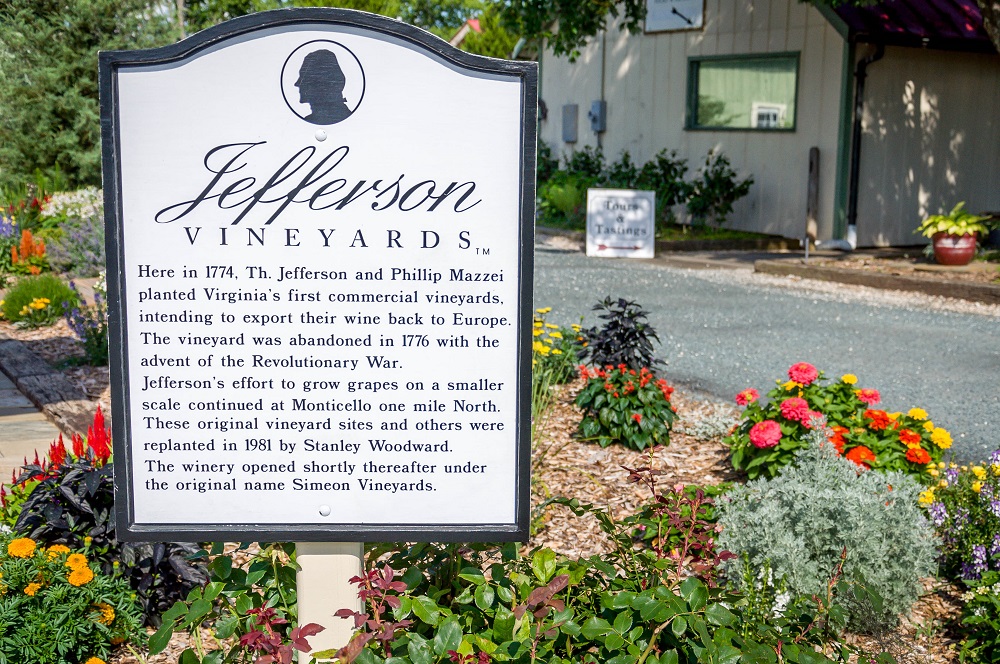
                                           The birthplace of American Wine
                       
Tomorrow is President’s Day.   Did you know that several Presidents were instrumental in shaping the course of wine in our country?  Several of our founding fathers were not only involved in efforts to ensure life, liberty and the pursuit of happiness, but were real bon vivants with deep appreciation of fine wines. 

Let’s start at the beginning.   George Washington drank 3 glasses of wine after dinner. While this wine was a Portuguese Madeira (a very “in” wine at the time), he was also quite interested in French wine with dinner.  Washington’s wine cellar included many chateaux still famous today, such as Mouton-Rothschild and Yquem.  Way to go, George!

Thomas Jefferson had a profound influence on the American wine industry.  Out of all the Presidents, Jefferson was certainly the most passionate about wine.  As the Ambassador to France, Jefferson toured many of the country’s most illustrious chateaux---his favorites were Burgundy and Bordeaux.  I was recently at Chateau Haut-Brion in Bordeaux and in the entry way of the chateau was an oil painting of Jefferson.  According to records, Jefferson sent home thousands of bottles from the area for him and his friends, one of whom was George Washington.  

Jefferson, however, was much more than a consumer of French wine.  A definite wine geek, he took copious notes on the different French terroirs (soil types, drainage etc.). Moreover, he was the first American to attempt wine-making.  Jefferson brought home cuttings from France and began growing grapes for his own wine-making at Monticello.  He was certainly a dude with whom I would want to hang-out.

Fast forward >150 years to the Presidency of Richard Nixon.  While Nixon’s ethics and politics don’t leave one with a warm and fuzzy feeling, he was undeniably a wine aficionado.  At a time when jug wine and cocktails were the norm, Nixon drank the real-deal Champagne and Bordeaux.  Fine wines apparently put a big dent in his entertainment budget.  Considering it was tax payer dollars funding this, however, this may be another nail in his coffin.

Ronald Reagan loved wine.  Prior to Reagan, mostly French wines were served at White House special dinners.  But Reagan, who was especially crazy about wines from his home state of California, changed all of that.  At a time when the California wine industry was beginning to shine, Reagan helped further promote it on a more global scale by serving it to some of the world’s most prominent leaders.   BV Private Reserve was served to Prince Charles, while a Jordan Cabernet was on the menu at another dinner honoring Queen Elizabeth.  Nancy Reagan, on the other hand, was wild about Kendall-Jackson Chardonnay and it frequently was served at White House events.

Have a Presidential Day.


Friday, December 9, 2016

A White Christmas

White Bordeaux completes the perfect White Christmas

I’m dreaming of a White Christmas.  While I love red Bordeaux, I’m thinking of dry white Bordeaux this year …perfect for San Diego’s warm December weather.  Perfectly timed for a White Christmas was a white Bordeaux tasting I just attended.  Held by a very sophisticated and savvy group of wine lovers (the Commanderie de Bordeaux of which I am a member), the blind tasting’s findings are below.

Before unveiling the winners, let’s review white Bordeaux.  Produced primarily from Sauvignon Blanc, these gorgeous relatively unknown wines also are often blended with Semillon.  While Sauv Blanc should be familiar to many, Semillon is often not.  One of the things I most love about Semillon is its luxurious, velvet-like texture.  Its flavor profile ranges from citrus in less ripe grapes, to tropical flavors in perfectly ripened grapes.  Mixed with the high acidity of Sauv Blanc, white Bordeaux can be a marriage made in heaven.

While extraordinary whites are made by some of the top Grand Cru Chateaux (e.g. Premier Grand Cru Chateau Haut-Brion Blanc which sells for about $850 a bottle), the Commanderie de Bordeaux tasting excluded all Grand Cru chateaux.  Eight members of our group tasted >10 bottles from the 2014 vintage.  Prices ranged from $28 to $14.  Here are the top three from our group's consensus:
  • 1st:  Chateau Charmed-Godard ($23)
  • 2nd:  Clos Floridine $26
  • 3rd:  Chateau Doisy Daene ($23)

The best wine of all tasted was disqualified because it was from the 2015 vintage.  Personally, this one was my hands-down favorite, however, the 2015 weather presented Bordeaux with much riper fruit than the year prior.  This gorgeous wine was made by Chateau Haut Mayne in Graves and offered a killer price quality ratio of a mere $12.  If you find it, buy a case or two.  It’s an extraordinary value.


If you don’t know white Bordeaux, you should.  Make your Christmas a white one this year!


Friday, September 30, 2016

Mad About Tokaj

    A special micro-climate of wet and warmth creates the perfect environment for Botrytis.

I landed in Hungary a few days ago and I'm currently in the town of Mad, deep in the heart of the Tokaj ("TOCK eye") wine district.  A few hour’s drive east of Budapest, this wine country is is so special that the entire district was declared a World Heritage site by UNESCO. Everything is wine-centric in Mad, including things such as the "Botrytis" Hotel. Golden ripe fruit is hanging on the vines and the autumn colors are painting the leaves.  Magic is about to happen.

Tokaj (or Tokay) is the sweet wine made in the Tokaj wine region.  It’s the world’s oldest botrytized wine.  Botrytis is a fungus that attacks sugar-laden grapes with the help a special micro-climate.  During the autumn a morning mist is created by the convergence of two local rivers; and, the wet mornings along with the warm afternoons create the perfect storm for the Botrytis fungus.  Like in the Sauternes district of Bordeaux, “noble rot” (aka Botrytis) thrives in these conditions.  Grapes are attacked by the fungus which bores microscopic holes through the skin of the berry to get the sweet nectar.  What is left is a shriveled, concentrated grape filled with uber-sweet juice, high in acidity (which balances the sugar) and filled with beguiling aromas caused by the interaction with the noble rot. 

People in the Tokaj district long ago recognized they had a very special sweet wine like no other.  In 1757 the monarchy made a law that established geographical boundaries for the sweet wine region.   This was the world’s second appellation system (Chianti, the first, was legally demarcated in 1716.)  Tokaj didn’t stop there, however. Vineyards were then classified based on quality, and it all was approved in 1772.

From the 17th to 19th centuries Tokaj graced the tables of royalty throughout Europe.  In the late 1800’s, however, Tokaj fell victim to the phylloxera bug that destroyed the vineyards throughout Europe.  World Wars I and II didn’t help.  Nor did Communist rule.  Knock-off Tokaj from other countries further worsened the situation.

But, Hungary is on the move again supported by moneys from the European Union to reinvest in its prized Tokaj wine district.  The E.U. has cracked down legally on others in Europe using the protected name Tokaj.   Moreover, the E.U. has recently invested 330 Million Euro for viticultural improvements moving the local wine industry into the 21st century.

Nectar coming from the Tokaj region’s grapes is mentioned in Hungary’s national anthem---a testament to the importance of its sweet wine.  A deep Topaz in color, these luscious wines are truly a golden national treasure.  Tomorrow I head to the actual village of nearby Tokaj so stay tuned for my "mad-about" favorites from this special region. 


Friday, September 16, 2016

Huge Changes in Bordeaux

                      Bordeaux was chosen as Europe's "Top Toursit Destination"


I just arrived in Bordeaux.   Although I was here in 2012, this town has shifted completely on its axis.  On my first visit in the early 1990's Bordeaux was a forlorn city scarred by run-down, abandoned warehouses along its vast river.  There was little tourism except for wine business folks who occasionally were forced to overnight at one of the city’s lack-luster hotels.  Even in 2012, the dining scene was equally uninspiring.  Yes, there were a handful of good restaurants, but they were old-school spots that had been serving the same menus for decades.   Today, the warehouses have been replaced by a $90 million cultural center.  A bazillion Euros of tourism monies are now flooding into the once forgotten city.

                        Once delapidated warehouses now house chic boutiques & bistros

“Build it and they will come” is certainly the motto for Bordeaux.  The city’s drastic redevelopment of its entire waterfront now offers a plethora of tourist activities.  The biggest and brightest of all is the Cité du Vin (“the City of Wine”).  Ten years in the making, this museum-cum-cultural-events center contains a series of multi-sensory wine exhibits, along with a wine store selling selections from practically every corner of the globe. There are several restaurants with mind-boggling selections of wine, a wine bar, gift shops, and even a bookstore.  Tourists are in every nook and cranny of the town.  The Euros are flowing, along with the wine.

                             Rooms of the Grand Hotel overlook the tony Grand Theater

Hotels have joined in the town’s major cosmetic makeover. The 5 star Grand Hotel spent nearly $70 million to redecorate.  Smaller properties, equally focused on the sophisticated traveler, have followed.  Luxurious boutique hotels are springing up like morels after a spring rain.  Restaurants are following suit with cutting edge chefs flocking to the town to open temples for a new age cuisine.  Gordon Ramsay arrived in 2015 and already has two Michelin stars.  Tonight I'm dining at a just-opened farm-to-table place whose young chef has received raved reviews.  On today's walk I spotted countless new upscale wine bars, bistros and sidewalk cafes.  Fusion cuisine and food trucks appear to be the new norm.

                                                  This could be Paris, non?

But, the downtown area is not all that is new in the world’s most famous wine district.   Wineries has joined in the revitalization by establishing wine routes for tourists.   More wineries are opening hospitality programs to welcome visitors for wine-tasting.  One of the most compelling change in the wine industry, however, is the quest for new varietals.  Global warming is wreaking havoc in Bordeaux.  Researchers are experimenting with <50 new varieties.


The Wine-Knows' harvest tour begins tomorrow.   None of the participants have ever been to Bordeaux so they won't be able to totally recognize the incredible metamorphosis.  One of my jobs, henceforth, will be to ensure they appreciate the transformation of a once ugly step-sister into a glam-Cinderella.


Friday, May 6, 2016

Malbec---a Wine List’s Best Value


If you’re not wanting to drop serious money on a bottle of red wine and yet want a good wine, then head straight to the Malbecs.  One of the five red grapes allowed currently by law in Bordeaux (and used in the blend of some of Bordeaux’s priciest bottles), Malbec is vinified as a separate varietal in Argentina.  An Argentine Malbec is normally the best value red on a wine list.  

In addition to their high quality/price ratio, I especially love Malbecs because they typically have soft tannins…this means the wine is approachable when young.   Another reason to choose a Malbec from Argentina is that Argentina rarely has poor vintages. Regardless of the year, you’ll get a good vintage.  (Take for example Robert Parker’s Vintage chart---he has rated 10 out of 10 of the past vintages in Argentina in the 90’s).   There’s no other spot on earth that has received these consistent scores for the quality of the vintage from Parker, or probably from any other wine critic.

An Argentinean Malbec is often a terrific choice because it can pair well with a wide group of foods.  Naturally, it’s a great red meat wine, but it can also work with spicy food.  Case in point: Argentina’s traditional chimichurri sauce is often served with the country’s famous steaks (chimichurri is an addictive high-octane spicy condiment).  This means that Malbec also goes well with Mexican food, in addition as spicy Asian dishes.  But, take it from this almost-vegetarian, Malbec is so not a one trick pony.  It can pair perfectly with grilled veggies, frittatas, and polenta.  The wine also works well with a pesto-pasta, or even a tomato-sauced pasta.  

Malbec from Argentina is an unsung hero.  To learn more about this terrific varietal why not join Wine-Knows on our trip to Argentina and Chile next year?  There are four seats remaining on this harvest tour to South America.  Check out this trip’s details: http://www.wineknowstravel.com/


Friday, April 29, 2016

UNESCO: Burgundy & Champagne


The United Nations Education, Science and Cultural Organization (UNESCO) has awarded the vineyards of Burgundy and Champagne special status.  These wine areas, now join other World Heritage Sights such as Egypt’s Pyramids, Australia’s Great Barrier Reef and many of Europe’s greatest cathedrals, along with the wine districts of Bordeaux, Port and the Hungary’s Tokaj.

Cellars such as Veuve Cliquot's in Reims are now protected


In addition to Burgundy & Champagne’s vineyards, several of the cities in these wine districts have been granted UNESCO World Heritage status.  Both Reims and Epernay’s underground Champagne cellars are now protected by UNESCO.  Similarly, Beaune’s magical medieval downtown and its miles of underground wine cellars in Burgundy are now UNESCO.  Nearby, Dijon’s historic downtown has also been granted UNESCO protection.

                                           Beaune's architectural gems are UNESCO

UNESCO World Heritage is awarded to sights that are deemed of “outstanding value, to humanity.”   The organization provides resources in the form of technical assistance as well as moneys to ensure that these cultural masterpieces are preserved for future generations.

Merci, UNESCO!


Friday, March 18, 2016

Wine & Food Grazing in Downtown Bordeaux

Below are the don’t miss spots in Bordeaux for any serious gourmand or wine-lover.  As all are located in the town's central area, they can be reached on a walking tour---which means more available calories for indulging.  Skip lunch and opt for a grazing journey across the city.

                                             Canelés are culinary treasures from Bordeaux

Canelés at Baillardan
Don't even think of visiting Bordeaux without having one of these petite dark-caramel pastries which are a specialty of the region.  There's no better place to have them than at Baillardan.  Made from an ancient recipe, these addictive morsels should be front and center on any foodie's list. (http://www.baillardran.com/en/)

                                      The goat cheese section at Fromager Jean d'Alos

Cheese at Jean d’Alos
Passionate Monsieur d'Alos has run the city’s premier cheese shop for nearly 40 years.  He treats his assortment of >150 cheeses as if they were jewels…which they are.  Don’t miss a tour of his 15th century aging caves located below his shop.   (http://www.jean-dalos.com/)

                      Pain et Bricoles is extremely popular...one bite & you'll know why

Bread at Fabrique Pain et Bricoles                                                     You’ll need some bread to go with your cheese and there’s no better place to procure it than at this artisanal boulangerie.  Be mindful, however, that the line can often stretch out the door, so plan accordingly.  Rather than a baguette, opt for the killer crusted rustic country bread, Pain de Campagne. (https://www.facebook.com/La-fabrique-pains-et-bricoles-166564966870338/)

                                        L'Intendant is mecca for wine lovers 

Wine at L'Intendant
This is the Bentley of Bordeaux wine shops.  A four floor emporium of who's who in the wine world, this superstore is a must for any lover of wine. Most affordable wines are on the ground floor and prices rise as you ascend the spiral staircase to the oldest vintages on the top floor.  There are about 15,000 bottles.  (http://www.intendant.com/eng)

                  The best of the Bordeaux region's food products await at this covered market

Covered Market:  Marché des Capucins
While it is Bordeaux's largest market, is is not a building of beauty...but it is a fabulous larder that showcases the best of the French southwest culinary world.  And, it offers great gourmet items to bring home for gifts.  Who wouldn't love a beautifully decorated box of fleur de sel from the nearby Atlantic? (http://marchedescapucins.com/)

                                           Your walk's reward at Saunion
Chocolate at Saunion
After too much walking, certainly a little treat from one of the city's best chocolate shops is in order, non?   The same family has been producing chocolates at Saunion for four generations and their pieces are works of art. Expensive?  Oui.  Worth it?  Main oui!    (http://www.saunion.fr/) 

Bon voyage.