Showing posts with label Bourgogne. Show all posts

Saturday, April 15, 2023

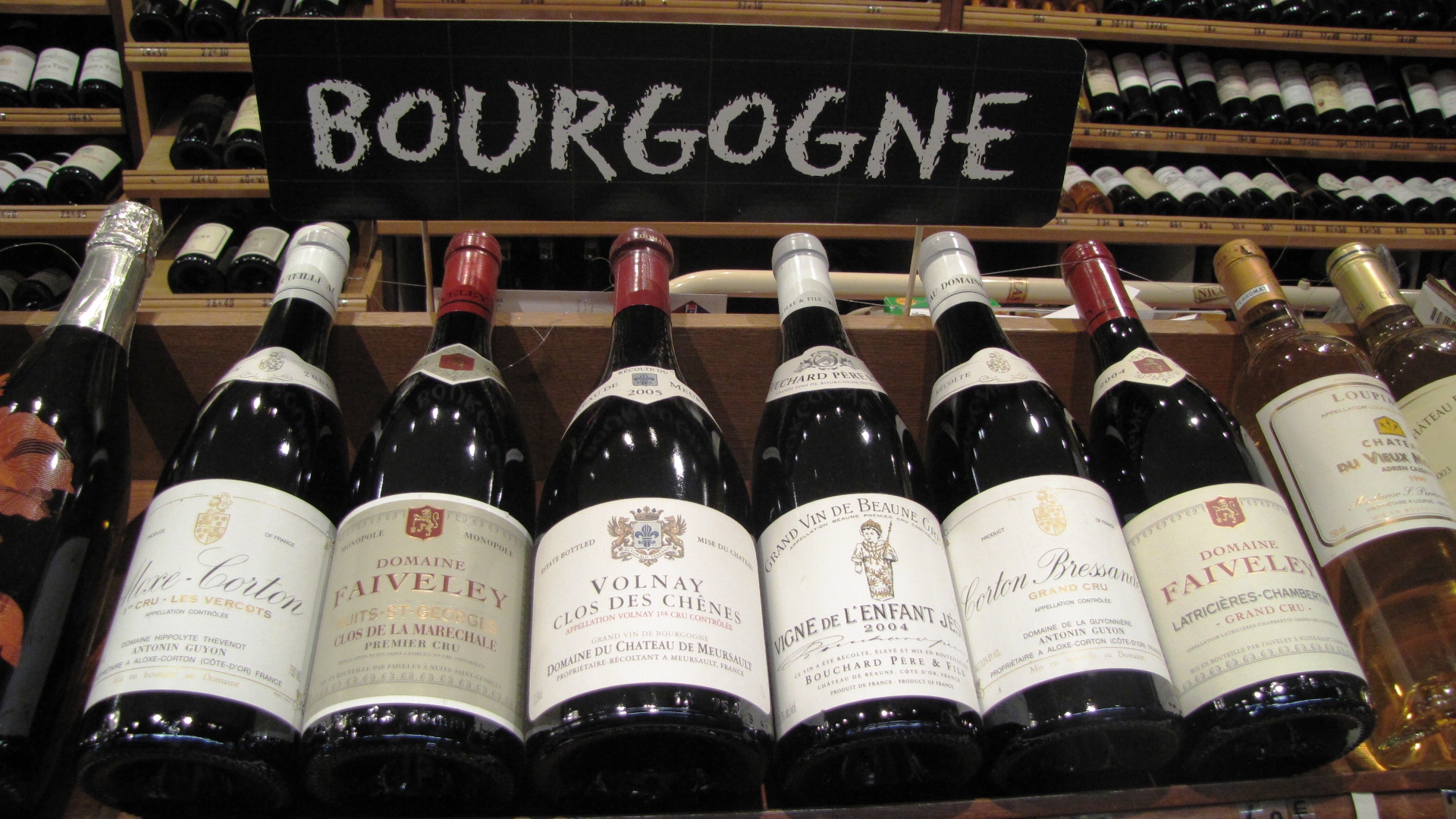
Decoding Burgundy’s Strange Wine Labels


This is the second in a three-part series on Burgundy (Bourgogne). 


It sounds unthinkable to Americans, but Burgundy does not mention the grape variety anywhere on their wine labels.   If it’s a white wine in Burgundy, then it’s a Chardonnay; if the wine is red, the variety is Pinot Noir.   So, if the grape isn’t listed what is printed on the label to tell the consumer what is inside this bottle pricey wine?   

The parcel of land (Corton-Charlemagne) & its hierarchy (Grand Cru) inform the consumer 

The most important prerequisite to Burgundian winemakers is the plot of earth in which the grapes are grown.   In the last blog, the concept of terroir was discussed in terms of the Middle Ages' monastic orders who analyzed every vineyard to determine which plots of earth produced the best grapes and why.   A thousand years later, the concept of terroir is the most important thing on Burgundy's wine labels, hence, the grapes’ birthplace is often front and center on labels.

 The wine's birthplace (Clos Mouches vineyard) is often the 1st thing a consumer sees

The parcels which medieval monks determined consistently produced the best wines are now the Grand Cru vineyards of Burgundy.  For Burgundy lovers, Grand Crus such as Clos Vougeot, La Tâche, Romanée Conti, and Corton-Charlemange are the pinnacles.  Premier Cru, the second tier on Burgundy's quality ladder, is also displayed on labels.  With both Grand Cru and Premier Cru, however, the name of the actual vineyard takes center stage.

The last tidbit about Burgundy's different system of labeling, is that the name of the producer takes a back seat to the terroir and the wine’s hierarchy.  The star of the show is the terroir, and the winery is less important.

To learn more about Burgundy and its wines, we have a few spaces available for our harvest tour next year, September 2024.    Burgundy & Champagne – Wine-Knows Travel (wineknowstravel.com)


Friday, October 20, 2017

A Burgundy Primer

                       Burgundy's Cote D'Or is home to some of the priciest cult wines on earth

Many serious wine lovers believe that some of the world’s greatest wines come from Burgundy.   Others would argue that Bordeaux is the pinnacle.  I don’t think you can compare the two.  Burgundy’s production is miniscule;  Bordeaux’s is mammoth.  Burgundy is boutique producers;  Bordeaux is large-scale chateaux.  Burgundy’s wines are quietly elegant;  Bordeaux’s are bold and massively-structured.  

History
The famous Cluny Abbey played an important role in Burgundy 


The Catholic monks, abbeys, and the monasteries have played an enormous role in shaping Burgundy’s wine history.  From 900 A.D., the clergy were actively involved in not only making and selling wine, but actually developing the notion of terroir (soil, microclimate, slant of the hill, drainage, wind, environmental pests, etc.).  Early on they learned that different plots of earth made consistently different wines.  

    Centuries ago monks surrounded vineyards with special characteristic with walls               

The monks mapped out an intricately complex quilt of vineyards throughout Burgundy which today are the basis for the region's Cru’s.  They built walls around each plot.  Wall in French is “clos,” thus many of Burgundy’s vineyards begin with the word “clos.”

Location

                                           In French Burgundy is known as Bourgogne

Burgundy begins just 120 miles south of Paris.   The actual wine part of the region is a long, narrow area that runs about 150 miles in length.  Burgundy is composed of these five distinct sub-districts (north to south):
1)    Chablis
2)    Cote D’Or
3)    Cote Chalonaise
4)    Maconnaise
5)    Beaujolais

Two Great Grapes of Burgundy

Reds in Burgundy are made from Pinot Noir (the only exception is Beaujolais which uses the Gamay grape).  Difficult to grow, fickle Pinot Noir thrives in a narrow band of soil and climate parameters.  Red Burgundy is mecca for many oenophiles.  In fact, many in-the-know consumers feel that Pinot Noir is at its very best in Burgundy.

White Burgundy is made a 100% from the Chardonnay grape.  The Chardonnay varietal is actually is native to the Burgundian region of France.  While Chardonnay is a now a universal grape, white Burgundies are some of the most divine wines on planet earth---complex layers with a long finish.

Burgundy is Terroir-Driven
Every plot of earth has been painstaking rated for the quality of its terroir


Unlike Bordeaux where the pecking order is established by a chateau’s land holdings, Burgundy’s hierarchy is purely terroir based.   For example, Mouton Rothchild in Bordeaux owns many parcels in different parts of the huge wine region.  All of them may be used in the making Rothschild's wine as Bordeaux wines are all about blending.  In Burgundy, vineyards have been carefully mapped out into very small plots based on their unique terroir.   In contrast to Bordeaux, Burgundy "Cru" cannot be blended as their intent is to showcase the specific single vineyard and its terroir.

Stay tuned for future articles on Burgundy, including Pinots and Chardonnays that won’t break your bank, pairing Burgundy's wine with foods, and many other favorite experiences of mine awaiting you in Burgundy.