Showing posts with label Grenache. Show all posts

Wednesday, September 30, 2026

Provence Beyond Rosé: The Underrated Reds

                 The village of Chateauneuf du Pape is a full immersion experience in wine

When many people think of Provence, they picture colorful outdoor markets and endless fields of lavender. I've seen these vistas during my many visits, but when I think of Provence, I think of its wines—its true unsung heroes. While I adore Provence’s rosés, I’m utterly enamored with its spicy, full‑flavored reds and its elegant, tropical whites. These wines are, hands down, some of the most underrated in France.

Most serious wine lovers know Châteauneuf‑du‑Pape, but they may not be aware of the equally refined wines of Bandol or the remarkable quality‑to‑price ratios found in Vacqueyras and Gigondas. Let’s explore Provence’s “non‑pink” wines, beginning with terroir and then moving on to its grapes.


🌿 Terroir

            The Rhone, along with the Mediterranean, has a tremendous influence on Provence's wine

Provence sits in the South of France, where the Rhône River cuts through the region on its way to the Mediterranean. Vineyards closest to it benefit from mineral‑rich soils and rocks washed down from the Alps. Summers are hot—thanks to beaucoup sunlight—so ripening grapes is never an issue. And the mighty mistral winds sweep through the region, keeping pests at bay and the air remarkably clear.

🍇 Grapes

                                   GSM is one of the hallmark blends in all of France

Red grapes dominate Provence, thriving in the region’s heat. Syrah and Grenache are the most widely planted, joined by Mourvèdre—another Rhône varietal. These three grapes are often blended together and affectionately referred to as GSM, an acronym of their initials.

🍷 Châteauneuf‑du‑Pape: Provence’s Superstar Reds

                At Chateau Beaucastel, Wine-Knows are taken to the vines to see rock-filled vineyards

Red wine accounts for roughly 35% of Provence’s production. The most prized are the celebrated reds come from the village of Châteauneuf‑du‑Pape. Located near the Rhône River, the area is famous for vineyards strewn with large stones—galets roulés—left behind by ancient flooding. These stones provide superb drainage and reflect heat back onto the vines during Provence’s cold winters.

My favorite producers are Château Beaucastel and Château La Nerthe. Their wines—both reds and whites—are gorgeous, voluptuous, and complex…so wonderful they make you forget all about their steep prices.


🌊 Bandol: The Mediterranean Jewel

                                             The Bandol appellation is on the Mediterranean

Further south lies the tony little wine area of Bandol. Just a few miles from the Mediterranean, Bandol’s wines are an exception to Provence’s blending tradition. They are primarily made from Mourvèdre, and many are 100% varietal. Seek out Château Pibarnon and Domaine Tempier for some truly killer wines.

💎 Gigondas & Vacqueyras: Quality Meets Value

                                     The tiny village of Gigondas is a Provence charmer

For exceptional quality at a fair price, look to the villages of Gigondas and Vacqueyras. Here are a few of the many standout reds: Famille Perrin, Gigondas, L’Argnée Vieilles Vignes and Domaine Le Sang des Cailloux, Vacqueyras, Cuvée de Lopy.

Next time you're buying wine, look beyond Rose and turn to the unsung heroes of the area, the Reds.


Thursday, August 22, 2024

Grenache—Sensational Summer Red


                        Grenache is one of the world's most versatile wine-making grapes 

Few red wines work during hot summers but Grenache is one of the exceptions.  After all, Grenache accounts for about 75% of the seductive wine blends of Chateauneuf du Pape in France's Rhone Valley.   While many mistakenly think the Rhone's popular Grenache is from France, in fact it is Spanish in origin.  Known as "Garnacha" in Spain, this late ripening red grape needs plenty of hot weather.  It's no wonder, therefore, that Grenache grows in Spain and the south of France where summers can be sizzling.


Grenache is one of the most versatile red grapes in the world.  It produces that can range from lighter to full-bodied; from simple and less costly ones that offer immediate gratification, to complex, multi-layered gems that are both cellar-worthy and pricey.  It's no wonder why Grenache is in the top ten of the planet's most planted grape varietal. 


While Grenache has moderate tannins to provide structure, this wine is all about fruit.  Think red fruit such as strawberries, raspberries, plums and cherries.  Depending upon the terroir, Grenache can also offer black fruit flavors such as blackberries.  Grenache, however, differentiates itself from other fruit forward wines because of the spices such as cinnamon or star anise, as well as subtle nuances of floral notes.  It's like a well-orchestrated symphony with the string, woodwind, brass and percussion sections all working together in perfect harmony.


The modest tannins and red fruit flavors means Grenache can work well with a variety of summer dishes, especially foods that have smoky or charred flavors.  Grilled poultry, meat and veggies all pair beautifully.  Grenache's spicy undertones also accentuate BBQ foods that have spices in the sauces.  Serving tapas?  Garnacha is a perfect choice as an aperitif.   Moreover, Grenache can work with desserts that reflect the red fruits of the wine.  Berry cobbler?  Perfect!   Strawberry shortcake?  Bravo!


One last tip for serving Grenache during hot weather:  make sure there's a slight chill on it.  Sixty degrees is perfect....but remember, room temperature is seventy and outside summer temps of eighty degrees can drastically dampen any wine's strengths.   


_

Friday, January 12, 2024

What is GSM?

                      France's Rhone River Valley is ground zero for the GSM blend

Over the past twenty years the phrase GSM has become quite popular among serious wine lovers.  Sommeliers are using the term to discuss their wine list, and tasting room personnel in California’s Central Coast wineries toss it to and fro like it was commonplace.  For those of you who are coming on our September trip to the Rhone Valley and don’t know the term, you need to know it.  GSM is code for the immensely popular Rhone blend of Grenache, Syrah and Mourvedre.  

                          GSM appears in both the north & south Rhone but in differing proportions 

The Rhone Valley is the second largest wine growing region in France.  GSM is dominant throughout both of its two sub regions, the northern & southern Rhone. Here’s a recap of these three varieties that comprise GSM.


Grenache

One of the most versatile red grapes in the world, Grenache thrives in hot, dry climates such as the Rhone Valley, Spain (where it is named Garnacha), and California.  Grenache produces wines that can range from light to full-bodied; from simple inexpensive wines that offer immediate satisfaction to complex ones that are cellar worthy and do not come cheaply.  Grenache is all about fruit…strawberries, blackberries, raspberries.  That being said, the variety’s earth notes can include an interesting layering of spices such as allspice, cinnamon or pepper, as well as subtle nuances of floral notes. 

Grenache is the superstar grape in the wines of the southern Rhone.  Chateauneuf du Pape, for example, is typically a blend of 75% Grenache.  In second and third place in the south’s blend are Sryah and Mourvedre, respectively.  

                  Wine-Knows visit the famous hill of  Hermitage in the Northern Rhone

Sryah

Unlike the southern Rhone where Grenache rules, Syrah is King in the Northern Rhone dominating the blend in famous wines such as Hermitage and Cote-Rotie.  In fact, DNA testing shows the Syrah grape is indigenous to the Rhone Valley.

Syrah, in contrast to Grenache, contributes not only firm tannins that make for powerfully flavored and full bodied wines, but Syrah’s very dark inky color adds  deep hues to these northern Rhones.    Similar to Grenache, on the other hand, the Syrah grape yields rich fruit flavors in the form of black cherry, blackberry and plum.  Syrah also provides a beguiling spice profile of cloves, licorice, white or black pepper, and even chocolate.  

Wine-Knows will visit the town of Chateauneuf du Pape & its famous wineries

Mourvedre

The “M” part of GSM tends to produce deeply-colored and tannic wines that can be high in alcohol.   Mourvedre is mainly used for blending in both the northern & southern Rhone and is rarely vinified as a varietal except in the appellation of Bandol (on the Mediterranean) where the cooling maritime influence can change it into a rockstar.  Mourvedre offers earth flavors such as leather, as well as dark fruit flavors.  There is often even a patina of chocolate.

If you’re joining the Wine-Knows' harvest tour this September in France you’ll have several opportunities to sample GSM in the famous southern Rhone appellation of Chateauneuf du Pape, as well as Hermitage and Cote Rotie of the northern Rhone.  We have remaining 1-2 spaces still available for a lucky GSM lover.  But, since we’ll also be visiting Burgundy and Champagne on this same trip, Pinot Noir & bubble lovers are also welcomed!

Burgundy & Champagne – Wine-Knows Travel (wineknowstravel.com)


Wednesday, November 15, 2023

Seductive Reds of Chateauneuf-du-Pape

            Rocks from the nearby Rhone River help warm the vines in winter & cool them in summer 


This is the second article in November's trio on the wines of the Southern Rhone.

The first blog of this series discussed the genesis of the name Chateauneuf-du-Pape (CdP), the "new chateau of the Pope," which came about when the papacy was moved from Rome to the southern Rhone Valley.  Today, we'll learn about the highly coveted reds of CdP.  It is important to note that these red wines are blended wines...from both red and white grapes.  This blog will address the main red grapes used in these red wines. 

                          CdP is located <10 miles north of the Papal Palace in Avignon

With more than 8,000 acres of vines planted, CdP is the largest appellation in the Rhone.  Red wine is King in this area and represents 94% of the district's production.  Of the eight red varietals planted, Grenache leads the pack accounting for approximately 3/4 of the vines.  Grenache offers medium tannins and acids so it is often much more approachable at a younger age than a Cab Sauvignon.  Flavors of Grenache are strawberry, cherry and raspberry laced with nuances of cinnamon and licorice.  As CdP's reds are blended, however, Grenache is never vinified as a varietal in this appellation.

Syrah, the second most popular red grape, is another important part of CdP's blends.   While Syrah grapes are only 12% of the vines, this variety is important to the blend.  Deep colored Syrah is added to darken up Grenache which is far lighter in color.   Syrah also has more tannins and acids than the far more gentle Grenache so it adds structure to the blend.   While Grenache offers red fruit flavors, Syrah's contribution is black fruit, as well as chocolate and pepper notes.

                                Everything in the village of CdP is wine centric

The third grape most used in CdP reds is Mourvedre.  While accounting for <10% of the vines planted, Mourvedre adds an important profile to these blended wines.  Like Syrah, Mourvedre adds structure and dark fruit flavors, however, it also brings the grapes' signature nuances of cedar and herbal aromas...both adding layered complexity to the blend.   As Mourvedre thrives in the heat and is drought tolerant, this grape is now seen as a hedge against global warming.

Wine-Knows will be spending a day in Chateauneuf-du-Pape learning about these gorgeously complex blends.   We have 2-3 spaces available on our September 2024 harvest trip.     Burgundy & Champagne – Wine-Knows Travel (wineknowstravel.com)


Sunday, April 3, 2022

French Riviera's Wine Appellation

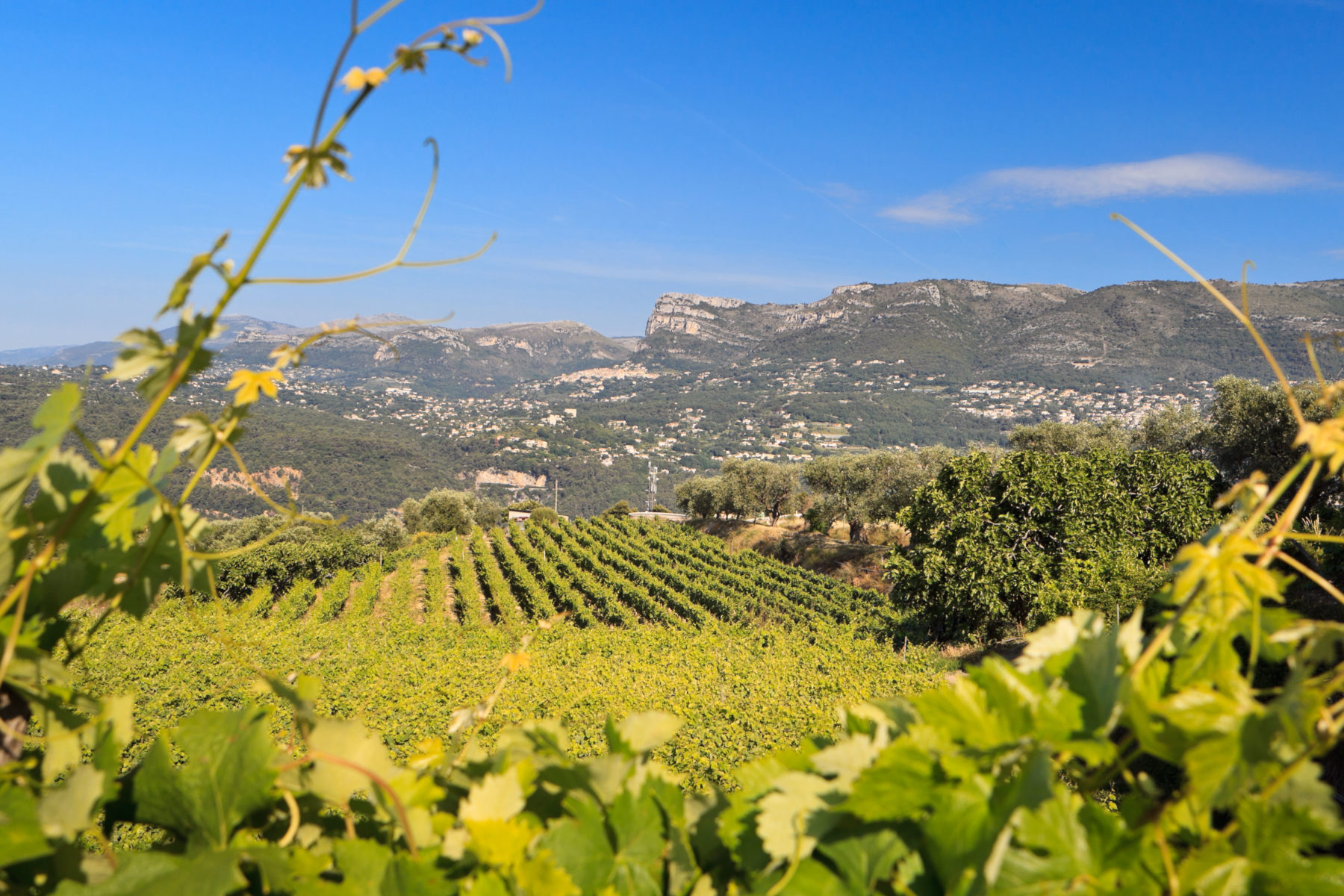
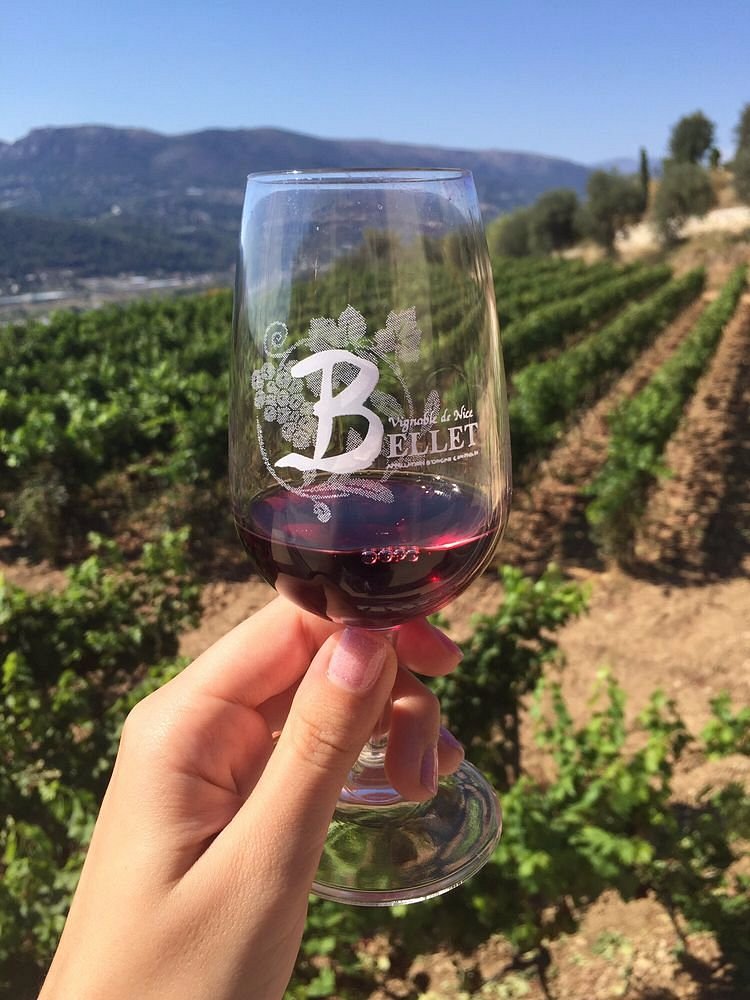
The Bellet wine appellation lies within the city limits of Nice

The hills above Nice are filled with jaw-dropping villas and bougainvillea-framed panoramas of the Mediterranean.  These hills are also home to France’s smallest urban wine appellation, Bellet.   Comprising less than 150 acres of vines with fewer than 10 producers, Bellet wine is well known to locals but unknown to the world since it rarely leaves the area---the mere 120,000 bottle production is snatched up by Riviera wine-lovers and restaurateurs in-the-know.

 The Bellet area has been making wine for < 1500 years

Formed in 1941, the tiny Bellet appellation has a unique terroir.  At an altitude varying from 600-1,200 feet above sea level, vines often cling to the hillsides in terraced vineyards.  Manual harvesting is the only possibility in these inhospitable conditions.  Soil, washed down from the Alps for millenniums, a mix of sand and rocks, provides a perfect drainage system for grapes.  Furthermore, Bellet is less than three miles as the bird flies from the Mediterranean so this allows its vines to  recuperate at night when the marine influence brings coolness to the hot, dry daytime temperatures.

                 Wine-Knows will be visiting Bellet this autumn....there is only one spot available!

Bellet produces red, white and rosé wines.  White grape varieties include Chardonnay and Rolle (aka Vermentino in nearby Italy).  These two are often blended together creating a spectacular white not seen elsewhere in France.  For reds, Grenache  (one of southern France’s greatest grapes, e.g. Chateauneuf du Pape), is mixed with unknown native Riviera varietals such as Braquet and Folle Noire.   

"I love cooking with wine....sometimes I even put it in the food."   Julia Child

Wine-Knows will be visiting the Bellet appellation during its Week in Provence at the villa where Julia Child wrote her masterpieces, Mastering the Art of French Cooking.    There is only one seat remaining.  For more information about this special “Julia” trip, visit our website:

http://www.wineknowstravel.com/julia-2022-1-itinerary-2/


Wednesday, April 14, 2021

Grenache---a Hero of a Grape

                                                     Grenache thrives in hot climates

Grenache, often associated with the coveted wines of Chateauneuf du Pape in France’s Rhone Valley, is actually a grape of Spanish origin.  Known as “Garnacha” in Spain, this late ripening red variety needs plenty of hot weather.  It’s no wonder, therefore, that Grenache grows in Spain and the south of France where summers can be sizzling.

                     Chateauneuf du Pape is one of the most famous spots on earth for Grenache

The Grenache grape is often used in a blend, especially in Chateauneuf du Pape.  Its characteristic flavors include red fruits such strawberries and raspberries with hints of spices like white pepper or cinnamon.   Because of the heat required to ripen the grape, however, Grenache can be high in alcohol, thus blending is often required to dampen these alcohol levels.   The varietal also is moderate in color, so darker grapes such as Syrah are often added to deepen the blends color.  Grenache offers soft tannins and less acidity than other red grapes, so it is often blended with higher tannin and more acidic grapes (such as Tempranillo) to balance the wine's structure.

                            Grilled carrots, carmelized onions & a spicy herb-infused ricotta

Food-wise, Grenache can swing many directions.  Because of the wine’s spicy nuances, it can work well Asian-inspired foods, or spicy cuisines such as Indian.  Grenache can pair with rich bold foods such as BBQ meats, game, or even poultry that has been marinated in a big-flavored sauce.  Grenache also is a good match for cheeses, including strong cheeses that have been smoked.


Outdoor grilling season has approached.  Will not throw something on the "barbie" and pop a Grenache?


Friday, July 3, 2020

4 Wines to Celebrate the 4th


For our special American holiday, here are four made in the USA wines that should be included in your independence day menu.  These wines have been chosen for their ability to pair with summer foods, as well as their terrific price-quality-ratio.   One is a blend, the three others are 100% varietal.  They are equally divided between white and red.  All are available online (K&L has all four).

White Rhone Blend
Tablas Creek’s “Patelin de Tablas” (Paso Robles) is consistently one of my favorite California white blends of luscious Rhone varietals such as Grenache Blanc, Roussane, Marsanne and Viognier.  It’s a real bargain for $20.

Viognier
Alban’s Viognier (Central Coast) knocks it out of the summer ballpark.  Alban was one of the first pioneers to use this white Rhone varietal on the coastal Cali.  Like all Viognier, this one serves up stone fruit, citrus layers and floral notes.  ($28)


Cabernet Franc:
This grape is the mother grape to both Cabernet Sauvignon and Merlot.  Offering less tannin than its offspring, it’s the perfect summer red aperitif wine.  Lieu Dit (Santa Ynez Valley) offers a superb rendition ($30).

Grenache:
If you love Pinot Noir for its silky elegance and Syrah for its spice, then you should check out Grenache.  It’s the backbone of those beloved reds from Chateauneuf-du-Pape.  California’s Central Coast Nelle vineyards produces one of the best renditions. ($38 online)

Cheers to the red & white, as well as the blue !


Friday, May 8, 2020

Rhone Rangers, Part II


                                 Large rocks provide warmth to vines during cold nights

This is a second article in a two part series on France’s world-class Rhone Valley wine district.  Today we travel to the southern sub-zone of the Rhone.  Many readers may know this southern area because of its famous wines from the town of Chateauneuf-du-Pape.

The southern Rhone terroir is different from the cold, harsh north.   The Mediterranean Sea exerts a tremendous influence by moderating the south’s temperatures.  Winters in the south are far less dramatic, and southern summers are hot but cooled by the effects of the Mediterranean.   Large rocks washed down over the millenniums from the Alps and other mountains by the Rhone River, also help with the climate:  retaining heat, they provide warmth to vines on cold nights.  Their smaller pebbles create excellent drainage.  

While Syrah is supreme in the northern Rhone, the big kahuna red grape of the southern Rhone is Grenache.  While Grenaches comprises nearly 70% of the south’s vineyards, there are several other red varietals allowed by law.  All southern Rhone wines are blended.    While wines are mainly Grenache, a little Syrah is added to for its color and spice, as is Mouvedre which adds structure and elegance.  The southern Rhone blend of Grenache, Syrah and Mouvedre is so popular that it is frequently called simply GSM.  This famous blend has been replicated around the world.

The southern Rhone’s Holy Grail appellation is Chateauneuf-du-Pape (“the Pope’s new house,” named so after the papacy was move from Rome to this area in 1309).  These wines are some of the most seductive I know.  Like all southern Rhones, they are Grenache-centric, however, similar to the northern Rhone, laws allow for combining both red and white grapes.  GSM is strongly represented in the mix, but there are also some white grapes added in small amounts.   

While red wines are the majority produced in the southern Rhone, opulent whites are also made.   They are scare but, oh, but they can be divine.  Made from unknown varietals like Ugni Blanc, Clairette, Grenache Blanc, and Picpoul (along with Roussane and Marsanne), a white southern Rhone from Chateauneuf-du-Pape can be a religious experience.

Pop a Rhone wine to celebrate the weekend!


Friday, October 4, 2019

The World’s Most Widely Planted Grape?


There are over 10,000 grapes on the earth, but not all of them are used in making wine. While numbers vary, most would agree that at least 1,000 of them are currently used to make wine.  Now, make a guess as to what wine grape is the most planted varietal.   If you guessed Merlot, you’re close…. it’s second.  If you guessed Cabernet Sauvignon you are right!  Cabernet Sauvignon accounts for >5% of the grapes for wine production around the globe.  There are more than Cabernet vines than both Pinot Noir and Syrah and plantings combined.

You may have been lucky on choosing Cabernet, however, for the most planted white wine grape varietal, what’s your guess?   Chances are >99% of you guessed incorrectly.  For white wine grapes, the world’s most widely planted variety is Airen.  That’s right…Airen.    This grape ranks 4th among both red and white wine grapes.  It is surpassed only by Cab, Merlot, and Tempranillo.  Airen vines account for more than both Pinot Noir and Sauv Blanc combined.

Airen is grown almost exclusively in Spain.  Up until a few years ago it was the world’s most widely planted grape.  If you’ve never heard of it, it’s because Airen is often used for Spain’s unpretentious wines.   The last five years, however, many of the Airen vines have been ripped out and replaced with Tempranillo, another grape native to Spain.    That being said, Airen and Tempranillo combined currently account for 45% of all of Spain’s wine grapes.

Below is a list of the Top Ten wine grape varietals across the globe:

1.     Cabernet Sauvignon
2.     Merlot
3.     Tempranillo
4.     Airen
5.     Chardonnay
6.     Syrah
7.     Grenache
8.     Sauvignon Blanc
9.     Pinot Noir
10.  Trebbiano (also called Ugni Blanc)


Wednesday, July 3, 2019

Seeing RED on the 4th!


                                                        Summer calls for lighter bodied reds


The 4th of July always signals to me the switch to lighter bodied red wines:  out with the highly structured Cabernets, those big Mouvedres from Bandol, the intense Malbecs from Argentina, and those California Zinfandels with soaring alcohol levels.    The heat of summer calls for easier drinking reds without a lot of tannin or alcohol.  Here are my favorite four to honor the 4th.

Pinot Noir:
One of the best summer reds is Pinot Noir.  A more feminine grape, Pinot has lower tannins than most other red grapes which means it’s easier drinking in the warmer temperatures of July and August.   Silky and soft, Pinot Noir can be a refreshing summer alternative to the more powerhouse big reds of winter.

Barbera:
Barbera is also a good choice for summer-time quaffing.  The grape has very little tannin and lots of fruit profile.  Mainly grown in the Piedmont district of Italy (home to the heavily structured Barolo and Barbaresco), Barbera works well with summer’s menu of simple grilled meats, poultry and fish.

Frapatto:
One of my fave red wines to drink during the heat of the summer is Frapatto.  Grown primarily in Sicily, this gem of a wine is perfect as an aperitif or with a lighter main course such as poultry or fish.  When I think of Frapatto I think of strawberries as this berry is very prominent in both the varietal’s taste and aroma.   Serve it and I guarantee people will rave.

Grenache:
This grape, which is native to Spain, is also grown in France’s Rhone Valley.   Both countries make lighter-style red (unless the wine is aged in oak).   This low tannin wine serves up an impressive lineup of summer-time flavors of red fruit such as raspberry and strawberry (versus black fruit of the more highly structured reds).

Here’s to the RED white and blue!


Friday, October 26, 2018

Mourvedre---A Glorious Autumn Wine


I have long been a fan of Mourvedre (more-VEH-drah).  In fact, I spent several weeks this summer in the epicenter of Mourvedre production…the South of France.  Some think that this inky dark varietal may be native to this part of France so it’s no wonder that Mourvedre reaches rock-star status in this Mediterranean-kissed area.

Mourvedre is a meaty, full-bodied red wine.  It is also a grape.  Mourvedre is used in the South of France primarily as a blending varietal with Grenache and Syrah.  The Mourvedre adds tannins and structure, along with flavors of dark red berries, spices like cinnamon and black pepper, and herbs such as thyme.  The grape can also add a floral note, usually in the form of violets.  Moreover, Mourvedre is second only to Syrah as the darkest colored wine.

If you’re a Cabernet lover you’ll probably find Mourvedre quite appealing.  In the seaside Bandol area (not far from St Tropez), Mourvedre is produced as a 100% varietal.  These wines can be killer.  Domaine Tempier and Chateau Pibarnon are the perennial faves although their prices have escalated the last few years as these wines continue to become more popular.

Although Mourvedre is most known for making concentrated reds, there are also wonderful Rosés from the varietal being made in the South of France.  Domaine Lafage Miraflors is a solid bet for less than $20.  Tempier makes at outrageously good rendition but its price is double Lafage’s Miraflors at about $40.

Why not try something new this autumn?


Friday, September 28, 2018

Seeing Red


There are approximately 50 major grapes used to make red wines.  The particular variety utilized has a tremendous influence on the wine’s color, especially when the wine is young.  (As wine ages it changes color, however, for the purpose of this article, to keep a level play field all comments will be related to young wines.  Additionally, the climate in which the grape is grown also impacts the wine’s color.  For the sake of this article, neither of these variables will not be addressed).

The color of a red wine is directly related to the amount of plant pigmentation in the grape’s skin.    In general, thicker skin grapes such as Cabernet Sauvignon have much more pigment than the delicate thin-skinned grapes of Pinot Noir.  This is why a Cab is much darker in color than a Pinot.  But, thickness of skin does not always determine the color of a wine.  The amount of color pigment is the determinant.

Syrah is the darkest colored red wine.  In fact its deep purple-black is so intense that it’s opaque (unlike the lighter Pinot Noir that is transparent).  In the case of Syrah, yes the grape’s skin is thick, however, it’s not the thickest of all grape skins.  Syrah simply has an enormous amount of plant pigmentation in its skins, thus its inky nearly black color.

Mouvedre (a Rhone varietal), Malbec (from Argentina) and Petite Syrah (no relation, by the way, to Syrah), fall just shy of Syrah’s super deep pigmented color. All of these wines, like Syrah, are so dark that they’re opaque.   The grapes from which these wines are made are all loaded with dark plant pigments.

Next in line moving down the color spectrum is Cabernet Sauvignon.  Cab makes fairly deeply colored wine, but not as intense in color as the above varietals.  Not far behind Cab in almost in the dead center of the red color range is Merlot.   Just a little lighter than Merlot, Zinfandel falls next.   Zin’s color is a surprise.  Compared to its tannins and high acidity which creates a bold wine, Zin’s color is less intense than one would expect from the strength of its taste.   Also sharing this middle spot of the red color wheel is Spain’s flagship grape, Tempranillo, along with Sangiovese from Italy.

At the bottom of the red range are the lightest colored wines.  Pinot Noir is generally the lightest, however, Grenache is also a grape with significantly fewer plant pigments.  Grenache, a Rhone varietal, is typically mixed in France with the extremely dark Syrah.   Pinot, however, is often vinified alone and appreciated for its light strawberry-colored hue.

There are at least 50 shades of red.  Enjoy.


Friday, August 18, 2017

Summer Reds

                           Pinots, Grenache and Frappoto make for great summer drinking

A light bodied red wine can be the spot-on choice for a hot summer’s day.  Perfect summertime grapes include Pinot Noir, Grenache, and Frappoto.  All of these grape varietals are thin-skinned, therefore, don’t offer a lot of tannin (not the best ingredient during the heat of the summer).

Pinot Noir, grown in cool climate areas (think Sonoma vs. Napa), is a terrific summer wine that can pair both with meats and fish.  Pinot flavor profile includes cherries and strawberries, but interesting spice or floral notes can make this varietal a compelling wine.   Pinot Noir is the hallmark grape of Burgundy, but red Burgundies are usually expensive.  For something more affordable look for great Pinots that are made in the Russian River of California… not far from the cooler Pacific Coast.  Oregon’s Willamette Valley also produces some stunners.  All Pinot Noirs below are highly recommended.

·        Russian River:  I particularly like Dehlinger.
·        Oregon:  Ponzi, Adelsheim, Domaine Droughin or Soter all produce excellent wines.
·        Burgundy:  Jadot produces both high-end, as well as some less costly wines.

Grenache is the world’s most planted red grape.  It is becoming more popular, especially among California vintners.  A Rhone varietal (one of the grapes used in Chateauneuf du Pape), it is also grown in Spain where it is known as Garnacha.  California’s Central Coast is also having very good success with this varietal, but they are using it primarily in blends.  The Grenache grape is full of red fruit flavors (strawberries and raspberries).  While it has good structure, Grenache’s tannins are background notes.  The wine works especially well with grilled chicken, but also can swing to lamb or beef.   My faves include....
  • Spain:  look no further than Arryan’s La Suerte Mentrida. 
  • Central Coast:  Best includes Tablas Creek, Zaca Mesa and Justin.
  • Chateauneuf du Pape:  Beaucastel is the bomb. 

·      Frapatto is one of my favorites for summer time.  Hailing from Sicily, Frapotto is a fun summer wine that usually everyone likes.  Relatively unknown in the US until recently, Frapotto is starting to appear on our wine lists.  Often blended with Sicily’s famous Nero d’Avola grape, Frapotto is more and more being vinified as its own varietal.  Think strawberries.   It’s a real hero with fish.  Best producers are Planeta and Orcchipenti.

     Paint the remainder of the summer Red!


Friday, August 4, 2017

Best Bargain Rosé

                                              Over 50% of Provence's wines are Rosé 

I owe this delightful discovery to a client of ours who telephoned recently about a Rosé tasting he had conducted in the Bay Area with friends. He was calling to tell us that the hands-down favorite was a French one from Trader Joes.  The price?  A whopping $6.99. My husband jumped in the car and dashed out to grab a few bottles. Our client was right.  This one, a wine from Provence, is a real winner that delivers a terrific value.  

If a Rosé could choose its birthplace it might very well choose Provence.  First, the area is stunning.  Second, it's been making wine for >2,000 years so they've had plenty of time to get it right. Located in southern France not far from the Riviera, Provence specializes in Rosé.   I was in Provence last month at a Wine-Knows sponsored Julia Child cooking event.   Our group tasted a plethora of Rosé most of which were very good.  But, none offered the quality price ratio of the one from TJ's.

Drum roll please!  The terrific seven buck Rosé is produced by J.L. Quinson and its called Cotes de Provence, AOC (which means its from the appellation encompassing the hills of Provence).  The 2016 blend is a equal blend of Carignan and Grenache...both common grapes for the Rhone Valley of which Provence is a part. (Note:  Quinson also makes another Rosé which TJ carries called Coteaux d'Aix en Provence, so pay attention).

We're heading back to TJ's to pick up several cases for summer drinking and reminiscing about our glorious time at the Week in Provence with Julia Child.  Thank you, Marco, for this great tip!

Have a Rosé-all-day kind of weekend!