Showing posts with label Spanish wine. Show all posts

Thursday, August 22, 2024

Grenache—Sensational Summer Red


                        Grenache is one of the world's most versatile wine-making grapes 

Few red wines work during hot summers but Grenache is one of the exceptions.  After all, Grenache accounts for about 75% of the seductive wine blends of Chateauneuf du Pape in France's Rhone Valley.   While many mistakenly think the Rhone's popular Grenache is from France, in fact it is Spanish in origin.  Known as "Garnacha" in Spain, this late ripening red grape needs plenty of hot weather.  It's no wonder, therefore, that Grenache grows in Spain and the south of France where summers can be sizzling.


Grenache is one of the most versatile red grapes in the world.  It produces that can range from lighter to full-bodied; from simple and less costly ones that offer immediate gratification, to complex, multi-layered gems that are both cellar-worthy and pricey.  It's no wonder why Grenache is in the top ten of the planet's most planted grape varietal. 


While Grenache has moderate tannins to provide structure, this wine is all about fruit.  Think red fruit such as strawberries, raspberries, plums and cherries.  Depending upon the terroir, Grenache can also offer black fruit flavors such as blackberries.  Grenache, however, differentiates itself from other fruit forward wines because of the spices such as cinnamon or star anise, as well as subtle nuances of floral notes.  It's like a well-orchestrated symphony with the string, woodwind, brass and percussion sections all working together in perfect harmony.


The modest tannins and red fruit flavors means Grenache can work well with a variety of summer dishes, especially foods that have smoky or charred flavors.  Grilled poultry, meat and veggies all pair beautifully.  Grenache's spicy undertones also accentuate BBQ foods that have spices in the sauces.  Serving tapas?  Garnacha is a perfect choice as an aperitif.   Moreover, Grenache can work with desserts that reflect the red fruits of the wine.  Berry cobbler?  Perfect!   Strawberry shortcake?  Bravo!


One last tip for serving Grenache during hot weather:  make sure there's a slight chill on it.  Sixty degrees is perfect....but remember, room temperature is seventy and outside summer temps of eighty degrees can drastically dampen any wine's strengths.   


_

Friday, July 19, 2024

Spain’s Most Popular Liqueur

                                                       43 adds a complex vanilla flavor
 

Little known in the US, “Licor 43” (simply Cuarenta y Tres to Spanish speakers) is the most sought after liqueur in its native Spain.  Named after the forty-three ingredients from which it's made, 43 Licor is a well-kept secret recipe of the family who has been making it for nearly eighty years.

I first encountered 43 on the island of Mallorca when I was served a decadent glass of white sangria at an upscale restaurant/hotel.  There was a definite something different, something quite wonderful that I couldn’t put my finger on…and it wasn’t the sparkling white wine from which it was made.   Fortunately, I was able to learn the recipe from the bartender:  Cava, sparkling lemonade and 43!   The Bartender couldn't believe I had never heard 43 and showed me the bottle.

                                       Summer is the perfect time for serving white 43 sangria

When exiting Spain I made sure to stop at the Duty Free to purchase a bottle to take home.  The display of 43 was gigantic, by far the largest in the entire store overflowing with every name-brand liquor.   I was dumbfounded that I had never heard of it in spite of  more than thirty trips to Spain.  

Upon returning back to the US my first sip of the liqueur I discovered what makes 43 so compelling.  In its virginal state, it was a vanilla bomb laced with many complexities.  It reminded me of a relative of Italian Tuaca & Galliano, both vanilla laden liqueurs.  But, 43 had so many layers:  cinnamon, orange peel & savory.  Now, I could understand why that first white Sangria had me at “Hola!”

                            White 43 Sangria is also a hit at Christmas with oranges & pomegranates

I  have made lots of this white Sangria after that trip to Mallorca. When I had almost finished the bottle of 43 I began to panic and wondered if I could get it shipped from Spain.  I Googled it and happily found that all the big liquor stores in the US carry it (e.g. Total Wine & BevMo).   Perfecto!


White Sangria recipe:

 Wine-Knows: Fine Wine & Gourmet Food Journeys for the Discerning Traveler: White, Red & Blue Sangria (wineknowstravel.blogspot.com)


Thursday, March 14, 2024

White Wines of Northern Spain

                              The Viura grape, by law, must be at least 51% of a white Rioja blend
 

White grapes in Spain’s home of the world famous red Tempranillo grape?  That seems like an oxymoron to those who enjoy the Rioja or the Ribera del Duero’s world-class reds.  But, wait!   There is "white" life beyond "red" for wine lovers.   Spain’s north produces some wonderful white wines and you don’t have to travel to Spain necessarily to have them.  With summer approaching these sublime whites can enchant even the most discerning of wine connoisseurs.

                            Rioja Blanco is a rarity in the red Tempranillo-centric Rioja district

White Rioja (aka Rioja Blanco) is made from a blend of white grapes, the most important of which is Viura.   Rioja Blanco is rare, accounting for only a mere 10% of the Rioja’s entire wine production.   Often aged in oak, these whites take on bold aromas of roasted pineapple.  On the palate, an older white Rioja can reveal layers of subtle lemon flavors, minerals and good acidity.  In its youth, these whites offer a lemon-lime profile, laced with honeydew melon and mineral nuances.

As mentioned above, white Rioja is a blend of Viura with an accompaniment of a few other obscure white varieties not known to consumers outside of Europe.  For example, ever hear of a white Tempanillo?  A cousin of the red Tempanillo grape, this white often appears in a Rioja Blanco.  Malvasia and white Garnacha are two other popular white grapes used for blending.  By law, however, Viura must account for the majority of any Rioja Blanco.

          Seafood paella, popular in Spain's south, is often accompanied by a Verdejo from the north

Verdejo is the other hallmark grape of northern Spain.  Go into any restaurant in Spain and ask for a glass of white wine.   Or, head to any wine shop in Spain and ask for white wine.  Chances are in both cases you’ll be offered a Verdejo from Spain’s Rueda wine region.  Verdejo accounts for 40% of all wines sold within the country of Spain.   Its popularity may be due to Spain’s warm climate, although Verdejo is a flavor bomb offering up tropical, stone fruit and citrus.   


If you’re looking for a new white for the summer, both White Rioja and Verdejo from Rueda are terrific wines to try.  Both are available in the US.


Monday, March 4, 2024

Rueda Wine: 5 Important Facts to Know

             An inhospitable terroir allows only grapes & grains to grow in the harsh Rueda

The last three blogs have discussed the wines of Spain’s Rioja, Ribera del Duero and Toro wine regions.   Today we move to the final wine district in the quartet of northern Spain wine regions that Wine-Knows travelers will be visiting this autumn, the Rueda.  The first three wine regions are known for their red wines.  The Rueda, however, is all about white wine.  Below are five facts a wine lover visiting the region (or simply drinking these high QPR wines at home) should know.


1.  The Verdejo grape put Rueda on the world’s wine map. 

The Rueda is home to the largest number of Verdejo vines in the world.  98% of Rueda’s wines are white and the majority of them come from the Verdejo grape.   Research has shown that Verdejo arrived in Spain from North Africa in the 11th century.  It gradually made its way north to the Rueda after adapting in the vineyards of Spain’s south.

Today 4 out of every 10 wine bottles sold in Spain is made from Verdejo and most of it comes from the Rueda. 

          2.  Verdejo wine is a light to medium bodied aromatic wine with the                              following characteristics:

          ~ Citrus (lemon, lime, grapefruit)

          ~ Stone fruit (peach, apricot)

          ~ Tropical (pineapple, melon, mango)

          ~ Herbs (licorice, grass)

Well made Verdejo, unlike many white wines, can often age beautifully for 5-10 years developing rich textures and nutty nuances in addition to its fruit-centric tastes. 

             Stones absorb the heat during the day & warm the vines during cold nights 

3.  Rueda’s terroir forces grapevines to work hard.

Like the adjacent Toro wine region, Rueda is located on the same 2,000-3,000 foot plateau where the harsh landscape is wild and the soil is low in nutrients.  On the other hand, this higher altitude means cooler temperatures during the area’s extreme summers.  Plants are forced to work hard to survive so only grains and grape vines grow in Rueda’s inhospitable terroir.   

Rueda’s stony soils provide a great drainage system for winter rain to seep deep into the earth.  In order to live during the hot summers the grape vines must send their roots downward through the earth to seek water and nutrients.  Traversing many layers, the struggling vines bring back to the plant complex nutrients which translate into complex wines.    

The Duero River helps moderate the heat of summer and cold of winter so it’s no surprise the finest wines are made from vineyards located along the Duero’s banks.

           Wine-Knows has a harvest appointment at Menade to taste their high-scoring wines

           4.  Rueda's wine laws effect what's in your wine glass.

Rueda received official status from the Spanish Government (D.O.) as a unique region with noteworthy wines in 1980.  In order for Rueda to appear on a wine label, it must contain a minimum of 50% Verdejo.   Wines labeled “Ruedo Verdejo” have a higher bar in that they must have a minimum of 85% Verdejo grapes.  Many Ruedo Verdejo, however, are made entirely from the Verdejo variety.

The D.O. wine laws also permit blending with Sauvignon Blanc, along with Palomino, Virua, Viognier and Chardonnay.  That being said, Verdejo D.O. must be a minimum of 50% of all Ruedas made.


5.  The Rueda also grows some red grapes for red wine.

Up until the end of the 19th century when the vineyard bug phylloxera destroyed most of the vines throughout Europe, the Rueda region was known for its red wines.   It wasn’t until after the phylloxera pandemic that white grape vines were planted.  The Rueda, like its western neighbor Toro and eastern border Ribera del Duero, grows Tempranillo.   Cabernet Sauvignon, Merlot, and Garnacha are also permitted by Rueda’s D.O. laws.


Monday, February 5, 2024

5 Facts You Should Know about the Rioja

Whether you're coming with Wine-Knows on their sold-out tour to Spain this autumn or not, here's a quick summary of the top things for wine-lovers to know about the Rioja wine district.

1.  The Rioja is Spain’s most famous wine district. 

The Rioja is arguably Spain’s top wine region and certainly the most famous wine area with the exception of Jerez (Sherry) in southern Spain.  Internationally renowned, the Rioja’s prestigious wines often receive top-ratings by critics and connoisseurs.   This being said, the Rioja has increasingly had to fight off competition from the nearby Ribera Del Duero region.   Nonetheless, the Rioja is still considered Spain’s most important and finest producer of premium red wines.

                             Tempranillo, the Rioja's most famous grape, is a major part of red blends

         2.  Wines are often blended in the Rioja.


Red wines in the Rioja are traditionally a blend of traditional Spanish red grape varieties.  The base of the blend is Tempranillo, however, Garnacha (aka Grenache), Graciano and Mazuelo (aka Carignan) are also used in the blends. 


                             The Rioja is also one of Spain's most beautiful wine regions


       3.  The Rioja also produces terrific white, rose & sparkling wines.


Although the Rioja is associated mainly with red wines, the region also makes some stunning whites and rose (rosado) wines.  White Rioja (Rioja Blanco), is quite rare making up only 5-10% of the region’s wines.  Viura is the main grape of these white wines, however,  Rioja Blancos are a blend of other grapes like Garnacha Blanca, Tempranillo Blanco, Malvasia, and even Chardonnay.  Sparkling wine is also made and has been included in the Rioja's latest wine classification.

             Rioja Alavesa lies at the foot of the mountains separating the Rioja from the Atlantic


        4.  The Terroir of the Rioja is Diverse.


The Rioja wine region is about 210 square miles.  The mountains on its northern border help moderate the climate by protecting the region from the strong influences of the Atlantic.  The River Ebro flows through the region also moderates the climate, protecting it in winter from freezing temperatures and cooling it in the scalding summers.   In general, the Rioja’s soil is limestone and iron.


The Rioja is divided into 3 sub-districts based upon terroir.

~ Rioja Alavesa is the most northern of the 3 sub-regions.  It is closest to the Atlantic so the area is colder.  Soil here is limestone and clay.

~ Rioja Alta comprises the higher altitudes vineyards in the western section of the Rioja.  Soil is iron rich and clay.

 ~ Rioja Oriental (formerly called Rioja Baja) is located in the eastern section of the district and accounts for 40% of the region’s wine.  This area is composed of lower altitude vineyards.  Unlike the other two sub-districts, it is warm and dry.  Soil, washed down from higher altitudes, is high in iron.


    5.  The Rioja’s wine classification system was changed in 2018.


While aging requirements have always been present in the Rioja's wine system (Crianza 2 year minimum, Reserva 3 year minimum & Gran Reserva 5 year minimum), the biggest change in the new rules is the addition of the sparkling wine category, Gran Anada, and the allowance of single vineyard wines echoing the importance of terroir.


Stay tuned for the next article on the Ribera del Duero wine district that Wine-Knows travelers will also be visiting this October.


Monday, April 25, 2022

2 Roses Not to Miss---Their Origin Will Surprise!

                                                 Think out of the Provence box for Rosés !

Summer is just around the corner.  This means it’s time now to restock our wine cellar with plenty of Rosé.  I’ll be in Provence this September at Julia Child's villa* so I’ve spent the winter & spring searching for the best Provençal Rosés.   I've tasted several that received high-scores from esteemed critics, and spending as much as $30 a bottle.  I was disappointed in all of them.  The good news is that I have two magnifique Rosés for you. Neither of them, however, is from Provence.  In fact, neither is from France.

Both of these well-crafted Rosés, however, are from Europe and I sampled each one in their respective countries last autumn.  After my discouraging tasting of Provençal Rosés, I turned again to the internet for help in locating the two memorable Rosés from my latest trip.  Fortunately, I was able to locate both on the East Coast.  After allowing a couple of months to recover from shipping across the USA, another tasting was conducted to see if these two stunners were as good as I remembered.  They were.


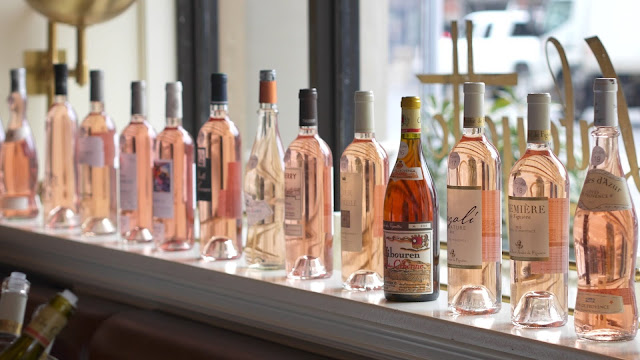
                                       Muga's Rosado deserves one resounding Olé !

So what are the two Rosés that were heads above some of the most highly touted Provençal Rosés?   The first is made by one of Spain’s mover-and-shaker wineries,  Muga.   (Do note that Muga makes two different Rosés and it’s their Rosado that I’m speaking of, not Flor de Rosé).  Wine Knows has been fortunate to visit Bodegas Muga in the Rioja several times.  This winery has received just about every award there is.  In fact, James Suckling (Wine Spectator) has given some of Muga's wines a perfect 100 score.  

We had our first sip of Muga's Rosado at an impressively located seaside restaurant near Gibraltar---the Mediterranean was just to our left and the Atlantic immediately to the right.  The Rosé was so compelling that we returned to the same restaurant to dine three days in a row.  Muga's Rosado is made from Garnacha (Grenache) and Viura grapes, the latter being a white grape. We have tried their 2019 and 2020 vintages and both were noteworthy.  Purchased online in a case, count on less than $25 per bottle including shipping and tax.  A real steal.

                                    Even Dionysus would love Gaia's 14-18h Rosé

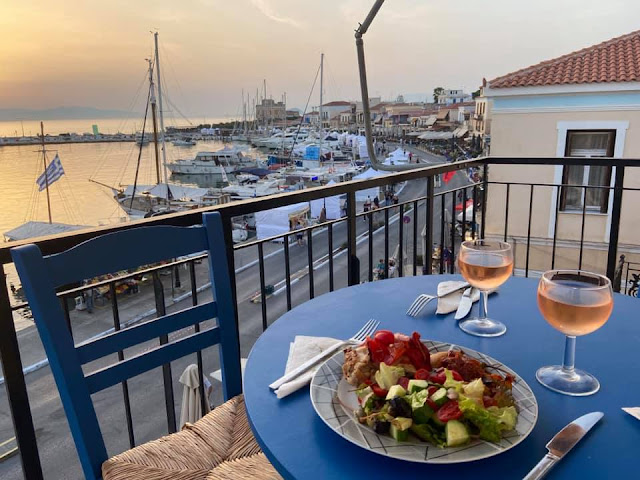
The other outstanding Rosé is Greek and produced by Gaia.   Wine-Knows groups have visited Gaia several times.  Last September I was on Aegina island (an hour's ferry ride from Athens) when I spotted Gaia’s Rosé in a wine shop.  I immediately bought a bottle and opened it to serve with dinner that night.  It was stunning.  The next day we returned to the shop and bought every bottle they had. 

Gaia is one of the top quality wine producers of Greece.  The winery pushes the envelope by experimenting with different varietals and even has conducted research on aging wine on the ocean floor.   This wine is named 14-18h Rosé because the Agiorgitiko grapes are kept in contact with their skins for 14-18 hours.  We have tried both the 2019 and 2020 vintages---both were superb.   A case of this remarkable wine with shipping and tax is a phenomenal bargain at about $20 per bottle.

Highly recommend at least a case of both of these well crafted Rosés for your summer stash.   Be sure to order them well before the heat of summer arrives.

* There is ONE opening in the Julia Child Week in Provence due to an unexpected surgery.   http://www.wineknowstravel.com/julia-2022-1-itinerary-2/


Friday, May 21, 2021

The Making of a Sherry


                                     Sherry's unique Solera system operates on gravity flow

Last week on this blog two different types of dry Sherry were discussed.  Produced only in a limited geographical area of southwest Spain not far from Gibraltar, Sherry is different from other wine because of its “solera” system.   Think of the solera  as a vertical system where wine can be transferred via gravity flow.


To understand the process of making a sherry we must first start with the “base wine.”  Sherry begins as a regular wine made from the white Palomino grape.  The wine is initially aged for the first few years in contact with the yeasts left over from its fermentation.  These yeasts float to the top and create a layer called “flor.”  This flor cap creates a barrier to prevent oxygenation, and also gives the wine below it many flavors.

                     Dead yeasts from fermentation top the sherry in the base wine stage

Once the base wine goes through the initial aging with the flor of yeasts, it is then transferred to a holding area we’ll call the “nursery.”   (The flor is not transferred but remains behind.)  The nursery then babysits the wine until it’s ready for transfer to the the very top layer of the usually four tier Solera system.

To understand the Solera system, we’re now going to move from its top fourth level to the very bottom tier.   Solera in Spanish means "on the ground."  The very bottom level of the Solera system is a mixture of the wines that have been passed down through the varying levels bit by bit:  from the fourth level to the third, then to the second layer, and finally to the bottom final level.   The bottom ground level of the Solera is from where the finished sherry comes.  It is important, however, to note that the bottom level casks are not emptied.  Only a small amount of the cask is removed from the "ground floor."  After this removal, the bottom layer is then topped off with wine from the levels above.

      Some Sherry bodegas don't have verticality so must transfer the wine between levels by hand

What is removed from the lowest level of the Solera system for bottling, is then replaced from the above level three.   This third tier is then replaced with wine from the second tier.  Likewise, Sherry from the first level of the Solera is allowed to flow into level two.   Finally, a small amount of Sherry that has been patiently waiting in the nursery is permitted to flow into tier one of the Solera.

                    The solera system has been used to make Sherry since the 18th century

The bottle of Sherry that is ready for the consumer, hence, is a combination of all tiers of the Solera system, having been passed down slowly ounce by ounce from the nursery through all the levels.  In summary, the solera system is a unique form of aging, as well as a form of blending.   This system is unique and is only used to create Sherry.

Want to see the solera system in action?   Come with Wine-Knows in October to visit the Sherry wine countryside, along with Seville and Granada.


http://www.wineknowstravel.com/granada-and-seville-itinerary/


Friday, May 14, 2021

Sherry---No Longer Your Grandmother’s Wine


                                   A dry Sherry is a perfect pairing for pre-dinner nibbles 

This is a the second article in May's series on Spain.  It’s a back to the future story to do with Sherry:  the wines of the country's Sherry region are coming back into fashion.  But, these are not the insipid sweet wines of yesteryear enjoyed at the end of a meal with a piece of gingerbread or fruitcake.  Instead, the new Sherry is bone dry and is often taken as an aperitif to begin a meal.  Be advised, however, that while Sherry is made in several styles (varying from dry to sweet),  this article discusses only dry Sherry that is aged under a top cap of yeasts.

                      The yeast cap both protects Sherry from oxidation & gives it flavors

Sherry is a distinctive wine made from the white Palomino grape in the southwest of Spain near Seville.  The process of making Sherry is quite different from that of regular wine (next week’s blog will address this unusual process).  Suffice to say that Sherry is aged under a protective film of its own fermentation yeasts that have floated to the top of the barrel.  This “cap” of yeast protects the wine from oxidation, but it also gives flavors to the wine.

These dry aperitif Sherries are called fino and manzanillo.  The fino style, offering bread-like notes (influenced by aging under the cap of yeast), is a relatively  simple Sherry.  Finos offer a delicate bouquet often with almond nuances and savory herbs.  Served chilled, fino is a good, inexpensive introduction to a dry Sherry.

                                     Wine-Knows will visit the top Sherry producer in Spain

Manzanillo sherry is also dry, and like fino, it is aged under a cap of yeast.  The difference is that manzanillo is made in a different part of the Sherry region.  The special climatic conditions of the area, situated at the mouth of a river, favor the formation of a special kind of yeast which gives the wine its unique characteristic.  In addition to flavors contributed by the yeast (e.g. brioche, freshly-baked bread), manzanillo sherry also serves up an almond-like profile, and savory flavors such as camoumille.

Summer is quickly approaching---why not forgo the usual glass of Rosé and try a refreshing dry fino or manzanillo?   Sherry doesn’t deliver the usual uncomplicated charm of a Rosé.  It’s a bit more serious.  For wine-lovers, a dry Sherry can be the perfect way to begin the evening’s festivities.

Jerez de la Frontera, the city of Sherry, offers a stunning backdrop for its wines

There are two slots available on Wine-Knows’ tour to Spain this October.  In addition to Granada and Seville, we’ll be visiting Spain’s premier producer of Sherry.


www.WineKnowsTravel.com

Wednesday, April 14, 2021

Grenache---a Hero of a Grape

                                                     Grenache thrives in hot climates

Grenache, often associated with the coveted wines of Chateauneuf du Pape in France’s Rhone Valley, is actually a grape of Spanish origin.  Known as “Garnacha” in Spain, this late ripening red variety needs plenty of hot weather.  It’s no wonder, therefore, that Grenache grows in Spain and the south of France where summers can be sizzling.

                     Chateauneuf du Pape is one of the most famous spots on earth for Grenache

The Grenache grape is often used in a blend, especially in Chateauneuf du Pape.  Its characteristic flavors include red fruits such strawberries and raspberries with hints of spices like white pepper or cinnamon.   Because of the heat required to ripen the grape, however, Grenache can be high in alcohol, thus blending is often required to dampen these alcohol levels.   The varietal also is moderate in color, so darker grapes such as Syrah are often added to deepen the blends color.  Grenache offers soft tannins and less acidity than other red grapes, so it is often blended with higher tannin and more acidic grapes (such as Tempranillo) to balance the wine's structure.

                            Grilled carrots, carmelized onions & a spicy herb-infused ricotta

Food-wise, Grenache can swing many directions.  Because of the wine’s spicy nuances, it can work well Asian-inspired foods, or spicy cuisines such as Indian.  Grenache can pair with rich bold foods such as BBQ meats, game, or even poultry that has been marinated in a big-flavored sauce.  Grenache also is a good match for cheeses, including strong cheeses that have been smoked.


Outdoor grilling season has approached.  Will not throw something on the "barbie" and pop a Grenache?


Friday, February 26, 2021

The First Wine to Circumnavigate the Globe

Most Sherry in Spain is bone-dry & used as an aperitif or with a 1st or 2nd course

The 500th anniversary of Ferdinand Magellan’s around the world voyage was celebrated in 2019.   In 1519 Magellan set sail in a fleet of five ships from southern Spain.   King Carlos I of Spain financed most of the voyage in an attempt to outmaneuver the Portuguese who had locked in the eastern route to spice-laden Indonesia.   

In the course of preparing for this 500th year celebration, historians uncovered a 200 page document detailing the supplies loaded on the fleet before it sailed.  This original manuscript lists 250 casks of Sherry (166,500 bottles).  In today’s dollars, the price would be approximately $80,000.  Magellan spent more on Sherry than he did on armaments to protect his men. 

It’s no surprise that the first wine to circumnavigate the globe was Sherry.  One of the world’s oldest wines, Sherry has been part of the world’s greatest empires and civilizations.  Enjoyed by the Phoenicians (who brought the original grapes for Sherry to Spain), and then by the Greeks, Romans, Moors, Spanish and the British.  During the period when Magellan set sail, Sherry was one of the world’s most popular wines.

                                   The town of Jerez is the capital of Sherry production
 

Sherry is also produced in the south of Spain very near the area from which Magellan sailed, so this may have also influenced why it was chosen.   Since then laws were enacted in the 1930’s to prevent Sherry from being made anywhere else but a small area surrounding the city of Jerez (not far from the straits of Gibraltar).  While many Americans associate Sherry with a sweet wine, there is an entire portfolio of bone-dry Sherry.  In fact, in Spain the most popular Sherry is completely dry with no trace of sugar.

Wine-Knows will be visiting the Sherry wine countryside this October on our tour to Seville (55 miles from Jerez), and Granada.  There are only four spaces remaining.  Home to the flamenco and mind-dazzling Moorish architecture, this part of southern Spain is the most fascinating in all of the country.

http://www.wineknowstravel.com/granada-and-seville-itinerary/