Showing posts with label Pinot Gris. Show all posts

Monday, February 21, 2022

Alsace’s Unsung Hero Wines


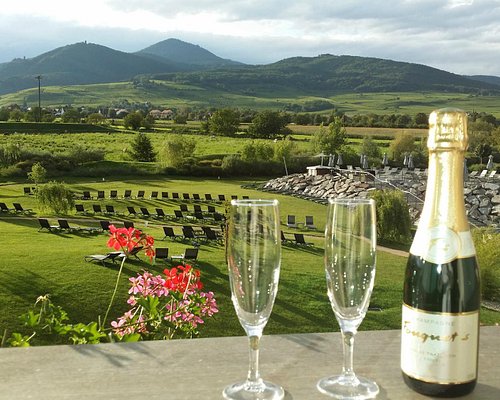
                                       Alsace makes both high quality still & sparkling wines


Forbe’s  called Alsatian wine, "The best, and best value, white wines you've never drunk."  Alsace, a relatively unknown and unfashionable wine region for most Americans, forms France's northeastern border with Germany.  Perhaps Alsace's misconceived association with German sweet wines is the cause for discerning USA wine lovers to miss out on the dry sensational wines of Alsace?   
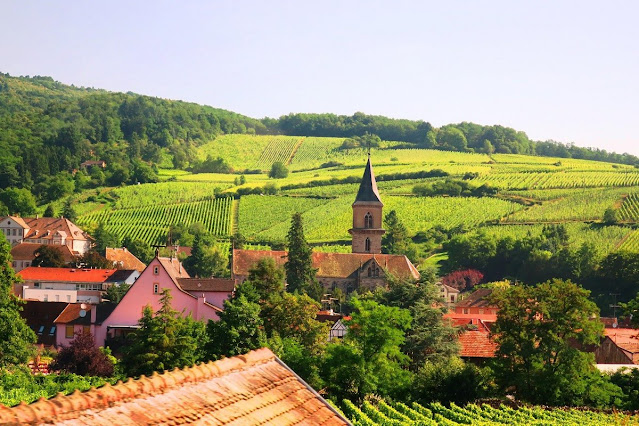
 Alsatian wines are some of the best values on planet earth
 

Wine from Alsace is a phenomenal bargain.   When dining at a Michelin star I always turn to the Alsatian wine section of the wine list.   First, I love these wines---and so do knowledgeable sommeliers who understand their food-friendly beauty.  Second, because of the lower demand for these unknown gems, prices for Alsatian wines represent some of the best values on a wine list. 
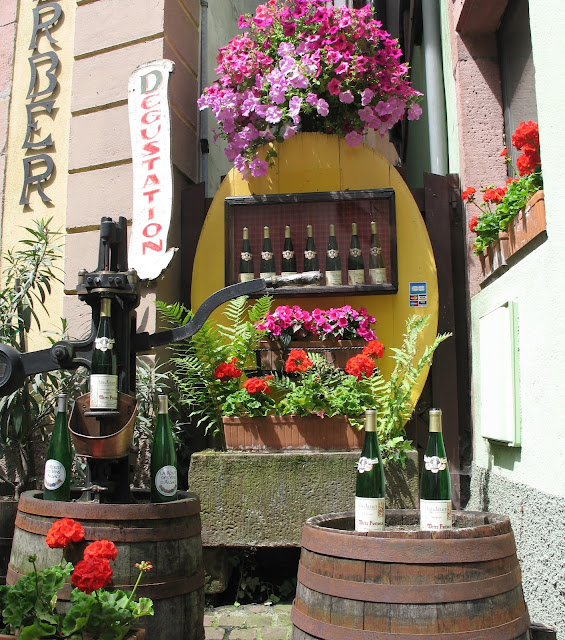
                                     Alsace is a treasure trove for well crafted white wines
       

There are three main white grapes in Alsace:

Pinot Gris

You may know this grape by its Italian name, Pinot Grigio.  While they are the same grape, the varietal reaches rock-star status in Alsace.  Alsatian Pinot Gris is often a full bodied wine with tropical and stone fruit flavors.  Citrus is often present, as is a spicy nuance. 

Gewurztraminer

     This grape may be another reason why Alsatian wines is not fashionable:  no one can       pronounce it (plus this varietal is often associated with its sweet German counterpart).  Dry Gewurztraminer can be quite seductive:  think luscious aromatics like an intoxi- cating perfume.  In addition to floral notes (often roses), there’s also an exotic layering of passion fruit or lychee.    

     Riesling

     Like Gewurztraminer, Riesling is also a highly aromatic grape.   In Alsace young            Riesling flavors can range from lemon/lime to pineapple, apricot and nectarines,            and are often laced often with floral aromas.  The varietal’s high acidity make it an        especially food-friendly choice.
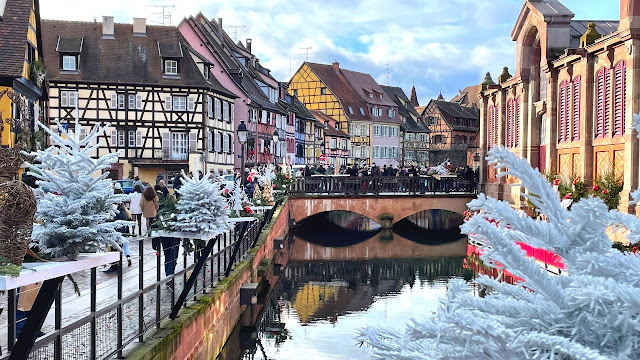
                  The Christmas "marches" in Alsace are some of the most special in Europe

Wine-Knows will be visiting Alsace this year (December 6-16) during the region's world-famous Christmas markets.   With roots in the Middle Ages, modern day Christmas markets are some of the most magical celebrations in all of Europe.  Why not join us to learn about Alsatian wine, and experience Europe like you've never seen it before?

http://www.wineknowstravel.com/christmas-market-itinerary/


Friday, January 31, 2020

Parlez Vous Pinot?


Pinot Noir, named for its pinecone shape, is the ancestor of all Pinot varietals

Chances are even the most novice of wine drinkers have heard of either Pinot Noir or Pinot Grigio.  However, it's possible that even a few veterans may not know about Pinot Meunier, Pinot Blanc, or Pinot Gris...or if there is a connection among any of these grape varieties.

Indeed, all of the above Pinot grapes are related.  Their common name is a French word meaning "pinecone," which comes from the shape of their bunches of grapes (small berries tightly clustered together in the form of a petite pinecone).  Pinot Noir, Pinot Blanc and Pinot Grigio (aka Pinot Gris) are not only related but DNA shows that all three of these grapes are identical, except for a tiny mutation that changed their skin color.  Pinot Noir's skin is black and so named after the French word black, noir.  Pinot Gris/Grigio has a greyish colored skin thus the names which means "grey" in French and Italian, respectively.   Pinot Blanc gets its name from its whitish skin (white in French is blanc).   

Pinot Noir is the founding member of this ancient noble French family of grapes.  One thousand years older than the Cabernet Sauvignon grape, Pinot Noir is not only one of the oldest wine grapes, but is the primary ancestor for many of today's wine grapes.  Pinot Noir has a high propensity to mutate.  It has birthed over 150 different varietals.

Pinot Blanc is just one of the many grapes that have descended from Pinot Noir.  Sometime centuries ago a vine of black Pinot accidentally mutated and produced a shoot of only white skinned grapes.  This single white cane was probably grafted to create a vine that produced only blanc grapes.  Voila.  Pinot Blanc.

Pinot Meunier is also a descendant of the original granddaddy grape, Pinot Noir.  One of the three grapes allowed by law in Champagne, Pinot Meunier is dark skinned and contributes aromatics to the Champagne blend.  Both Pinots Gris and Grigio (the same grape but called different names in different parts of the world) are morphed offspring of Pinot Noir.  

A toast to mutation and le santé in 2020!


Thursday, February 14, 2013

One of the World’s Most Romantic & Scenic


Many of you are probably expecting this article to be about France or Italy…both offer very romantico and attractive wine countrysides.   This Blog is about neither, but instead, a country that is on the other side of the globe.   New Zealand caught me totally by surprise. …dramatic beauty (a kind of Switzerland meets Tahiti), as well as mind-boggling landscapes all surrounded my majestic verdant peaks and empty, endless beaches.   A perfect place for romance.

Another revelation… New Zealand also happens to make fabulous wine.  I’m not a fan of Sauvignon Blanc, especially the grassy herbaceous style.   That being said, I was surprised to find so many Sauv Blancs that were made more in the tropical fruit genre that I enjoy.   Several of them were stunning.   One of my favorite producers was Terra Vin (particularly loved its floral as well as mineral notes, along with its great finish, however, I would have preferred for it to have a little less alcohol).  A deserted beach and two glasses of this well-crafted Sauv Blanc could be a true recipe for some starry-eyes.  

An additional stand-out white was the Viognier from Trinity Hill.  Bone dry, this winner is grown in the South Island’s stony soil.  The winery also made one of the best values we found in our 10 day reconnaissance.  We ended up going back three times to buy additional bottles of their Tempranillo….a steal for $35.  Since then, we’ve found out that this wine has won too many international competition medals to count.  A real Spanish version of romantico.

Trinity Hill’s winemaker has a wife who also makes wine.  (Hard to believe all that talent in one family.)  Her wines are made under the Bilancia label and are show-stoppers.  We found her Pinot Gris (well structured with an intoxicating nose and a fabulous finish) and Late Harvest Viognier (a pineapple and apricot bomb that is only made in the best vintages) to be outrageously grand.  And, what’s more romantic than husband and wife winemakers?

We loved the wines of Unison so much that we ended up inviting the winemaking team to our home in San Diego and they took us up on our offer in August 2012 when we hosted a winemaker dinner.  Their Bordeaux blends are exceptional, worthy of any passionate celebration.

The most romantic and most breathtaking wine district in New Zealand was not near the sea, however, but instead in the middle of the country near an idyllic lake surrounded by year-around snow-capped mountains.   There were many excellent producers we visited but Valli’s Riesling really pulled at the strings of our hearts.  We loved it so much that we chose it for our last night’s dinner…overlooking the lake at Queentown at one of the area’s best restaurants.  Very romantic.

Stay tuned for more details about our 2014 trip to New Zealand.

Happy Valentines Day!