Showing posts with label Pinot Grigio. Show all posts

Monday, February 21, 2022

Alsace’s Unsung Hero Wines


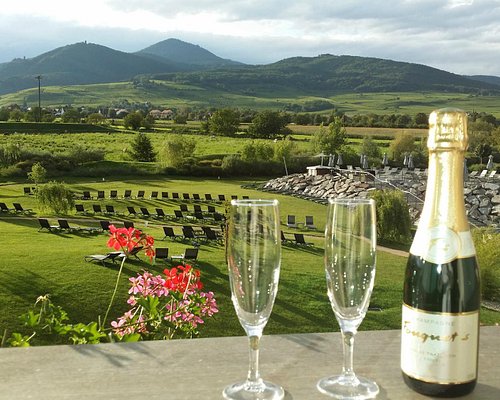
                                       Alsace makes both high quality still & sparkling wines


Forbe’s  called Alsatian wine, "The best, and best value, white wines you've never drunk."  Alsace, a relatively unknown and unfashionable wine region for most Americans, forms France's northeastern border with Germany.  Perhaps Alsace's misconceived association with German sweet wines is the cause for discerning USA wine lovers to miss out on the dry sensational wines of Alsace?   
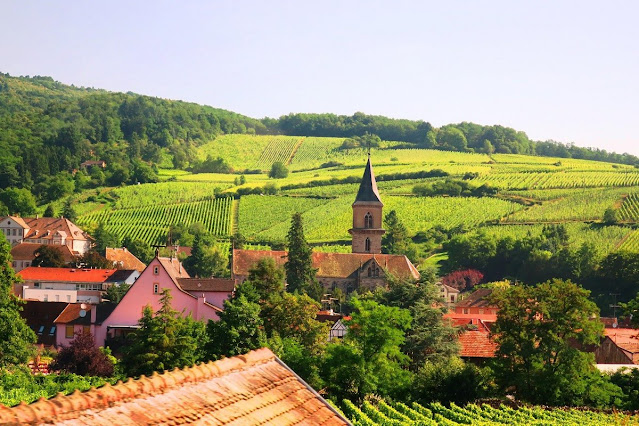
 Alsatian wines are some of the best values on planet earth
 

Wine from Alsace is a phenomenal bargain.   When dining at a Michelin star I always turn to the Alsatian wine section of the wine list.   First, I love these wines---and so do knowledgeable sommeliers who understand their food-friendly beauty.  Second, because of the lower demand for these unknown gems, prices for Alsatian wines represent some of the best values on a wine list. 
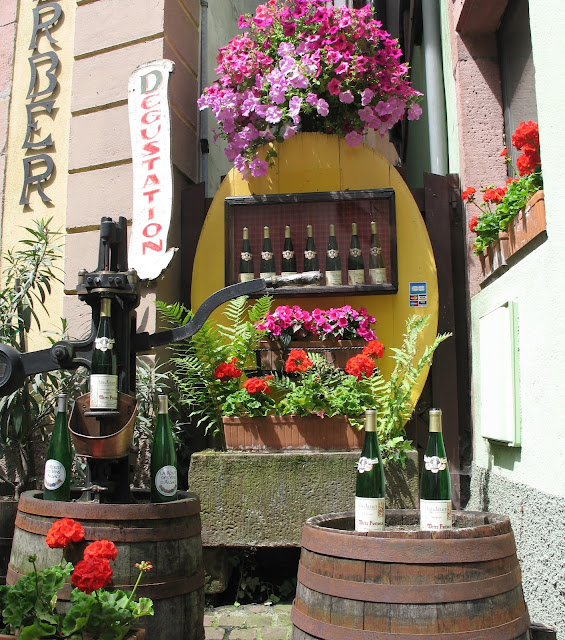
                                     Alsace is a treasure trove for well crafted white wines
       

There are three main white grapes in Alsace:

Pinot Gris

You may know this grape by its Italian name, Pinot Grigio.  While they are the same grape, the varietal reaches rock-star status in Alsace.  Alsatian Pinot Gris is often a full bodied wine with tropical and stone fruit flavors.  Citrus is often present, as is a spicy nuance. 

Gewurztraminer

     This grape may be another reason why Alsatian wines is not fashionable:  no one can       pronounce it (plus this varietal is often associated with its sweet German counterpart).  Dry Gewurztraminer can be quite seductive:  think luscious aromatics like an intoxi- cating perfume.  In addition to floral notes (often roses), there’s also an exotic layering of passion fruit or lychee.    

     Riesling

     Like Gewurztraminer, Riesling is also a highly aromatic grape.   In Alsace young            Riesling flavors can range from lemon/lime to pineapple, apricot and nectarines,            and are often laced often with floral aromas.  The varietal’s high acidity make it an        especially food-friendly choice.
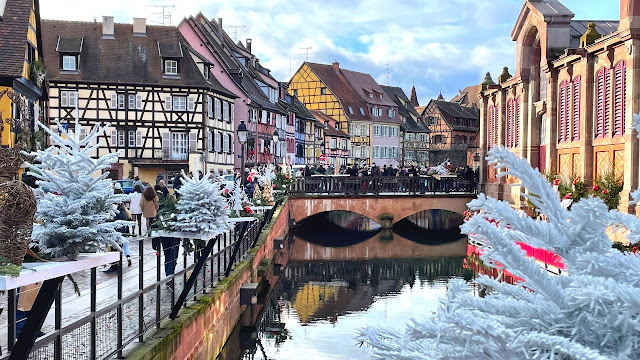
                  The Christmas "marches" in Alsace are some of the most special in Europe

Wine-Knows will be visiting Alsace this year (December 6-16) during the region's world-famous Christmas markets.   With roots in the Middle Ages, modern day Christmas markets are some of the most magical celebrations in all of Europe.  Why not join us to learn about Alsatian wine, and experience Europe like you've never seen it before?

http://www.wineknowstravel.com/christmas-market-itinerary/


Friday, April 3, 2020

Italy's World-Class White Wines


                          Friuli-Venezia Giulia is positioned in Italy's top northeastern corner

In tribute to Italy’s dire situation with COVID-19, my Blogs for the entire month of April will be dedicated to Italia. Today’s article is devoted to the top white wine district in the country, Friuli-Venezia Giulia.  Located in Italy’s far northeastern corner, this magical wine area was once ruled by the Venetian Republic, as well as the former powerhouse Austrian-Hungarian Empire.  Today, it’s the perfect viticultural combination of both of these former rulers:  Italian passion meets Slavic grape varietals.

Friuli-Venezia Giulia produces world-class whites.  The region’s vineyard yields are among the lowest in Italy.  This is the result of Friuli’s quest for quality.  It’s also one of the reasons some of the gorgeous white wines are more expensive than other Italian white wines.  (BTW:  they are worth every Euro).  There are also some sleeper bargains that I have listed below. 

                       Friuli's terroir provides the perfect package for stunning whites

The area’s terroir is critical in making superior white wine.  Bordered on its north by the Alps, these mountains protect the wine region from the dramatic Austrian winter.  The Adriatic Sea frames it’s southeastern border and like all bodies of water, the sea helps moderate the climate.  Friuli’s summer weather is typically characterized with very warm days and chilly nights…perfect growing conditions for grapes to maintain a balance between acidity and ripe sugar levels.  Known as the “diurnal shift,” this significant swing between day and night-time temperatures is seen in every wine region of the world that makes complex wines.  Valley soils are well-drained alluvial matter that have been washed down from the Alps.  Friuli-Venezia Giulia also has rolling hills which enhance drainage.

White grape varieties are not typically seen outside of Friuli-Venezia Giulia.  One of my favorites is Ribolla Gialla (ree-bowl-lah-jawl-lah).  These light-medium bodied wines offer seductive floral aromatics and a mineral-laced citrus palate, along with acidity to create the perfect food-friendly wine.  Friuliano is another varietal from this area.  These wines are fruit-driven with notes of nuts and citrus with a touch of minerality to complete the perfect sip.  There’s also Pinot Grigio, but don’t think for one moment that it’s not top notch.  Instead, think of complex tropical fruit layers and lingering finishes.

                                        A winemaking castle in Friuli-Venezia Giulia

Below are my suggestions for Friuli-Venezia Giulia that are available in the US:

  • Klet Brda “Bagueri” Ribolla Gialla:  $30
  • Gradis’Ciutta Gratins Collo Pinot Grigio:  a steal at $15
  • Vigne Zamo Vigne Cinquant’Anni Friuliano:  $35 & worth every penny
  • Torre Rosazza Pinot Grigio:  a bargain $19


Amore a Italia!


Friday, January 31, 2020

Parlez Vous Pinot?


Pinot Noir, named for its pinecone shape, is the ancestor of all Pinot varietals

Chances are even the most novice of wine drinkers have heard of either Pinot Noir or Pinot Grigio.  However, it's possible that even a few veterans may not know about Pinot Meunier, Pinot Blanc, or Pinot Gris...or if there is a connection among any of these grape varieties.

Indeed, all of the above Pinot grapes are related.  Their common name is a French word meaning "pinecone," which comes from the shape of their bunches of grapes (small berries tightly clustered together in the form of a petite pinecone).  Pinot Noir, Pinot Blanc and Pinot Grigio (aka Pinot Gris) are not only related but DNA shows that all three of these grapes are identical, except for a tiny mutation that changed their skin color.  Pinot Noir's skin is black and so named after the French word black, noir.  Pinot Gris/Grigio has a greyish colored skin thus the names which means "grey" in French and Italian, respectively.   Pinot Blanc gets its name from its whitish skin (white in French is blanc).   

Pinot Noir is the founding member of this ancient noble French family of grapes.  One thousand years older than the Cabernet Sauvignon grape, Pinot Noir is not only one of the oldest wine grapes, but is the primary ancestor for many of today's wine grapes.  Pinot Noir has a high propensity to mutate.  It has birthed over 150 different varietals.

Pinot Blanc is just one of the many grapes that have descended from Pinot Noir.  Sometime centuries ago a vine of black Pinot accidentally mutated and produced a shoot of only white skinned grapes.  This single white cane was probably grafted to create a vine that produced only blanc grapes.  Voila.  Pinot Blanc.

Pinot Meunier is also a descendant of the original granddaddy grape, Pinot Noir.  One of the three grapes allowed by law in Champagne, Pinot Meunier is dark skinned and contributes aromatics to the Champagne blend.  Both Pinots Gris and Grigio (the same grape but called different names in different parts of the world) are morphed offspring of Pinot Noir.  

A toast to mutation and le santé in 2020!


Friday, September 6, 2019

8 Pinot Noir Facts That May Surprise You


                        Salmon screams for Pinot---the varietal is a fabulous choice for fish

Pinot Noir is one of the first red wine grapes to be harvested each season.  The warmer regions in California began picking the varietal a week ago.  In Germany and Burgundy the harvest for Pinot won't occur for another week or two.  Here are some interesting tidbits for all the Pinot lovers during the time of its harvest.

1.  Pinot Noir, a 1000 years older than Cabernet, is one of the oldest wine grapes on the planet.

2.  It has the same DNA as Pinot Blanc & Pinot Grigio---the latter two are simply color mutations of the same grape.

3.  Pinot Noir is one of the parents of Chardonnay.  

4.  Germany is largest producer of Pinot Noir in the world.

5.  Pinot Noir actually means "black pine" in French.  It is named after its pine cone shaped bunches of fruit.

6.  Pinot Noir is more fickle to grow than many other grapes.  Its thin skin is sensitive to the elements and to pests.

7.  All red Burgundy is 100% Pinot Noir.

8.  Pinot Noir is the perfect pairing for food.   It can swing both directions---from seafood and poultry, to red meats.