Showing posts with label wine science. Show all posts

Thursday, October 27, 2022

Why do Wines Have a Peppery Smell/Taste?

                   Syrah is one of the most well known grapes for its peppery characteristics

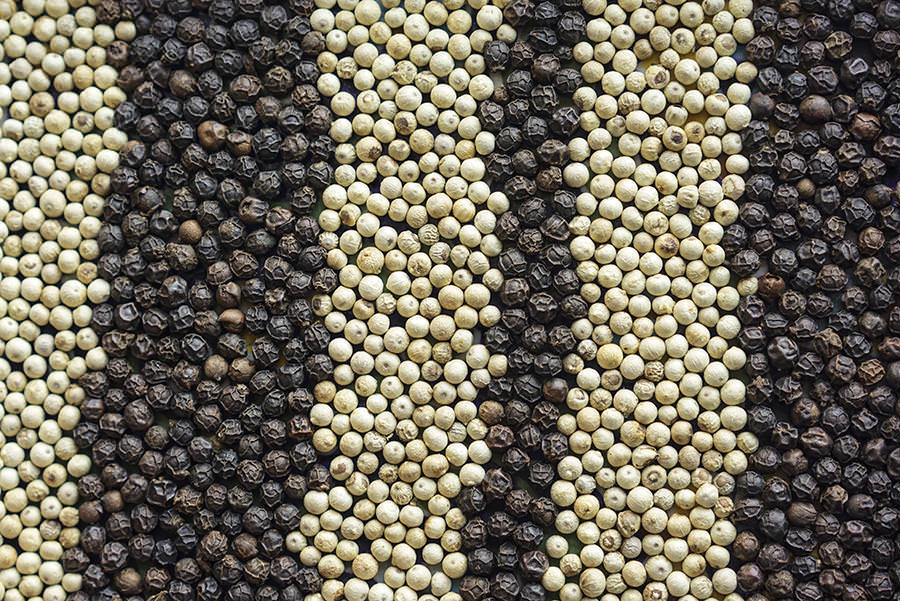
If you’re a Syrah lover (especially those produced in warm climates such as the Rhone Valley), then you’re most likely more than aware of this varietal’s pepper nuances.   There’s a scientific reason for this pepper and it has do with a chemical called rotundone.  This same substance, rotundone, not only appears in Syrah grapes but occurs in both white and black peppercorns.  Unlike many parts of a grape that are changed during the fermentation process, rotundone survives fermentation and ends up in your glass creating a spicy, peppery character.


Rotundone is a relatively newly discovered compound.   It was identified only fifteen years ago by researchers who were on a quest to investigate the science behind the peppery smell in wine.  The chemical, present in the skins of grapes, is found in miniscule amounts.  But, rotundone is such a  powerful aromatic compound that one teaspoon can cause an Olympic size pool to smell like the inside of a pepper grinder.


Both the white pepper smells of cool weather Syrahs, as well as the black pepper of Syrah grown in warmer terroirs are due to rotundone.   And, it’s not only limited to Sryah grapes.  In fact many varietals including Cabernet Sauvignon, Grenache, Pinot Noir and even the white varietal Gruner Veltliner have been discovered to have rotundone.  Interestingly, the rotundone chemical is also present in marjoram and even some cocoa powders, and the smell is also present in well-aged leather.


Friday, November 8, 2019

The Science Behind Grass in Your Glass


                     New Zealand's Greywache Sauv Blanc is one of the country's benchmarks
                                
This is the third in a four-part blog series on aromas and flavors in wine that are directly related to chemicals produced during the wine-making process.  Today, we’ll discuss the grassy smell and taste found in wine.  These isn't a figment of your imagination, but is a scientific fact that occurs as a direct result of chemical changes during fermentation.

Have you ever wondered why your Sauvignon Blanc (SB) is reminiscent of freshly mowed grass?  This classical grassiness taste and nose found in many SB’s is due to chemicals called aldehydes.  These compounds, released during fermentation as yeasts turn SB grape sugar into alcohol, evoke the smell of just-cut grass.  The SB grape has  the ability to produce high level of aldehydes.  The perception of grassiness is driven for the simple reason that these same chemicals are also found in grass.  Cutting grass releases these highly fragrant chemicals into the air.

The less ripe the SB grape, the higher the propensity is for aldehydes, and thus the stronger the grassy profile.  New Zealand SB’s are known for their traditional grassy notes.  Kiwi SB’s are purposely picked a little less mature for this reason, but also responsible is the moderate climate where this country’s SB grapes are grown.  The Loire Valley also is famous for SB.  As this area is fairly far north, SB often can’t ripen to its fullest degree, so Lorie wines classically also have grassy nuances.   In contrast, California SB has abundant sun and generally is picked more mature.  This translates to less intense grassy nuances.  In Cali’s warmer growing areas, SB’s actually can take on ripe tropical notes.

Next week we’ll finish this series by discussing one of the common flavors in sparkling wine which is also caused by the science during fermentation.