Showing posts with label wine flavor. Show all posts

Thursday, October 27, 2022

Why do Wines Have a Peppery Smell/Taste?

                   Syrah is one of the most well known grapes for its peppery characteristics

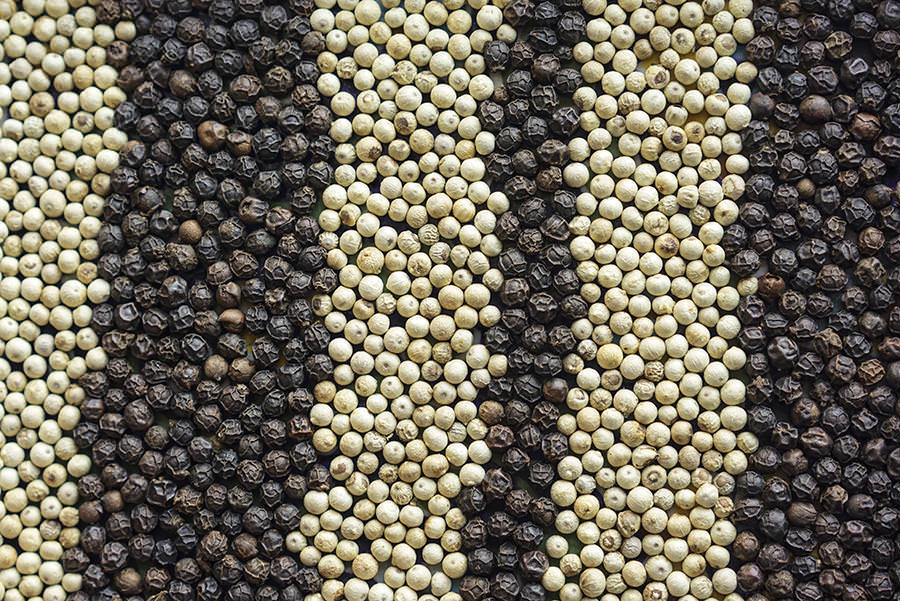
If you’re a Syrah lover (especially those produced in warm climates such as the Rhone Valley), then you’re most likely more than aware of this varietal’s pepper nuances.   There’s a scientific reason for this pepper and it has do with a chemical called rotundone.  This same substance, rotundone, not only appears in Syrah grapes but occurs in both white and black peppercorns.  Unlike many parts of a grape that are changed during the fermentation process, rotundone survives fermentation and ends up in your glass creating a spicy, peppery character.


Rotundone is a relatively newly discovered compound.   It was identified only fifteen years ago by researchers who were on a quest to investigate the science behind the peppery smell in wine.  The chemical, present in the skins of grapes, is found in miniscule amounts.  But, rotundone is such a  powerful aromatic compound that one teaspoon can cause an Olympic size pool to smell like the inside of a pepper grinder.


Both the white pepper smells of cool weather Syrahs, as well as the black pepper of Syrah grown in warmer terroirs are due to rotundone.   And, it’s not only limited to Sryah grapes.  In fact many varietals including Cabernet Sauvignon, Grenache, Pinot Noir and even the white varietal Gruner Veltliner have been discovered to have rotundone.  Interestingly, the rotundone chemical is also present in marjoram and even some cocoa powders, and the smell is also present in well-aged leather.


Friday, November 1, 2019

How Can Wine Smell like a Banana?


                 Banana, green apple & gooseberry profiles are the result of chemical reactions

Why in the world does a wine taste or smell like any fruit other than a grape?  This is the second article in a blog series on the science behind certain flavors and aromas in wine.  This particular article will discuss three fruit flavors/fragrances that can appear in wine.  In fermentation, yeasts eat the sugar in the grapes and convert it to alcohol.  In this process thousands of various chemical compounds are produced.  All three fruit flavors below are a result of these complex chemical processes.

Banana
The banana-like smell and taste is a result of a chemical compound by the name of isoamyl acetate, a by-product of yeasts during fermentation.  The isoamyl acetate also occurs naturally in the banana plant, as well as in pears.  It is present in most wines, however, it is below the threshold of one’s ability to taste it.  It should come as no surprise that artificial banana flavoring is made from isoamyl acetate.

This banana smell and taste can appear in both white and red wines.  Aromatic white wines that are fermented at cooler temperatures (lower temperature enhances the amounts of isoamyl acetate) often display ripe banana notes.  For example, that banana nuances can often be found in Chardonnay, Pinot Gris and Albarino.  Beaujolais is one of the few red wines that has a banana profile.


Green Apple
This flavor and smell profile found in wines is due to the lactic acid which is created during malo-lactic fermentation.  Lactic acid gives off green apple-like scents and flavors, in addition to a creamy mouth feel.  Wines that have pronounced green apple character are classically cool climate dry whites such as Chardonnay, Riesling and Gruner Veltliner.


Gooseberry
Like green apples and banana nuances, this flavor and aroma is not part of the grape.  Gooseberry is created during alcoholic fermentation and is a by-product of yeast activity.   This fruit is typically less sweet so its taste is on the tart side (think pucker),  but gooseberries can also have a slightly floral scent.  Generally found in aromatic whites, gooseberry is classically associated with Sauvignon Blanc (particularly those from cool weather regions such as coastal New Zealand, or France’s Loire Valley).

Keep in mind that each person has a different innate level of tasting various substances.  It doesn’t matter what you taste or don’t taste in a wine.  The only thing that counts is if it pleases you.