Showing posts with label Croatia. Show all posts

Friday, August 4, 2023

Croatia’s Venetian Gem


                Tiny Trogir island will be the starting point for Wine-Knows' yacht week in Croatia

Did you know that Croatia’s coastline was controlled by the powerful Venetian Empire for 350 years?   One of the most enchanting of all Venetian settlements along Croatia’s 1,000 mile coastline is the small island of Trogir (“Tro  gear”).  In fact, it oozes so much Venetian charm that Orson Welles chose the island to film his movie the Merchant of Venice in the 1960’s.   While many movies have been utilized Trogir as a backdrop, it has recently skyrocketed to fame for the island's use in the Game of Thrones.

                       These stunning buildings in Trogir could easily line Venice's Grand Canal       

Located just off the coast near the city of Split, Trogir is joined to the mainland by two bridges.   In 1997 the United Nations' cultural arm decided that the entire island was of such historical significance that it was granted special protection as a World Heritage Site (UNESCO).  This basically means that it now takes an act of God to change anything on the island.

                Trogir's main square is the antithesis of Venice's St Mark's in a good way

Trogir is a treasure trove of Venetian architecture from the 13th - 18th centuries.   Wander its tiny backstreets and you’ll swear you’re in an authentic Venetian neighborhood (today, that’s an oxymoron as few Venetians can afford to live in Venice).   You’ll know you’re not in Venice by the absence of endless souvenir shops, designer boutiques, and hordes of tourists jockeying for a table on its main square where small orchestras entice visitors to stop for a $20 coke or cappuccino.  Trogir’s far more simplistic main square has rustic charm for a fraction of the cost (and minus the pigeons) of St Mark's in Venice.

                 This scene is < 50 meters from Trogir's central square...not a single tourist in sight

The island of Trogir was purposely chosen by Wine-Knows as the boarding location for our private yacht.   For travelers arriving early a walking tour with a local guide is recommended as the best way to experience charming Trogir.   (Guides can be hired in advance via the web, or once you arrive on the island the concierge at the Brown Beach Hotel can assist with booking).


See you in Trogir!


Sunday, June 25, 2023

Split: the Hottest Chill City in Croatia

                   Wine-Knows will end its private yacht trip this September in Split 

Split is loved by travelers of all ages from a plethora of countries around the globe.  The city exudes a relax vibe.  Some might think it’s because of its drop-dead location on an exquisite palm tree-lined bay.  Others may attribute the calm to its pedestrian only historic town center filled with beautiful outdoor restaurants on enchanting small squares that make for perfect chill-spots.  And the weather?  Even on warm days, the ancient part of the city remains cool, shaded by a labyrinth of tall stone buildings and narrow passageways.  Split represents the best of slow-living.

                                   Diocletian's palace is even more special after dark

The chill vibe of Split may not be by accident.  Although the Greeks founded the city about 300 BC, the Roman Emperor Diocletian 700 years later chose Split to retire.  Diocletian built a massive palace and his final retirement residence occupies today roughly half of Split’s ancient city.  The huge palace (really a fortress) featured expansive areas for personal use and entertaining the masses, but also served as quarters for his large military troops.

                Portofino not only serves terrific seafood, but has a good wine list & sublime service

Diocletian’s Palace is a popular stop for travelers on a day trip from Dubrovnik, however, to best soak up the city’s “relax” atmosphere an overnight stay in mandatory.  Experiencing the old town after all the day trippers depart is part of the city’s magic.  Don’t think of staying anywhere but in the heart of the old town.  Also, do consider eating at the Zinfandel Wine Bar or Portofino (reserve at both, and request an outdoor table at Portofino or a coveted window-front seat at Zinfandel.)

                             Split's upmarket restaurants offer a dazzling area of fish & seafood
 

Split will be the final stop of Wine-Knows' private yacht extravaganza.  Travelers are encouraged to spend at least two nights soaking up its chill-vibe prior to boarding their international flights home.   

BTW:  There is one cabin remaining on Wine-Knows’ luxurious private chartered yacht.   www.WineKnowsTravel.com


Tuesday, June 6, 2023

Croatia’s Super-Star Wine Island: Korčula

                                 Vineyards are located only a few miles from Korčula town

While one can find local wine on nearly every Croatian island, Korčula (KOR-chu-la) has a reputation for making world-class wines.  The island was first colonized by seafaring Greeks in the 4th century BC who brought with them wine grapes.  Fast forward twenty-four centuries and this fertile plain planted by the Greeks remains unchanged.

       Wine-Knows' private yacht will stop in Korcula town, as well as visit its surrounding vineyards

                    Korčula's Venetian architecture reflects its rule for centuries by Venice

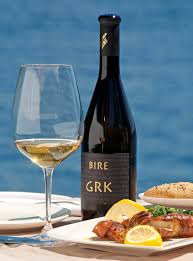
Although the Greeks brought the island’s first grapes, Korčula has birthed several of its own varieties.  Two of these grapes have become international stars in the wine world.  Grk (think “Greek” without the vowels), and Pošip (PO-ship) produce high quality dry white wines.  Grk, grown in the island’s sandy soil, offers an interesting combination of melon and pear, laced with minerals and white pepper.  Pošip, the other popular indigenous grape, serves up a full-bodied glass of apples, vanilla, citrus with subtle almond nuances.

                          The Grk grape's birthplace is Korčula & its only grown on the island

The Wine-Knows’ private yacht tour of the Croatian coastline will be visiting two different areas on Korčula.   The first is Korčula town, one of the best preserved medieval towns in the Adriatic, it is home to the Dimitri Palace five star hotel.  This Relais & Chateaux member property boasts a Michelin star restaurant in a drop-dead gorgeous setting along the sea.  Their restaurant was awarded Croatia’s Best Restaurant in the 2022 World Culinary Awards.  A few miles outside of Korčula town are the prime vineyards of Lumbarda where the group will have a private wine tasting.

     Vineyards are on the sea, thus the sea salt spray & rocky soil add minerality to the wines


For more information about the private yacht week in September, please click below:

https://www.wineknowstravel.com/croatia-itinerary/ 


Tuesday, May 23, 2023

Hvar Island: Jet-Set Sophistication

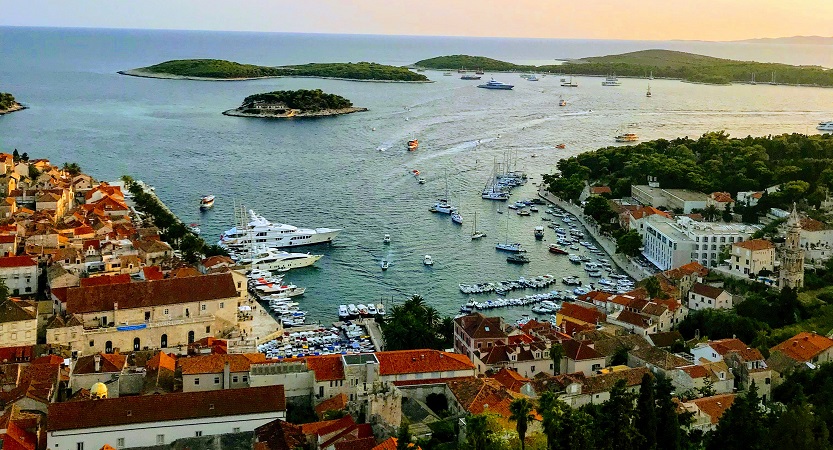
                                    Hvar town & seascape as viewed by its hilltop fortress

Last week Croatia's island of olives, Brač, was featured.  Today we travel to the “lifestyles of the rich & famous”  Hvar, the second island on Wine-Knows’ private yacht itinerary this September.   While Brac’s economy is based on olive oil, fishing, sailing and wine, its luxurious neighbor Hvar receives the majority of its revenue from upmarket tourism:  mega Euro yachts bring celebrities such as  Bill Gates, Tom Hanks, Georgio Armani, U2’s Bono, and even Beyonce.

          Look carefully behind tourist sunglasses & you may find Tom Cruise or Ellen DeGeneres

Hvar ("huh war") is considered one of the Croatia’s prettiest and the island has always attracted an elite group of visitors.  In the 1930’s Wallis Simpson and the former King of England vacationed here.  In the 1960’s it was Jackie Onassis and Orson Wells.  All arrive by private yacht and their preferred harbor is the island’s namesake town, Hvar.   A stroll down Hvar town’s port is like a walk down a maritime Rodeo Drive.  Bazillon Euro yachts with helicopter pads, indoor and outdoor swimming pools, outdoor fire-pits and indoor fireplaces, line the photo-op quay and mix with simple but colorful local fishing boats.

                                Diners are in for a terrific bonus:  Hvar makes good wine!          

Regardless, if you arrive by a private yacht or by the jam-packed public ferry, the town of Hvar is an alluring little jewel-box.   Travelers are greeted by a mesmerizing panorama: a delightful small harbor with a gorgeous promenade, palm trees and bougainvillea, handsome stone buildings topped with bright red tile roofs, and imposing 13th century town walls.   The cherry on top is the town’s iconic 16th century hilltop fortress.  A twenty-minute uphill walk is a must-do for fit visitors as the sweeping views from the fortress are breathtaking.

                                  Don't miss the Loggia, Clock Tower & hilltop fortress

Other not-to-miss sites in Hvar town are the Venetian Loggia and Clock Tower.  Built in the 13th century, the Loggia is a striking Renaissance structure. Beside it sits a 19th century Clock Tower.   Both of these edifices are now part of the Hotel Palace, a 5 star property belongs to the Leading Hotels of the World  group. Nearby is the town’s pretty main square, dominated by St. Stephens Cathedral.  Side streets off the square hide some cozy cafes and small art galleries, as well as a sprinkling of upmarket boutiques and souvenir shops.

But wait!  There's more to Hvar.  The island has been recognized by the United Nations and awarded with a World Heritage designation for its contribution to international agriculture.  The ancient Greek system of using geometrics to divide vineyards into smaller parcels, stone walls to separate the plots, strategically placed small stone huts, and the very first rainwater recovery system, was deemed by the UN to be of “Outstanding Universal Value.”


There are one or two spaces left on the September 2-9, 2023 private yacht.  For detailed information on the private yacht that Wine-Knows has leased, check out:

https://www.wineknowstravel.com/croatia-itinerary/


Tuesday, May 16, 2023

Croatia's "Olive Island"

                                          Brač is the third largest island in the Adriatic Sea

With more than a million olive trees, an Olive Oil Museum, the Olive Harvest Championship, the very first Olive Oil Cooperative in Croatia, and a three mile Olive Trail for tourists that passes through centuries old olive groves, there’s no wonder why the Croatian island of Brač (rhymes with watch) is appropriately named “the olive island.”  Located midway along the country’s 1,000 mile coastline, the island is 10 miles from the mainland city of Split. While olives are grown in many parts of Croatia, Brač is the nation’s largest olive grove.

                                  Centuries old wild trees & cultivated olive farms dot the island

It is believed that the ancient Greeks brought the first olive trees to the island.  Up until the 16th century, however, there were no cultivated olive farms.  Instead, trees grew wild.  Recognizing the valuable commodity, the Venetian rulers passed laws in the 17th century to encourage planting of olive trees.  They also instituted edicts to protect the island’s olives:  anyone found harming a tree was banned from the island for ten years.  By the 18th century, olive oil had become big business on Brač. 

                     Wine-Knows will tour an olive oil producer on their yacht trip in September

Brač’s olive oils are world-class.  The island’s unique geological and climatic conditions, in addition to hundreds of years of skills acquired by Brač’s olive growers, contribute to the quality of the oils produced.  Also, an olive variety only on Brač, oblica, further contributes to creation of the island’s distinctive oils.

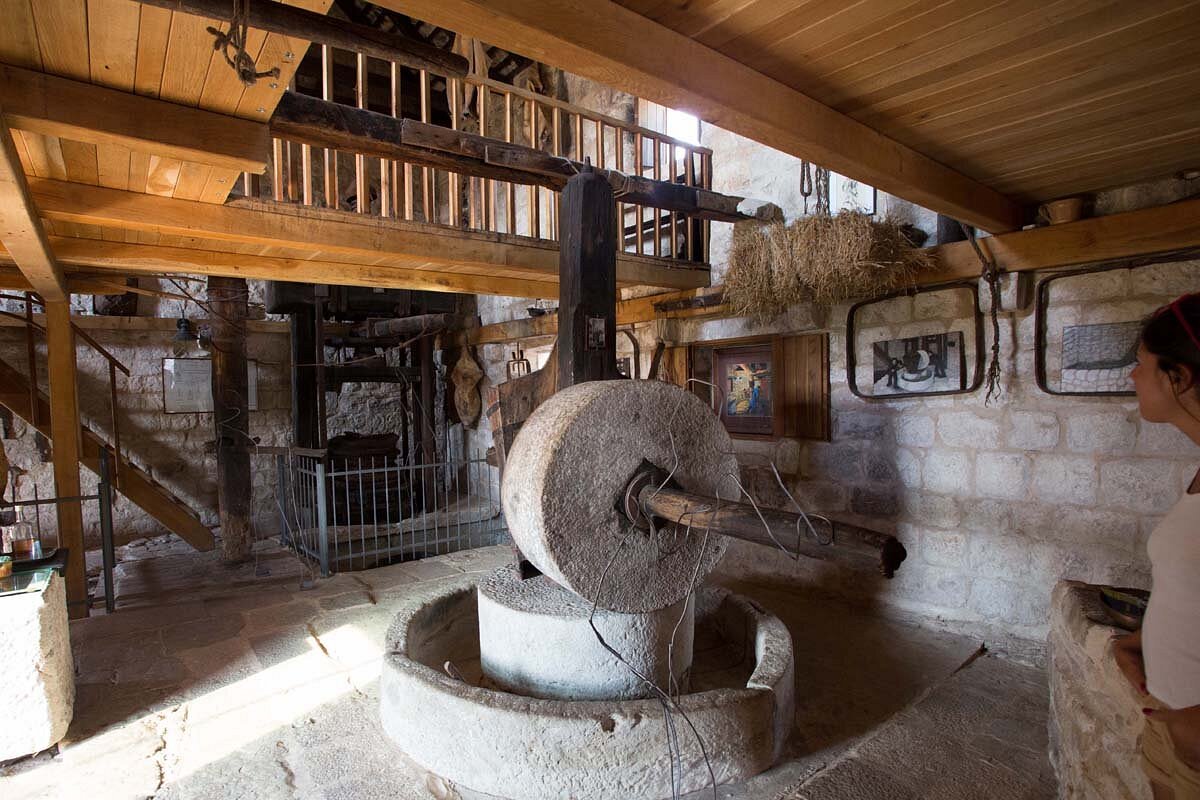
                           An ancient olive press in the local museum shows how oil was made

Recently, olive oil from Brač was granted protection by the E.U.  This means that only olive oil made on the island of Brač can be called Brač.  Furthermore,  the extra virgin oil must contain a minimum of 80% of Brač’s indigenous olive variety oblica.   All bottles of the island’s oil display a special label showing its EU protected status. This label guarantees the consumer that this is the real-deal Brač oil, and not some knock-off from Algeria.

                       The EU label guarantees the authenticity of the product to the consumer

This September Wine-Knows will visit the island of Brač for an olive tasting.  The private yacht that Wine-Knows has leased has one last cabin for one or two persons available.  For more information about this Croatian yacht trip, consult our website,

https://www.wineknowstravel.com/croatia-itinerary/


Friday, May 5, 2023

Sibenik, Croatia---a UNESCO Charmer

           Join Wine-Knows in September on their private yacht charter along the Croatian coastline

Only five cities around the globe have two UNESCO World Heritage monuments.  Sibenik is one of them.   The United Nations grants this special status to sites with significant cultural, historical or scientific importance.   Places such as the Great Barrier Reef, Acropolis, Taj Mahal, Leaning Tower of Pisa, Westminster Abbey, and our own country’s Grand Canyon and Yosemite are UNESCO World Heritage sites.  The fact that the small town of Sibenik has two spots on the list of world treasures is extraordinary.


                                 Backstreets create ja perfect stage for the movie industry

Sibenik is also the oldest town in Croatia.  Tossed back and forth between the Venetian Republic, the Byzantine Empire, and the Austrian-Hungarian Dynasty, the town is a medieval treasure trove for architecture.  It’s no wonder that Game of Thrones chose Sibenik for filming as its labyrinth alleyways make for picture-perfect Hollywood sets of Gothic, Byzantine and Renaissance splendor.

                               Invaders had to sail past this Fortress to enter  Sibenik's bay

The St. Nicolas Fortress is one of the coveted UNESCO sites.   Located on a small island protecting the entrance to Sibenik’s bay, this fortress is one of the best preserved on the Dalmatian coastline.  The Venetians built St. Nicolas in the 16th century to fend off maritime attacks by the Turks.  Shaped like an arrow, with a seemingly impenetrable exterior protected by 32 cannons, the fortress was designed to send a “don’t mess with me” vibe.

                         Wine-Knows will have a private tour of this UNESCO masterpiece

The Cathedral of St. James is the other UNESCO gem.   The church was initially conceived to be a simple one, however, several successive Italian architects over a period spanning more than 100 years turned the building into something far from simplistic.  The end result was a perfect fusion of Gothic and Renaissance.


Wine-Knows will visit Sibenik on this September’s private yacht tour of the Croatian coastline.  There are still one or two spaces left on the September 2-9 week (the week of 9-16 is old out with a waiting list).

https://www.wineknowstravel.com/croatia-itinerary/


Friday, March 1, 2019

California Dreamin’.....TRUFFLES !


                             A Wine-Knows group recently attended the Truffle Festival in Italy

Dreams do come true:  truffles are now being harvested in Northern California.  It’s ironic that some of the first truffles are coming from the Sierra foothills, the area of the state’s historic Gold Rush in 1849.  There’s definitely “gold in them their hills,” and it's now in the form of black truffles.

For those of you who don’t know truffles, they are among the culinary world’s priciest treasures.  White truffles, the most expensive gourmet item on the planet, even exceeds the price of caviar.   Black truffles, the species now grown  in California, are much less aromatic and flavorful but they are still gastronomic gems.   The black truffle is one of Southern France and Italy’s Umbria most prized food products.

The foothills of California are not the only site in the state where truffles have been harvested this year.  Some ten years ago several farmers in Sonoma wine country decided to plant oak and chestnut trees (both of these trees are famous in Europe for attracting truffles).  The trees were inoculated with the truffle spores.  Truffles grow underground with the help of Mother Nature near the roots of these trees in France, Italy and Croatia…so why not California with a little help of science? 

While there are several truffle pioneers in California, one of the most famous is  Tuck Taylor.  Once in charge of the French Laundy’s garden, Tuck is now employed by the Jackson Family Wine Company.  The Jackson Family operation harvested 25 pounds of truffles in their first season.  Most of these truffles were sold to the gourmet temples of dining in Northern Cali.  It’s interesting to note that other truffle orchards have been planted in the San Luis Obispo area and as far north as Mendocino county.   None of them are producing truffles yet, but it often takes from 5-10 years for truffles to propagate.

Ten years ago the idea of growing truffles in California was simply a dream.  And, I’m already dreaming of my first bite of the golden state’s black truffles.


Friday, May 30, 2014

Chardonnay is Croatian!

                                       Jaw-dropping vineyards along the Croatian coast

Advances in the science of DNA have led to miracle cures in treating diseases, putting heinous criminals in jail, and are also responsible for authenticating the origins of many of the world’s wine grapes.  Chardonnay, long thought to be native to France, has now been found to have Croatian roots---or, at least, the maternal part of the grape is indigenous to Croatia.  The story goes something like this…

Genetic plant scientists at U.C. Davis have proven that the Gouais Blanc grape, native to Croatia, is the mother of Chardonnay.  It is believed Gouais Blanc was brought to France by the Romans.  While seldom grown any where in the world today, this white grape varietal spread quickly across most parts of France in medieval times.  Gouais Blanc crossed in the vineyards of Burgundy centuries ago with Pinot Noir to create Chardonnay.  

While Chardonnay is certainly the most famous offspring of the Gouais Blanc, DNA fingerprinting by researchers has further shown that the Croatian grape birthed many other wine grapes.  Gouais Blanc is an ancestor of Aligoté, Auxerrois, Gamay Noir, and Gamay Blanc.

Today, there is little Gouais Blanc grown in Croatia, however, ironically, Chardonnay is becoming more popular.  Especially in the north of Croatia, near the Italian border, Chardonnay plantings are increasing.   Chardonnay pairs well with the fish-based cuisine of Croatia’s 1,000 mile coastline.  

Another connection of Chardonnay to Croatia is via the illustrious winemaker, Mike Grgich.  Born in Croatia, Grgich (who immigrated to the Napa Valley) changed the course of California winemaking in the 1970's when working as the winemaker for Chateau Monhelena.  In the world famous tasting in Paris  (which became a book titled Judgement in Paris, as well as served as the basis for a film Bottle Shock), his Chardonnay beat out some of France's most revered Chardonnays in a blind tasting.  This moment catapulted California's wine industry into a different stratosphere.

Chardonnay is intrinsically linked to Croatia.  Come join us this fall in Croatia for our harvest tour to learn even more information about the varietal and its homeland---we have one spot remaining.


Friday, March 7, 2014

Croatian Olive Oil Tops International List

Istrian Olive Oil with the area's coveted truffles

Olive oil is a symbol of the Mediterranean so it’s no surprise that Croatia, with a 1,000 mile coastline, garnered top scores among oils from >40 countries.  The only region to out-rank Croatia was Tuscany in Italy.  Nearly 50 brands of extra-virgin olive oil from northern Croatia are rated among the best in the world.  Accolades about Croatian olive oil has also been received from the TV food personality Anthony Bourdain.

But, all of the current hullaballoo about Croatian olive oils is somewhat a mystery to Croatians as they’ve grown up with local olive oils as long as they can remember.  After all, knowledge of olive cultivation and oil processing was brought to Croatia by the ancient Greeks.  In the Roman period, olive oil from the Istrian Peninsula of Croatia was regarded as one of the best in the entire Empire.  So, why all the attention now on something that’s been a given in the area for 2,000 years?

That being said, the current press on the impressive quality of olive oils in Croatia has sparked a flurry of others jumping on the bandwagon.  Once deserted farm land is now being planted with olive groves.  Farms that produced vegetables are also planting olive trees.  Vineyards are now adding olive trees in vacant areas adjacent to the vines.

Coming with us this September to Croatia?  You’ll be visiting one of the top olive oil producers in the country and sampling throughout the 10 day trip a variety of olive oils.  For more information about the trip: http://www.wineknowstravel.com


Sunday, October 27, 2013

Prosecco is CROATIAN in Origin !


DNA technology is responsible for apprehending criminals, curing diseases that were once thought incurable, as well as finally putting to rest the misleading origin of many of the world’s wine grapes.  Prosecco, an increasingly popular Italian sparkling wine, is one of the latest to have its birthplace accurately identified…and it’s not Italy!

First things first.  Prosecco is the name of the grape, but it’s also the name of the bubbly.  This wine comes from the hills outside of Venice.  A few years ago, this area was granted a special status (DOCG) by the Italian government.  Similar to the Italian wine laws that protect the coveted Barolo, Barbaresco and Brunello de Montalcino, legally only grapes from the Prosecco area can be used to make the sparkler.  The law is meant to protect “knock-off” bubblies from being called Prosecco. 

Now, back to the DNA findings.  The Prosecco grape has been shown through genetic analysis to come from Croatia…probably the Istrian Peninsula which is contiguous with Italy.  (After World War I Istria actually became part of Italy, but it was given to Yugoslavia post World War II.  Yugoslavia was later carved up and the Istrian Peninsula became part of Croatia.)   Prosecco’s Croatian origin has caused quite a scandal in the European Union (EU).   The new Italian wine laws granting a protected place of origin (DOCG) to Prosecco have mandated that Croatia’s “Prosec” (a sweet wine) must change its name to something else as it’s too similiar to the protected name of Prosecco.  How ironic is that?  The grape ends up being Croatian by birth, but the Croats have to change the name of their wine to accommodate Italy’s wine laws.

The 2014 tour to Croatia has the option of starting in Venice.  Come have a Bellini (Prosecco mixed with peach juice)  with us on the Grand Canal, and then we’ll hop a short ferry to the Istrian peninsula where we’ll sample their Prosec….and we’ll certainly not touch the subject of EU politics.

Sunday, October 6, 2013

Croatia---the New Tuscany

                                                       Croatia or Tuscany?  Croatia!
                                                      
First the bad news: Croatia is no longer a best-kept secret.  But, the good news is that it if you’re a lover of Tuscany, you’re going to fall head-over-heels for northern Croatia.  I find Croatia’s Istrian peninsula (which borders Italy) has a Tuscan feel reminiscent of the Tuscany I found during my first visit in the mid-1970’s…before this spectacular countryside became the darling poster-child of all of Italy.  Much of the Tuscany I loved is no longer.  Istria, however, catapults me back to the Tuscan countryside of 40 years ago with its jaw-dropping rolling hills dotted with castles, boutique wineries, artisanal olive oil producers, and a flourishing foodie scene---all with significantly fewer tourists and surrounded by a blow-your-mind coastline of epoch beauty. 

Like Tuscany, Istria has a long tradition of wine-making.  Similarly to Tuscany, it focused for years on quantity rather than quality.   In Italy, the change came in the 1980’s as the Tuscans began experimenting with international grape varieties such as Cabernet Sauvignon, and adopting stringent quality control practices.  In Croatia, the quality initiatives didn’t begin until post-communism in the 1990’s, when a wave of young Croatian winemakers began pushing the envelope.  Applying the latest wine technology, hiring well-known international wine consultants and reducing their yields, the Croats started winning international awards paralleling what the Tuscans had done earlier.

The same can be said for olive oil, another staple of Tuscany. The Istrian peninsula has always depended on olive oil for its cuisine, but, like its Tuscan counterpart following World War II, the quality could have been better.    In the last 20 years, >145 olive oil producers have sprung up in Croatia’s Istria…most of them small-scale, but all focused on the best extra-virgin oil.

Croatia’s breathtaking seaside is not the only added bonus when compared to Tuscany.  The Istrian peninsula has a magic gastronomic bullet that Tuscany does not---the much coveted white truffle.  Referred to as “white diamonds” in the culinary world, white truffles do not grow in Tuscany (black truffles, which are present in Tuscany, are much inferior to the white).


Now that the secret is out, I hope that you can join us on our trip to this special part of Croatia before the hordes of tourists change it like they’ve changed my beloved Tuscany.  Check it out at http://www.wineknowstravel.com/.

Saturday, September 14, 2013

Croatia’s 90 Point Parker Wines

   
Croatia has been producing wines as far back as the fifth century B.C.  My first visit was in 2009.  In preparation for this inaugural trip, I did a sweeping analysis of their current wine scene.  In this assessment I discovered that Robert Parker had dubbed Croatia as the next up-and-coming wine country.  Shortly thereafter, Parker published his first-ever review of Croatian wines.  His team scored  3 Croatian wines in the 90’s.  Below are the comments:

  • 2007 Tomac Amfora – 90.   From North Croatia, this Chardonnay (50%) sweetie is blended with local varieties from the Plesivica region. It has a fine minerally nose with limestone, orange-blossom, lychee and gooseberry. Good definition. Ripe on the entry with touches of butterscotch, vanilla pod and frangipane.  Intriguing.

  • 2006 Kabola Amfora – 90.   This Malvasia from Istria has a light nose of honey, melted butter and nutmeg, succinct and well defined. A touch of dried honey on the entry, waxy texture, hints of lanolin and hazelnut, leading to weighty, dried fruit, nectarine and smoke tinged finish. Excellent.

  • 2008 Trapan Winery Uroboros – 90.    Another excellent wine from this Istrian producer, light and floral on the well-defined nose: green apple, white flowers, watermelon and a touch of apricot. The palate has a ripe entry, lovely balanced and poise with well-judged acidity on the finish. This is a sophisticated, very well-crafted Croatian wine from Bruno Trapan.   One to watch!

Since that time, Croatian wines have won numerous international awards and have received accolades from other top wine writers such as Jancis Robinson of the U.K.  In 2014 Wine-Knows is heading to Croatia where we’ll be visiting the crème de la crème producers.    The trip is perfectly timed for the grape harvest as well as the white and black truffle season.

Wednesday, August 21, 2013

How a Croatian Changed the Course of California Wine

  Mike Grgich at his estate in Croatia

If you’re a wine lover and have not read Judgement in Paris by George Taber, rush out and buy a copy.  I can’t think of another book that sets the stage for American wine more than this one.   Taber chronicles the world’s most famous blind tasting where two Californian wines beat out a lineup of some of France’s priciest Cabernets and Chardonnays.  One of these Californian winemakers was born in Croatia.

Native Croat, Mike Grgich, was the winemaker at Chateau Monhelena in the Napa Valley at the time of the tasting.   Montelena’s Chardonnay was being tasted against the biggest mover and shaker white Burgundies.  Of the 11 judges, nine were French including a Bordeaux wine chateau owner, the proprietor of Burgundy’s most iconic winery and a sommelier from one of France’s legendary three star Michelin restaurants.

Judges were asked to rate each blindly tasted wine on a 20 point scale, as well as to rank each by first place, second place etc.  The wine world has not been the same since the winner of the Chardonnay-based wine was announced.  Upon hearing that the winner was the Croatian’s California Chardonnay the French judges were outraged.  Things really came unglued, however, when the top spot for Cabernets was Stags Leap from California.  One judge asked for her ballot back.  Others voiced their indignation by demanding a recount of the results.  Their outrage is carefully chronicled in Judjment in Paris.  Taber even includes the judges’ score cards.

After this tasting the California wine industry was catapulted into a new stratosphere as oenophiles around the globe took note of the huge victory.  Moreover, Mike Grgich’s career was made.   He left Monthelena and opened his own winery, Grgich Hills.  But, he never forgot his native Croatia.   He returned to Croatia in 1996 and opened his namesake winery.  Joining us on the 2014 tour to Croatia?  Come judge for yourself.


Thursday, July 18, 2013

Croatia—the Latest Foodie & Wine Mecca!

The world's largest white truffle was found in Croatia.
 
The gourmet scene in Croatia during the last decade has positioned the country as the leading high-end culinary destination in Eastern Europe…especially in its northern province of Istria which shares a border with Italy.  Here in Italian-influenced Istria, white & black truffles have catapulted the region to the newest foodie mecca.  Moreover, Istrian olive oils are winning top international awards, and Istria’s wines are receiving 90+ scores from Robert Parker. 

Moreover, Croatia embodies the Mediterranean Diet’s holy trinity of wine, fish & olive oil.   With more than a thousand of miles of seashore, its coastal cuisine has a distinctively Italian flavor thanks to centuries of occupation by the Venetians & Romans.  This strong influence from Italy is shown in their breads, curing of meats, cheeses, pastas, olive oils, as well as their wines.   Although our journey will be primarily along the dramatic coastline, we will venture inland on excursions where the gastronomy switches to reflect the years of Austrian, Hungarian & Turkish domination.  

If Croatia is on your bucket list, Wine-Knows will be featuring in September 2014 a tour that has been strategically planned to coincide with the grape harvest, as well as Croatia’s white & black truffle season.  It’s an absolutely magical time to visit the Mediterranean for any gourmand or oenophile.  Also, the month of September is idyllic for travelers seeking perfect weather…without the hordes of summer tourists.  For more information about Croatia, check it out: www.WineKnowsTravel.com.