Saturday, November 25, 2023

Sensuous Whites of the Southern Rhone

                                       
                                Switzerland's Rhone Glacier is the birthplace of the Rhone River

Today's blog will discuss the rare but wonderfully voluptuous white wines of the Southern Rhone River Valley.  The Rhone River is one of the most significant waterways in all of Europe.   Birthed in the Swiss Alps near Geneva, the river flows westward into France, then makes a sharp turn in the city of Lyon southward toward the Mediterranean.   On its southern journey to the sea, the Rhone River passes through both of the coveted viticultural areas of the Northern and Southern Rhone. 


White wine in the Southern Rhone accounts for only 4% of the wine production.  These whites are scarce little gems.  Whenever I'm in France dining at a Michelin star restaurant this wine region is one of the first I turn to on their wine list.   I love the white grape varieties used in these white blends.   (Also, I love the area's reds but they are plentiful in the US, so why not try for something I can't get so easily back home?)  If there's a white from the Chateauneuf-du-Pape appellation, that will be one of the first I consider.
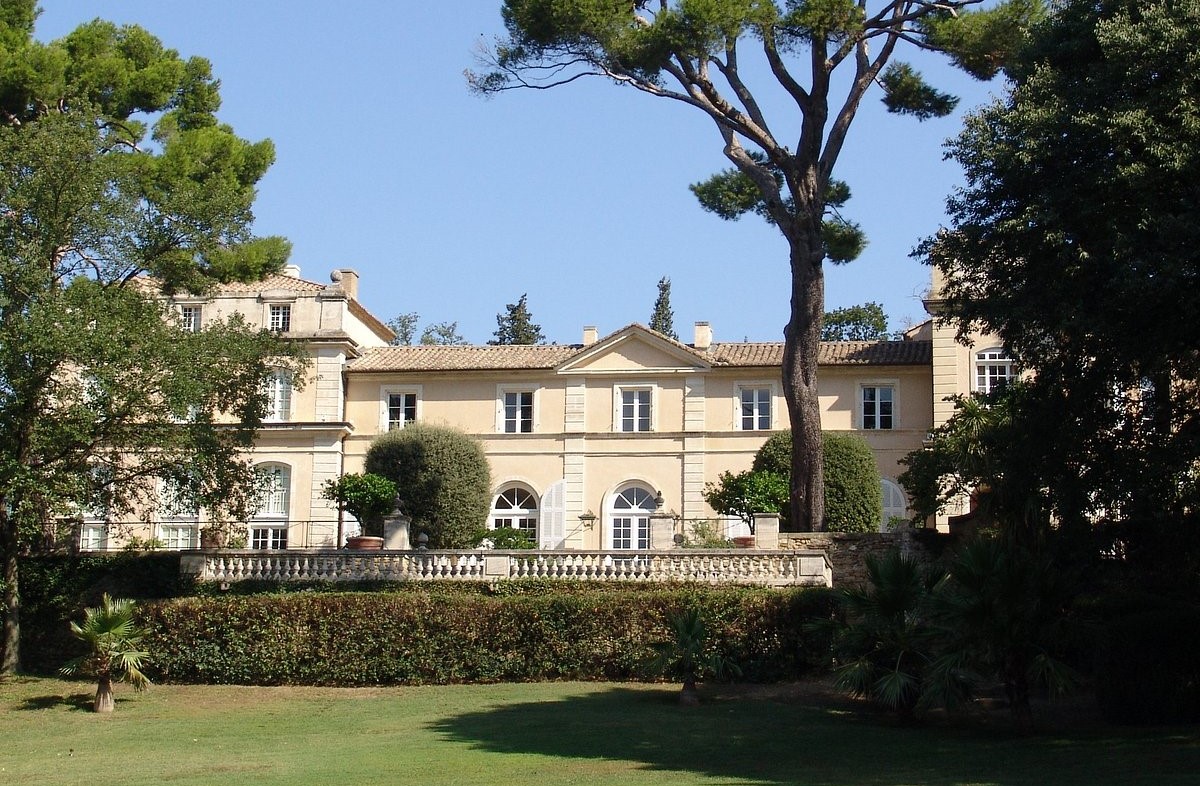
Wine-Knows will be visiting this esteemed Chateauneuf-du-Pape producer on their 2024 trip

As the Rhone River weaves its way toward the Mediterranean the southern section the valley widens and the climate changes.  This area becomes more Provence-like with strong influences of the Mediterranean in their culture and warmer weather than its northern counterpart.   While the white grapes in both the north and the south are the same varieties, the distinctly warmer summers and milder winters of the southern Rhone produce more voluptuous white wines.

Even the actual bottle of Chateauneuf du Pape is elegant with embossed lettering

White wines of the Southern Rhone, especially those of Chateauneuf-du-Pape, are some of France's most elegant and prestigious whites.    Always blended, they are elegant, rich, full-bodied seductive bombs of tropical fruit, laced with stone fruit and citrus notes in the background.  The four most common grapes found in the blends are Roussane, Grenache Blanc, Clairette Blanc and Bouboulenc.  To learn what each of these grapes contribute to the blend, join Wibne-Knows on its September 2024 tour to the Rhone, Champagne, Burgundy and Provence. 


Let me close by saying, "There's no place like Rhone...," especially the southern whites.


Wednesday, November 15, 2023

Seductive Reds of Chateauneuf-du-Pape

            Rocks from the nearby Rhone River help warm the vines in winter & cool them in summer 


This is the second article in November's trio on the wines of the Southern Rhone.

The first blog of this series discussed the genesis of the name Chateauneuf-du-Pape (CdP), the "new chateau of the Pope," which came about when the papacy was moved from Rome to the southern Rhone Valley.  Today, we'll learn about the highly coveted reds of CdP.  It is important to note that these red wines are blended wines...from both red and white grapes.  This blog will address the main red grapes used in these red wines. 

                          CdP is located <10 miles north of the Papal Palace in Avignon

With more than 8,000 acres of vines planted, CdP is the largest appellation in the Rhone.  Red wine is King in this area and represents 94% of the district's production.  Of the eight red varietals planted, Grenache leads the pack accounting for approximately 3/4 of the vines.  Grenache offers medium tannins and acids so it is often much more approachable at a younger age than a Cab Sauvignon.  Flavors of Grenache are strawberry, cherry and raspberry laced with nuances of cinnamon and licorice.  As CdP's reds are blended, however, Grenache is never vinified as a varietal in this appellation.

Syrah, the second most popular red grape, is another important part of CdP's blends.   While Syrah grapes are only 12% of the vines, this variety is important to the blend.  Deep colored Syrah is added to darken up Grenache which is far lighter in color.   Syrah also has more tannins and acids than the far more gentle Grenache so it adds structure to the blend.   While Grenache offers red fruit flavors, Syrah's contribution is black fruit, as well as chocolate and pepper notes.

                                Everything in the village of CdP is wine centric

The third grape most used in CdP reds is Mourvedre.  While accounting for <10% of the vines planted, Mourvedre adds an important profile to these blended wines.  Like Syrah, Mourvedre adds structure and dark fruit flavors, however, it also brings the grapes' signature nuances of cedar and herbal aromas...both adding layered complexity to the blend.   As Mourvedre thrives in the heat and is drought tolerant, this grape is now seen as a hedge against global warming.

Wine-Knows will be spending a day in Chateauneuf-du-Pape learning about these gorgeously complex blends.   We have 2-3 spaces available on our September 2024 harvest trip.     Burgundy & Champagne – Wine-Knows Travel (wineknowstravel.com)


Sunday, November 5, 2023

How the Popes Changed French Wine History

                 Pape Clement V changed the location of the Popes from the Vatican to France

This is the first article in a three-part series during November on the illustrious wines of France's Southern Rhone wine district.

Did you know the Papacy moved from Vatican City in Rome to the French city of Avignon from 1309 to 1376?  For nearly seventy years seven Popes ruled the Catholic Church from southern France's Rhone Valley.   Today, their majestic Papal Palace remains one of the largest and most important medieval Gothic buildings in all of Europe.

                           Avignon's Papal Palace is now a UNESCO World Heritage Site

The first French Pope, Clement V, was the former Archbishop of Bordeaux.  Fearing chaos in Rome after his controversial election to Pople, he refused to move to Rome.  Instead, Clement V did the unthinkable and set up oversight of the Papacy in the Episcopal place of the Bishops of Avignon.  Located on a natural rocky outcrop, the palace offered unobstructed views of the Rhone River just below it. 

                      The hilltop "new chateau of the Pope" offers a 360 panorama of vineyards

Clement V loved the countryside just outside of Avignon and stayed at various chateaux in the rural area frequently for extended periods.  His rule as Pope was cut short when he died in 1315.  His successor, Pope John XII, decided to build a summer chateau in this very area.   His Papal residence was called Chateauneuf du Pape, the "new castle of the Pope."   It wasn't long before the area around the chateau prospered and a village evolved at the foot of the castle.   A sea of wine grapes was soon planted as far as the eye could see as Clement V and all of the subsequent "Avignon Popes" were great lovers of wine.

Come experience the Chateauneuf-du-Pape harvest with Wine-Knows in September 2024

Today, this area is one of the most famous wine appellations in France:  Chateauneuf-du-Pape.  Wine-Knows will be visiting Chateauneuf-du-Pape next year for the grape harvest.  At this point, we have spots remaining for two or three lucky travelers.

Learn about the magnificent red wines of Chateauneuf-du-Pape in the next article of this series which will appear on November 15.  In the meanwhile, explore Wine-Knows' trip to Chateauneuf-du-Pape, which also visits Champagne & Burgundy!


Wednesday, October 25, 2023

France’s Premier Chocolate, Valrhona


     Wine-Knows will visit Valrhona's on its tour to Champagne, Burgundy, the Rhone & Provence

Today's article is the third in October's three-part series on France's Rhone Valley.  When one thinks of French chocolate, the name Valrhona is at the top of the list.   Valrhona is synonymous with quality.   Revered by Michelin star chefs around the globe, Valrhona chocolate is made in the Rhone Valley.   Take another look at the name:  Val - Rhona, short for Vallee du Rhone (or Rhone Valley in English).  The chocolate is named after the region in which it was first made more than 100 years ago.

                                   The Rhone Valley is famous for wine as well as chocolate

In 1922 pastry chef and candy maker Albert Giuronnet opened a chocolate shop in Tain Hermitage, a thriving small wine town located on the Rhone River.  Attentive to quality, Monsieur Giurronet insisted on roasting his own cocoa beans.  It didn't take long for his chocolate products to become well known and he became the supplier for the best pastry chefs in the Rhone Valley.

      One of Valhrona's iconic products, the "Rinette," is still made today by hand in Tain Hermitage

Fast forward 100 years:  Valrhona's chocolate empire remains in Tain Hermitage a croissant's toss from the Rhone River.  Today, it's a large high-tech factory with a visitor's center called the Cite du Chocolat (City of Chocolate).  Within this complex is the Ecole du Chocolat (School of Chocolate) where professional chefs from around the world flock to learn about the wonders of cooking with Valrhona's expansive portfolio of high-end chocolate products.

              The Rhone Valley offers dramatic vine-draped beauty, top wine & premier chocolate

Wine-Knows will be visiting Valrhona's Cite du Chocolat next September to tour the facility.  A word of warning:  there will be many samples for tasting!   We have a few vacant spots remaining on this trip which also visits Champagne, Burgundy & Provence.

Monday, October 16, 2023

Ground Zero for Luscious White Viognier


                 Wine-Knows will be visiting the home of Viognier wines next September, 2024

This is a second article in this month’s series devoted to wines of the Northern Rhone wine district.    Do you know Viognier wine?  If not, you should!  The appellation of Condrieu is ground zero for lovers of the highly perfumed white Viognier grape.  While Viognier is often used for blending in the Rhone, in the AOC of Condrieu it is 100% varietal.  In fact, the only wine that can be sold under the Condrieu AOC is a white wine made entirely from the Viognier grape.

                    Condrieu's appellation allows only one wine:  white wine made from Viognier

Viognier from Condrieu is a rich, opulent wine.  One of its pleasures comes before sipping.  The Viognier grape makes highly aromatic wines (think summer honeysuckle and/or fragrant roses).  For Viognier’s flavor you’re in store for another exotic summer experience (think ripe mango & papaya or even sweet tangerine).  

                             Viognier is known for its aromatic intensity and full bodied taste

Now for the bad news.  The Rhone’s Viognier production is very small.  If you see Viognier from the Rhone on a wine list (or on the shelf in a wine store) you’ll most likely be somewhere in the Rhone Valley.   While Michelin star restaurants in France will usually have a few Viogniers, the wine is not plentiful outside of the Rhone Valley.  That being said, here’s a magical trio worth every dollar and they’re all available through K& L Wine Merchants.


  • Andre Perret Coteau du Chery Condrieu ($80)
  • Clos de la Bonnette Legende Bonnetta ($60)
  • Francois Villrad “De Poncins: Condrieu ($70)


If you’re interested in tasting Viognier in the Rhone, why not come with Wine-Knows next September (2024) on its trip through the Rhone, Champagne, Burgundy & Provence.   There are 3-4 spots remaining.

Wine-Knows Travel – For the Discerning Traveler (wineknowstravel.com)


Friday, October 6, 2023

The Rhone’s World-Class Hermitage Wines


          The Hermitage hill as viewed from the hotel where Wine-Knows will be staying in 2024

This is the first in a three-part series on wines from the Northern Rhone.  Hermitage wines have a cult-like following by serious oenophiles.   Located just south of the city of Lyon, the small Hermitage appellation is situation on a perfectly positioned steep granite hill.  Drenched in full afternoon sunlight, this vine-draped slope overlooks the majestic Rhone River which cools during the valley's sizzling summers and provides warmth during its frosty winters.  The Hermitage hill is named after a tiny chapel which adorns its crest.  

                      The birds-eye view Hermitage chapel provides a perfect view for wine lovers 

The Hermitage appellation is known for its red wines which are made from the Syrah grape.   For Syrah devotees, Hermitage is the Holy Grail.   This is not surprising considering the Syrah grape comes from the Rhone region.  When young, these wines are rich and concentrated with bold tannins.  Their youthful profile is one of blackberry, dark cherry, spice and mineral.   Older Hermitage wines are elegant and complex with an earthy spectrum of leather, cocoa and coffee.  Because of their tannins, these opulent Hermitage can age for decades.

                         "La Chapelle" vineyard is one of the most coveted on the Hermitage hill

Hermitage is one of the few appellations that allows an addition of up to 15% of white grapes into its red wine.   Luscious Marsanne and Roussanne that are used to complete these perfect reds, adding interesting floral, stone fruit and citrus nuances.   Both of these white grapes are also used to produce the area’s rare white wine.   These hedonistic whites, known for their dense texture and a long finish, are highly coveted.


Hermitage’s red wines are the benchmark by which all other Syrah wines are measured.    For an up-close-and-personal experience with Hermitage wines, why not consider coming with Wine-Knows on its September harvest next year, 2024?  We have 3-4 openings left at this time.    

www.WineKnowsTravel.com


Wednesday, September 27, 2023

Wine Aromas & Flavors---What Causes Them?


      As grape sugar is converted by yeasts into alcohol, thousands of chemical by-products are produced


This is the final article in September’s series on the grape harvest.  Today’s blog discusses aromas & flavors of wine that are a direct result of the fermentation process.   How can a wine smell like a banana?  Why do Sauv Blancs often have a grassy profile?   What is it about Champagne that causes many to have almond nuances?   Did you know that all of these aromas and flavors occur because of chemical reactions during fermentation?  Let me explain.  

               Banana flavors & smells are due to isoamyl acetate produced during fermentation

First, let’s talk about the banana smell and taste.  This is a direct result of the fermentation process where yeasts change grape sugar into alcohol.  The banana profile is the result of a chemical compound by the name of isoamyl acetate, a by-product of yeasts during fermentation.   (Isoamyl acetate is used as an artificial banana flavoring in desserts).    These banana aromas & flavors can be found often in Chardonnay and Pinot Gris, especially from warm climates where grapes are super ripe.  Again, this is a result of the chemical changes during fermentation.

                                Aldehydes form during fermentation & are also present in grass

Have you ever wondered why your Sauv Blanc is reminiscent of freshly mowed grass?   The classical grassiness nose and taste is due to chemicals called aldehydes.  These compounds, released during fermentation, evoke the smell of just-cut grass.   Sauv Blanc grapes have the ability to produce high levels of aldehydes.  Similarly, grass contains elevated levels of this highly fragrant chemical and cutting the grass releases it into the air.

                                One of fermentation's many by-products is benzaldehyde

The almond profile in the real-deal French Champagne is also produced by yeasts as they change grape sugar to alcohol during fermentation.  During the process of making Champagne the fermenting grape juice is often stirred.  The chemical benzaldeyde  is released during the fermentation process and it is dramatically heightened during the stirring (“battonage”).   Benzaldehyde tastes and smells like almonds.


In summary, during fermentation yeasts eat the sugar of the grapes and convert it into alcohol.  In this process of fermentation, thousands of various chemicals are produced by the yeasts activities and they often influence the aromas and tastes of wine.