Saturday, March 25, 2023

The Knights of Champagne

 The Champagne brand is associated with all things elegant & extravagant

The Champagne brand is the most protected wine brand in the world.  This careful and arduous protection is done by a group of modern-day-knights known as the CIVC (Comité Interprofessional de Vins de Champagne).  The CIVC is actively involved around the world in protecting the Champagne brand.

                                    The CIVC is a formidable force in protecting the brand

The CIVC was formed in 1941.   The German army had marched into the Champagne district and its commanders demanded all of the sparkling wine be given to them.  Local wine producers banded together to protect themselves and were able to negotiate partial gifting (much of what was given was of a lesser quality, but cleverly passed off as "premier").  After the war, this group morphed into the CIVC.  One of their important functions is still to protect Champagne, but in this era it’s from invaders of a different type---brand invaders. 


Champagne is a brand.  It is a powerful brand.  The mere name connotes luxury.  Many would consider Champagne the globe’s most important wine, therefore, any intrusions on the Champagne name are serious offenses.   The CIVC has a cadre of attorneys around the world acting as knights in legal armor.

                        Not even fellow luxury brand Yves Saint Laurent could escape the CIVC

There have been dozens of lawsuits won by the CIVC regarding brand infringement.   Some of them have been against major corporations.  Take for example, Yves Saint Laurent, another French brand synonymous with extravagance.  The CIVC pounced on YSL over its perfume, Champagne.   The perfume had to be removed from the market.

Less well known companies have also felt the legal force of the CIVC.  Businesses producing such items as a lingerie line called Champagne, or Champagne candy in the shape of a cork, are no longer in business. Chinese beer manufacturers calling their products the “Champagne of Beer,” no longer abuse the brand of Champagne after their tangle with the CIVC legal beagles.  There have been cigarettes, toothpaste, and even cola called Champagne.  They no longer exist thanks to the CIVC.


Coming on the September 2024 tour next year to Champagne with Wine-Knows?   We will have a private seminar at the CIVC with one of its Directors.   There are 3-4 spots available on this trip.

Burgundy & Champagne – Wine-Knows Travel (wineknowstravel.com)


Thursday, March 16, 2023

The Person Who Changed the Course of Champagne

                                        Veuve Clicquot's cellars will be visited in next year's trip

If you’re thinking Dom Perignon (whom many mistakenly attribute as the person who invented Champagne), think again.   Fast forward 150 years to the early 1800’s.   The person who undeniably changed everything for Champagne was Veuve Clicquot…whose name translates to the 'widow' Clicquot. 

                                              The widow Clicquot was a formidable force

Madame Clicquot was widowed unexpectedly at the age of 27 with a six year-old child.   The year was 1805, and veuve Clicquot was left with her husband’s  company which was involved in banking, wool trading and Champagne production.  In this era it was unthinkable for a woman to work outside the home, and it was simply unimaginable for a women to run a business.  The fact that the woman was from a wealthy family (who were friends of Napoleon), made it all that much more inconceivable that she would run a business.

The widow Clicquot broke all of the stereo-types of women in her day.  Never-mind that France was in the middle of the Napoleonic wars.  Not only did she run her husband’s business but she took all facets of the company to new soaring heights…especially the Champagne part of it.   Here are just a few of her many contributions that championed an entire Champagne industry:


                  "Riddling" bottles was a game-changer for marketing a beautifully clear Champagne

  • The widow Clicquot developed a process (“riddling”) which turned the unappealingly cloudy Champagne into a brilliant clear wine.
  • Veuve was the first Champagne producer to sell wine outside of France…her customers were the Royal families of Europe.
  • Madame Clicquot pioneered the making of Rosé Champagne.
  • Widow Clicquot was the first person to use colored labels…all labels at this time were white.


Today, the much-heralded Champagne company still bears her name, Veuve Clicquot.   Travelers who will be joining Wine-Knows’ September 2024 tour next year may even have the opportunity to see Madame Clicquot’s office, left much as it was after her death in 1856.   You’ll also have a private tour and tasting at the winery.   There are 3-4 spaces remaining on this harvest trip to Champagne, Burgundy and Provence.

Burgundy & Champagne – Wine-Knows Travel (wineknowstravel.com)


Tuesday, March 7, 2023

Do You Know How Champagne Differs from Other Bubblies?

                                   Cava & Champagne have many similarities...and differences 

The month of March on this blog will feature three articles on Champagne.  The first of the trio identifies how Champagne differs from other sparklers.

There is a plethora of sparkling wines available from around the world.   While Champagne is generally the most expensive of them all, is there even a difference between it Cava, Prosecco, Crémant, Sekt, Fizz and the array of other bubblies?   There are definitely differences, so let’s jump right to the most important point.

                          The Champagne wine district is located 100 miles east of Paris

Legally, Champagne can only be called Champagne if it is produced in a specific demarcated region in France called Champagne.   These laws are strictly enforced by a barrage of world-wide attorneys hired by the French Champagne Wine Association.   In short, the name Champagne is based totally upon a geographic location in a specific wine district of France---it has nothing to do with a winemaking style.

The Champagne Wine Association sued YSL for                                                  brand infringement & won!

There are more differences between Champagne and sparkling wines, however, other than geography.  Below are some of the major differences:

Champagne, by law, can only be made from 3 grapes:  Chardonnay, Pinot Noir and/or Pinot Meunier.  This is not true with other sparkling wines, many of which are made from completely different grapes.

           Yeasts during secondary fermentation create bubbles & add complex flavors

Champagne, by law, must be made with a secondary fermentation in the bottle.  Most of us know that all wine is made by alcoholic fermentation (where yeasts turn the sugar in grapes to alcohol.)  Champagne, however, requires a second fermentation called methode Champenoise.  This second fermentation occurs when yeasts are purposely added to regular wine and the bottle is then tightly capped with a pressure resistant top.   Carbon dioxide, produced by these yeast, is what gives sparkling wine its bubbles.  

                  Special tanks, made for the addition of carbon dioxide gas, are used in Prosecco

While other sparkling wines, such as Cava, are produced by using a second fermentation, not all bubblies are created by a second fermentation.  For example, in the case of Prosecco, carbon dioxide is added to large stainless steel vats to create the bubbles.   Both Cava and Prosecco also use completely different grapes than those used in Champagne.

Crémant, a sparkling wine produced using a second fermentation in many regions of France (other than Champagne), differs from Champagne because Crémant has less atmospheric pressure in its bottles---this translates to softer bubbles.  It should also be noted that Crémant is often made from entirely different grapes than used in Champagne.  For example, in Alsace, Crémant can be made from Pinot Blanc, Pinot Gris and even Riesling.

In summary, Champagne differs from other bubblies because it is based upon a specific geographical location, and there are very stringent rules within the Champagne appellation on how this sparkling wine is produced.     


Tuesday, February 28, 2023

Capers & Caper Berries—Do You Really Know What They Are?

                                          Capers & caper berries come from the same plant

Living in California and a frequent traveler to Mediterranean countries like Italy, Greece, France and Spain, I find capers as an ingredient on menus at all of these locations.  Love veal piccata?   Capers are a critical ingredient to its lemony sauce.  Lox and bagels?  Don’t even think of serving them without capers.   Julia Child’s epiphany, sole meunière?  Not possible without capers.  A Greek salad?   One without capers isn’t Greek at all.   Many of us cook with capers (and some with caper berries), however, do you know what they really are?  And, do you know the difference?


                                  Caper plants grow wild throughout the Mediterranean

Let’s start with the basics.  Capers and caper berries both come from a caper bush plant.  These 3-4 foot tall bushes (with a width of 5-7 feet) grow wild in the Mediterranean landscape.   In many ways these plants are like a weed, popping up everywhere, even in the most inhospitable of conditions…. thriving in the most arid and hottest of locations without any type of care.   Caper plants, for example, love the cracks and crevices of centuries-old stone walls from where they often cascade down several feet, growing seemingly out of no where.  They flourish often where nothing else will grow. 


Capers are the unopened, unripened, buds of a caper bush.   The tiniest of these unopened buds (about the size of a peppercorn) are the most prized capers as they have a better flavor and a more delicate texture than the larger ones.  These baby capers are called “non pareil,” which in French translates to “has no equal.”  Capers come in several sizes (the largest ones are 2-3 times the size of non pareil).  The larger the caper, the more acidic and the less expensive.

            When the caper flower falls off it is replaced by a fruit which is the actual caper berry


When the immature caper bud is not picked, it eventually develops into a beautiful flower.  Later in the season, the flower falls off and is replaced by a fruit.   This fruit is the caperberry.  The oblong shaped berry, about the size of an olive, is not quite as intense in its taste as its caper relative, but it has a milder, similar flavor profile.


       This sunning starter in Croatia featured capers, caper berries & pickled caper leaves

Capers and caperberries add a brilliant burst of flavor to many dishes.  The two can be used in the same dish, or perhaps the caper utilized in the recipe and the caperberry used as a garnish? (This is especially nice if the berry is cut open so that diners can see its inside, and the berry’s stem is left intact for some showmanship in plating).   This also creates a perfect opportunity for the host and hostess to explain the difference between these two delicious food products.


Friday, February 17, 2023

A Winning Warm Winter Salad


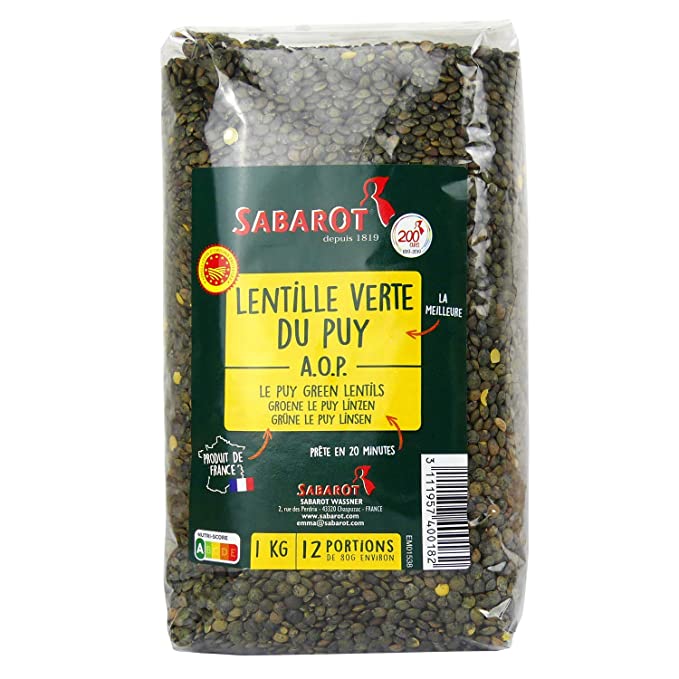
Ready for a different kind of salad?   I’ve got just the recipe.  It’s not only over-the-moon delicious, but it’s healthy and beautiful.  The salad is made from small green French lentils, known for having the best texture and flavor of all lentil varieties (and they keep their shape during cooking, unlike other lentils that basically turn to mush).  Most up-market grocery stores carry them, but Amazon can have them on your door-step in a matter of days if you can’t find them locally.

                          Only lentils grown in Le Puy's volcanic soil can be called Le Puy.

Green lentils are from France's central Auvergne region, specifically from the village of Le Puy.  They are registered by the French government as their own special appellation because of their unique qualities.  Grown in the center of France’s volcanic soil, these small green lentils have a slightly different flavor profile due to the earth in which they’re grown.  Some say their flavor is more earthy, but I think Le Puy lentils are more nutty and peppery.

One of my most treasured recipes of all time is from Green’s Cookbook (Batnam Books, published 1987).  Those of you in the San Francisco Bay Area well know the ethereal Green’s restaurant, one of the first vegetarian-only restaurants in San Francisco.  Established in 1979, Green’s is still going strong.   Debra Madison, Green’s owner & chef, really knocks-it-out-of-the-park with her warm lentil salad.  Infused with intoxicating aromas of mint, parsley, cilantro and thyme, along with roasted red peppers, feta and an seductive lemon vinaigrette containing smoky paprika and a hint of cayenne, this dish is both stunning in presentation and fabulous for your taste buds.


If you don’t have the cookbook, the LA Times has published the recipe.  This dish perfect for a pot-luck (but you should consider making a double recipe as there won’t be any leftovers to take home).   I often add toasted walnuts & mix in arugula just before serving. 

https://www.latimes.com/style/la-xpm-2008-sep-10-la-fo-bayleafrec10c-2008sep10-story.html


Bon appetit!


Wednesday, February 8, 2023

Comparing Two of Italy’s Best Cheeses


Northern Italy is a treasure trove for cheeses.  Two of the best known, Parmigiano Reggiano and Grana Pedano, appear to be almost identical.  Looking at two wheels of these drum-shaped cheeses they appear nearly identical with the exception of the specific writing on their exteriors.   If you cut them open, to the novice eye their grainy, crystalline texture in the same color palate look quite similar.   But, these two cheeses, both produced from cow milk, are quite different because of the specific areas in which they are produced.  Let me explain.


Like wine grapes, the milk of cows is very much influenced by the terroir in which the cows graze.  While both of the cheeses come from Northern Italy, Parmigiano-Reggiano comes from a small area outside the city of Parma.   North of Parma is the fertile Po River Valley, the home of Grana Pedano.  These two districts provide different pastures with different soils and weather.  Their respective terroirs are reflected in the two cheese differences with slightly different flavor profiles.   Parmigiano-Reggiano has a stronger, more complex, saltier and nuttier profile than the less intense Grana Pedano.


In addition to terroir differences, there are other disparities between these two cheeses.  First, Grana Pedano is made entirely of skim milk, while Parmigiano-Reggiano is made from a combination of regular & skim milk.  The heightened fat content of Parmigiano-Reggiano accounts for part of its richer, more butter-like  taste.    


Another difference between Parmigiano-Reggiano and Grana Pedano is due to their distinctive aging rules.   By law, Parmigiano-Reggiano must be aged a longer period, thus accounting for its higher price.   This prolonged aging period accounts for Parmigiano Reggiano’s deeper, more complex flavors in comparison to Grana Pedano.   That being said, Grana Pedano costs significantly less reflecting its shorter again period.


Last, but not least, the cows in the area of Parma by law have a strictly controlled diet of grass & hay only.   In the Po River Valley area, the laws for Grana Pedano allow the addition of silage (fermented foliage)  to the cow’s diet.  This accounts for another difference between the two cheeses.


While both of these formaggi are wonderful in their own right, they are unique.  Why not try a Valentine’s Day comparison of the two and see if you have a favorite?


Wednesday, January 25, 2023

What You Should Know About Tannin

                                      In addition to grapes, tannin is found in wood

Tannins play an important part in the complexity of wine, as well as its ability to age.   These naturally occurring chemical components, found in the skins and seeds of grapes, are responsible for the astringent, or “puckering” factor, of young red wines.   Below is a quick summary of six things a wine drinker needs to know:

  • As a wine ages, its tannins soften.

  • Different red grapes contain differing amounts of tannin:  highest levels are found in Cab Sauv and Syrah.   Lowest levels are found in Pinot Noir and Grenache.

  • Tannins are important in giving wine structure, hence, they play a vital role in the balance of a wine (where elements such as fruit, acidity, alcohol are in harmony)

  • High tannin wines need to be paired with the rich, fatty foods in order to soften their astringency & bitterness…think grilled T-bone or rib eye.

  • Wine barrels (particularly new ones) also add tannin to a wine.
  • Although far less than their red counterparts, white wines also contain tannins, Like red wines, those whites aged in new oak have more tannin.