Showing posts with label provence wine. Show all posts

Sunday, April 3, 2022

French Riviera's Wine Appellation

The Bellet wine appellation lies within the city limits of Nice

The hills above Nice are filled with jaw-dropping villas and bougainvillea-framed panoramas of the Mediterranean.  These hills are also home to France’s smallest urban wine appellation, Bellet.   Comprising less than 150 acres of vines with fewer than 10 producers, Bellet wine is well known to locals but unknown to the world since it rarely leaves the area---the mere 120,000 bottle production is snatched up by Riviera wine-lovers and restaurateurs in-the-know.
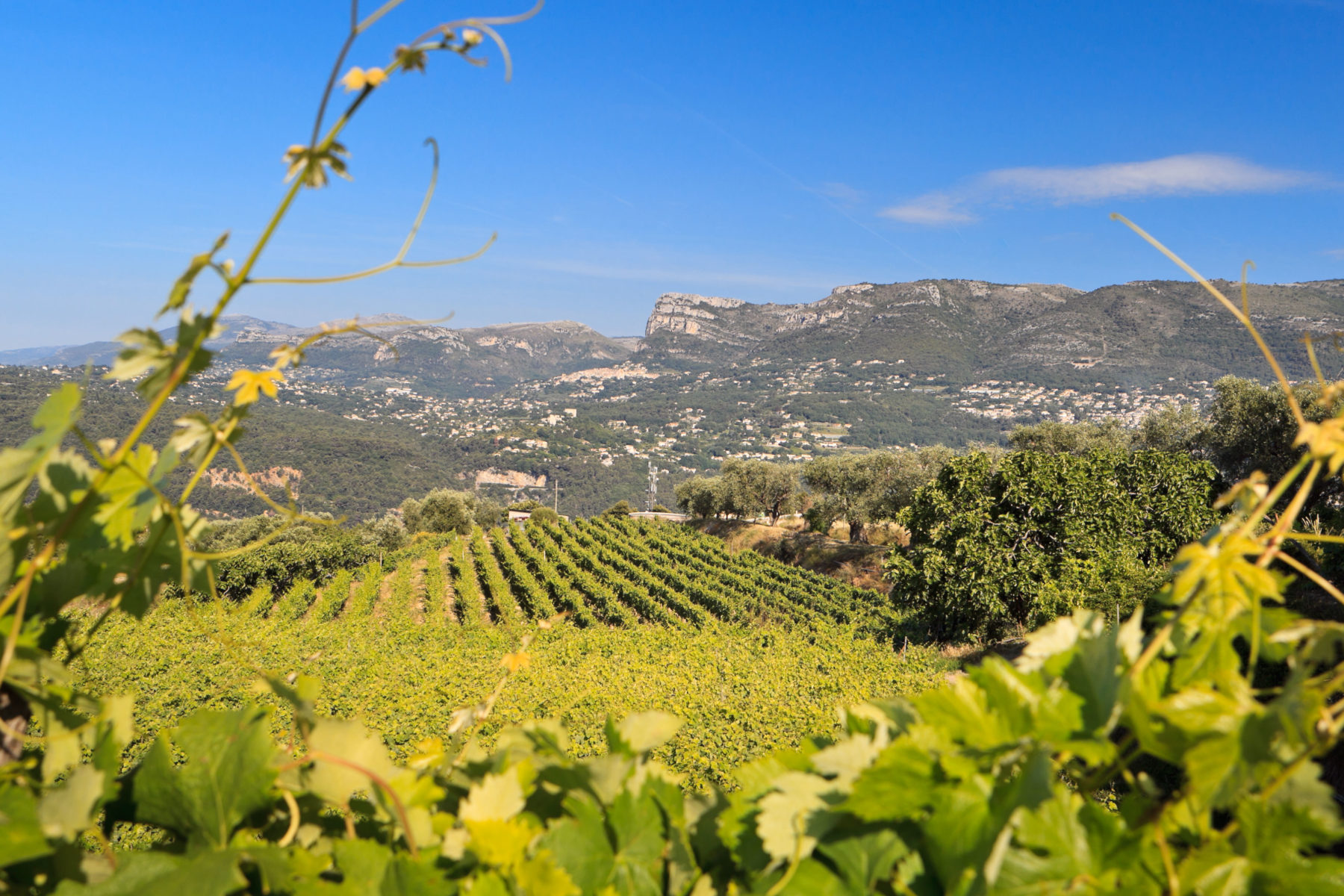
 The Bellet area has been making wine for < 1500 years

Formed in 1941, the tiny Bellet appellation has a unique terroir.  At an altitude varying from 600-1,200 feet above sea level, vines often cling to the hillsides in terraced vineyards.  Manual harvesting is the only possibility in these inhospitable conditions.  Soil, washed down from the Alps for millenniums, a mix of sand and rocks, provides a perfect drainage system for grapes.  Furthermore, Bellet is less than three miles as the bird flies from the Mediterranean so this allows its vines to  recuperate at night when the marine influence brings coolness to the hot, dry daytime temperatures.
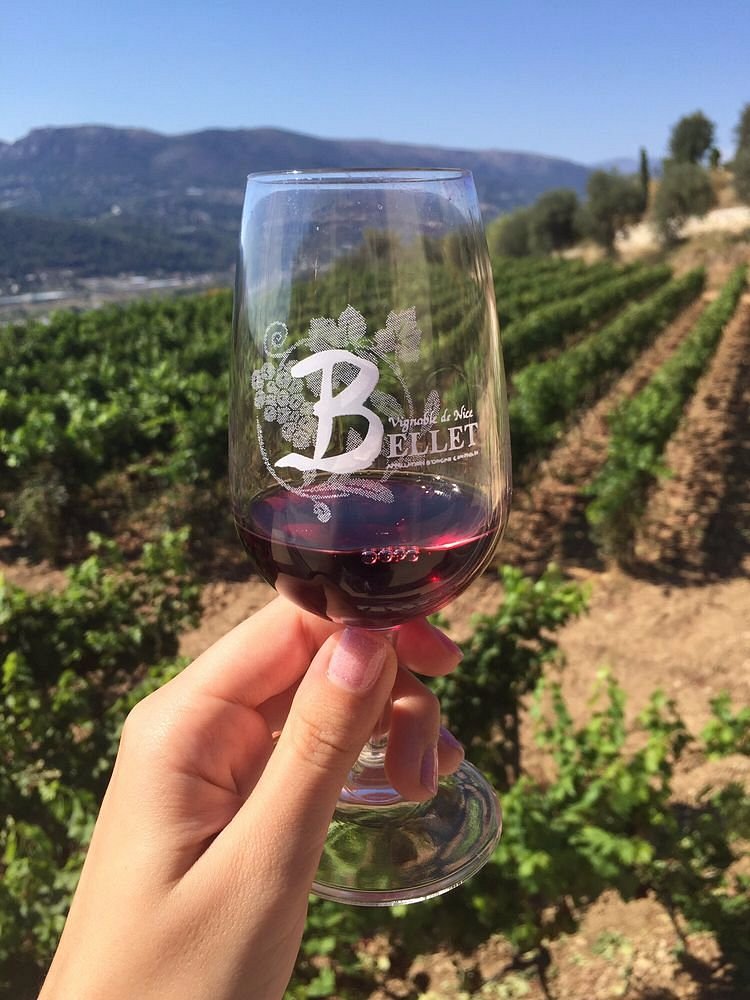
                 Wine-Knows will be visiting Bellet this autumn....there is only one spot available!

Bellet produces red, white and rosé wines.  White grape varieties include Chardonnay and Rolle (aka Vermentino in nearby Italy).  These two are often blended together creating a spectacular white not seen elsewhere in France.  For reds, Grenache  (one of southern France’s greatest grapes, e.g. Chateauneuf du Pape), is mixed with unknown native Riviera varietals such as Braquet and Folle Noire.   

"I love cooking with wine....sometimes I even put it in the food."   Julia Child

Wine-Knows will be visiting the Bellet appellation during its Week in Provence at the villa where Julia Child wrote her masterpieces, Mastering the Art of French Cooking.    There is only one seat remaining.  For more information about this special “Julia” trip, visit our website:

http://www.wineknowstravel.com/julia-2022-1-itinerary-2/


Friday, January 8, 2021

How Provence Changed the Course of American Cuisine

                                                      Provence's magic awaits...

France’s southernmost region, Provence, is 
an area of remarkable natural beauty, but it's also a culinary wonderland for the food-lover.  Bordering Italy and the Mediterranean Sea, Provence is a gastronomic symphony combining France’s best olive oils, spectacular wines (Chateauneuf du Pape, Bandol, and a plethora of Rosé in 50-plus-shades-of-pink), truffles, a mind-blowing selection of goat cheeses, and colorful outdoor Provençal food markets.  Both the rugged beauty and this treasure trove of food brought Julia Child to Provence in the late 1950’s.

            Towns have a weekly market day brimming with local produce, cheese, olive oil & crafts

Julia Child changed America’s way of eating and both of her ground-breaking cookbooks, Mastering the Art of French Cooking, were written in Provence. During this time American cuisine was built around convenience. Women, who were joining the workforce for the first time, didn’t have time to cook.  Frozen and canned food were mainstays for working mothers. Quick and easy were themes: canned sloppy Joe’s, frozen fish sticks and TV dinners were all popular, and even orange juice was instant.  It was a sad time in our country’s food history. 

                                  Julia took the intimidation out of cooking & made it fun!

In 1961 Julia's first volume of Mastering the Art of French Cooking was published. But, it wasn’t until two years later with her television debut on The French Chef that American housewives first saw a brave new world for cooking.  With her disarming personality, Julia demystified not only French cooking, but cooking in general in regards to using fresh foods. By the 1970’s Julia had become a celebrity, making food and cooking as much a part of American pop culture as rock ‘n roll, fashion, and art. 

                        Bouillabaisse, Provence's most famous seafood dish, was a favorite of Julia's

The villa in Provence where Julia wrote both volumes of her revolutionary cookbooks still exists.  In fact, Wine-Knows has leased it in September 2022.  Participants will dine at some of Julia’s favorite restaurants, visit her beloved olive oil producer, and shop at the local outdoor markets she so loved.  Moreover, there will be excursions to her most treasured hilltop towns and seaside resorts.

           You can stay at the villa where Julia wrote her trailblazing cookbooks & visit her foodie spots

The trip has been perfectly timed for Provence’s most idyllic time of year….after the height of the tourist season and at the most favorable time for perfect weather (late summer/early autumn).  One week has only two openings for culinary travelers to visit “mecca.”  Why not celebrate the COVID vaccine’s arrival by booking a trip for 2022? 

http://www.wineknowstravel.com/julia-2022-1-itinerary/

                  "I enjoy cooking with wine.  Sometimes I even add it to the food."   Julia Child

Provence has played a huge part in shaping the current foodie scene in America.  Come join one of Wine-Knows'  2022 groups on a wine and culinary adventure to honor Madame Child.

Viva Julia Child!   Viva Provence! 


Friday, September 7, 2018

Can You Taste the Earth Move?


                    Burgundy's Grand Cru hills were created by earthquakes

Some of my favorite wines from around the world are from soils that were created by cataclysmic earthquakes.  The most famous earthquake vineyards are probably those in Burgundy.  Millenniums ago a tremendous earthquake in the area created Burgundy’s Grand Cru vineyards.  The limestone of the Cote’d’Or (the “golden hill”) was forced out of the bowls of the earth by such a seismic event.

Not far from Burgundy are Alsace’s vineyards---they were also created by an earthquake.  The small wine town of Ribeauville sits almost on top of one of the main fault lines.   In fact, there are two main fault lines that criss-cross with several smaller ones in Alsace.  This may be a reason why there is a huge difference among wines that come from vineyards that are relatively close together---different soils have brought to the surface from varying fissures in the earth’s crust.

Further south in France are the earthquake vineyards of Gigondas located in Provence.  But, earthquake vineyards aren’t limited to Europe.  New Zealand was created from powerful underwater earthquakes that caused the seafloor to push up.  Located at the intersection of two of the world’s major tectonic plates, both islands of New Zealand are earthquake in origin.

Let’s not forget the American continents.  The San Andreas fault in California is responsible for the soils of the Central Coast and Napa/Sonoma.  Chile has produced some of the largest earthquakes in the world (a 9.5 in 1960 and the more recent 8.2 in 2014).  The movement of this same tectonic plate millenniums earlier created the Andes, the world’s longest chain of mountains.  Both California and Chile are known for wines created from these earthquake vineyards.

While there is no scientific evidence that fault-line vineyards directly affect the quality of the wine, there is thought that geology does play some kind of role.  For example, it is known that shifting faults lines not only juxtapose different types of bedrock in the soil, but that they affect ground water and can form valleys.  Indirectly, this can effect micro-climates which do have a profound effect on the wine.


Friday, February 23, 2018

Rosé Sales are in the Pink

                                           Rosé, once a step-child, has now gone mainstream

Ten years ago I began a mission of what I termed as “reverse snobbism.”  My  challenge was to change the perception of Rosé wine from an unsophisticated white Zin to a beverage that even a bon vivant would appreciate.   I received some concerned stares when I began several dinner parties with a dry French Rosé, especially from those who had not traveled to the south of France.  I am happy to say that I no longer get those looks.   Everyone now has jumped on the Rosé bandwagon, including a vodka producer who just released a Rosé vodka. 

Rosé has become the new hipster drink.  Angelina Jolie & Brad Pitt's purchase a few years ago of one of France's star producers of Rosé certainly didn't hurt promotion of the pink.  Last year sales of Rosé in the US escalated 50% ringing in at nearly $250 million.   But, there may be a lot more room for continued growth.  While many Americans still view Rosé primarily for summer-time drinking, Rosé is drunk year around in countries like France.  In fact, the French actually drink more Rosé than white wine.  In Provence, where most of the country’s Rosé is made, 90% of the total production of red grapes is used to make Rosé.  That leaves a lot of room in the US for continued rise of the pink.


With the growing US thirst for dry Rosé, it’s no wonder that French exports to the US have risen dramatically.  Rosé from Provence increased ten-fold between 2010 - 2016, and it’s expected that the stats from 2017 sales will confirm in another blockbuster year for the Rosé.   But, all pink wine seems to be on the rise.  Champagne makers in France are even reporting a sharp increase in sales of their Rosé Champagne.   Seems like everyone is on to a pink trend.  

Rosé is finally here...and it's here to stay.  Feeling in the pink mood?  Here are a few of my faves:   
  • J. L. Quinson Cotes de Provence at Trader Joe's:  hands-down best quality/price Rosé for $7 (note:  TJ's has a couple of Rosés by this producer.  Be sure to get the Cotes de Provence AOC)  
  • La Crema Rosé:   complex & a great buy for $20
  • Ployez Jacquemart  Brut Rosé Champagne:  can’t think of a better real-deal bubbly for $50


Friday, August 4, 2017

Best Bargain Rosé

                                              Over 50% of Provence's wines are Rosé 

I owe this delightful discovery to a client of ours who telephoned recently about a Rosé tasting he had conducted in the Bay Area with friends. He was calling to tell us that the hands-down favorite was a French one from Trader Joes.  The price?  A whopping $6.99. My husband jumped in the car and dashed out to grab a few bottles. Our client was right.  This one, a wine from Provence, is a real winner that delivers a terrific value.  

If a Rosé could choose its birthplace it might very well choose Provence.  First, the area is stunning.  Second, it's been making wine for >2,000 years so they've had plenty of time to get it right. Located in southern France not far from the Riviera, Provence specializes in Rosé.   I was in Provence last month at a Wine-Knows sponsored Julia Child cooking event.   Our group tasted a plethora of Rosé most of which were very good.  But, none offered the quality price ratio of the one from TJ's.

Drum roll please!  The terrific seven buck Rosé is produced by J.L. Quinson and its called Cotes de Provence, AOC (which means its from the appellation encompassing the hills of Provence).  The 2016 blend is a equal blend of Carignan and Grenache...both common grapes for the Rhone Valley of which Provence is a part. (Note:  Quinson also makes another Rosé which TJ carries called Coteaux d'Aix en Provence, so pay attention).

We're heading back to TJ's to pick up several cases for summer drinking and reminiscing about our glorious time at the Week in Provence with Julia Child.  Thank you, Marco, for this great tip!

Have a Rosé-all-day kind of weekend!


Saturday, June 10, 2017

Wines of Provence

                               Provence offers many charms, including its wines

I'm on my way to Italy after a star-studded two weeks in Provence.  When many think of Provence they flash on images of colorful outdoor markets and fields of lavender.  Yes, I experienced these vistas during my stay but when I think of Provence I think of its wines---its true unsung heroes.  While I love Provence's Rosés, I’m really enamored with its spicy, full-flavored reds, as well as its elegant, tropical whites.  Hands down, these wines are some of the most underrated in France.  While most serious wine lovers know Chateauneuf-du-Pape, they may not be aware of the equally elegant wines of Bandol, or of Provence’s great quality/price ratios like the area of Vacqueyras and Gigondas.   Let’s examine the “non-pink” wines of Provence beginning with terroir, and then move on to its grapes.  

Provence is located in the South of France and the Rhone River, which cuts through it on its way to the nearby Mediterranean, exerts a tremendous influence on the terroir.  Vineyards nearest the river have mineral-rich soil washed down from the Alps.  Summers are hot due to beaucoup sunlight, so there’s no problem ripening grapes. Mighty mistral winds keep pests at bay.

Red grapes, which thrive in the heat, are dominant in Provence.  Varietals such as Syrah and Grenache are most popular.  Another “Rhone varietal” is Mouvedre. These three grapes often are blended together, in fact, they are often referred to as a trio by the name “GSM,” an acronym of all their first letters. While red wine accounts for about 35% of Provence’s production, white wine is 15% (the remaining 50% is  Rosé).  Major white grapes include Marsanne, Roussane, Viognier and Rolle (known as Vermentino in Italy).  Like the reds, white varietals are blended rather than vinified as a single varietal.

Provence’s superstar reds are from the village of Chateauneuf-du-Pape.  Located very near the Rhone River, Chateauneuf-du-Pape is known for its vineyards filled with large stones left from the flooding river. These stones provide superb drainage and reflect back the heat in Provence’s cold winters.  My favorite producers are Chateau Beaucastel and Chateau La Nerthe.   These are gorgeous, voluptuous, complex reds and whites….so wonderful that they make you forget all about their steep prices.

Further south is the tony little wine area of Bandol.  Located just a few miles from the Mediterranean, these elegant wines are an exception to the blending norm throughout other areas of Provence.   They are mainly made from Mouvedre and many are 100% varietal.  Check out Chateau Pibarnon and Domaine Tempier for some killer wines.

For a great quality price ratio consider the Provence villages of Gigondas and Vacqueyras.    Here are some great reds from the 2015 vintage well worth searching out:
  • Famille Perrin, Gigondas, L’Argnée Vieilles Vignes
  • Domaine Raspail-Av, Gigondas
  • Montirius, Gigondas, Confidentiel
  • Domaine Le Sang des Cailloux, Vacqueyras, Cuvée de Lopy

Looking for a terrific white from Provence?  Below are some wonder-filled options...and the first one is worth every Euro:
  • Domaine Pibarnon, Bandol
  • Clos Sainte Magdeleine, "Bel-Amre,"  Cassis
Onward to a seaside villa with Wine-Knows on Tuscany's Mediterranean...

Friday, July 1, 2016

Tickled Pink Summer Rosés


It’s that time of the year to stock your cellars with plenty of bottles for the summertime crowds.  Rosé is always at the top of our list…perfect for drinking around the pool, and great aperitifs for outside summer dinners.  Here are my suggestion for this year’s best Rosés (in alpha order):

La Crema
This one is perpetually on my summer's list. Made from Pinot Noir, this Russian River Rosé is made in small quantities so buy several when you find it.  $20

MIP
Produced by Domaine Sainte Lucie in Provence, this one is a block-buster winner.  Very well crafted and great value.  $16-18

Mirabeau PURE
Mirabeau makes several Rosés, but the Pure rendition is the best of all.  Made in a lovely Provence village, this one is readily available at places at BevMo.  $16-18

Whispering Angel

I had my first taste of this wine just a few weeks ago.  My husband drove 50 miles to pick up a case after reading about it winning awards from those in  some wine rag.  From Provence, it’s a great choice.  $18-20