Friday, April 15, 2022

Spring Fling Veggies

                                   Spring is a wonderland for foodies who love to cook vegetables 

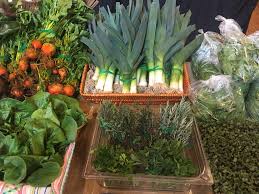
We’re less than a month into Spring and already farmers’ markets in southern Cali are brimming with a glorious cornucopia featuring every color of the rainbow:  carrots in yellows, reds & oranges;  verdant lettuces in boundless shades of green; cucumbers ranging from white and yellow to almost ebony;  pencil thin green asparagus at one stand juxtaposed with colossal versions in brilliant purple or white at the next vendor;  and a cacophony of fresh herbs ranging the entire green spectrum…dill, tarragon, mint, parsley, chives, lemongrass and cilantro.

To honor this splendid bounty of produce, this blog includes my homage in the form of cherished Spring recipes.  Two come from France, one from Italy, and yet another from the good old USA.

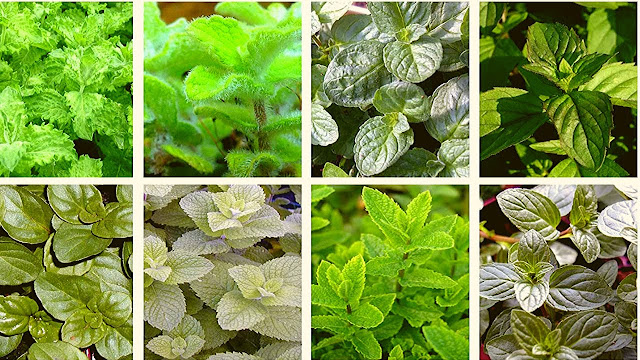
                                 Spring mint is available in every shape, size. color & smell

Fresh Peas with Lettuce & Mint:

I particularly like this version of this French classic as the peas are actually cooked in a small amount of cream.  This results in a more flavor-chocked dish:

http://www.kitchenriffs.com/2018/05/french-style-braised-lettuce-and-peas.html


Roasted Radishes:

In this recipe French-inspired recipe, I suggest you utilize a variety of different colored radishes (making sure, however, they are all roughly the same size.)  Also I recommend replacing the onion powder with fresh spring pearl onions, and the garlic powder with Spring’s lusciously gentle garlic.

https://www.wickedspatula.com/crispy-roasted-radishes/


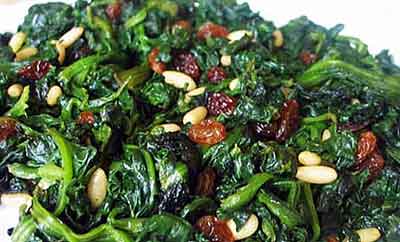
                                     The eternal city's signature dish is an eternal delight

Spinach alla Romana:

This traditional dish from Rome is essentially a simple stir fry, but the raisins and pine nuts catapult it into something far from simple.   I recommend two changes:  use only olive oil, and then a gentle spritz of a good balsamic at the end of cooking.

https://memoriediangelina.com/2013/06/09/spinaci-alla-romana-roman-style-spinach/


Grilled Carrots with Mint and Avocado:

We use a combination of different colored carrots in this recipe from Bon Appetit.   The dish is absolutely divine and pairs beautifully with poultry, seafood or pork.

https://www.bonappetit.com/recipe/grilled-carrots-with-avocado-and-mint


Happy Spring Fling!


Sunday, April 3, 2022

French Riviera's Wine Appellation

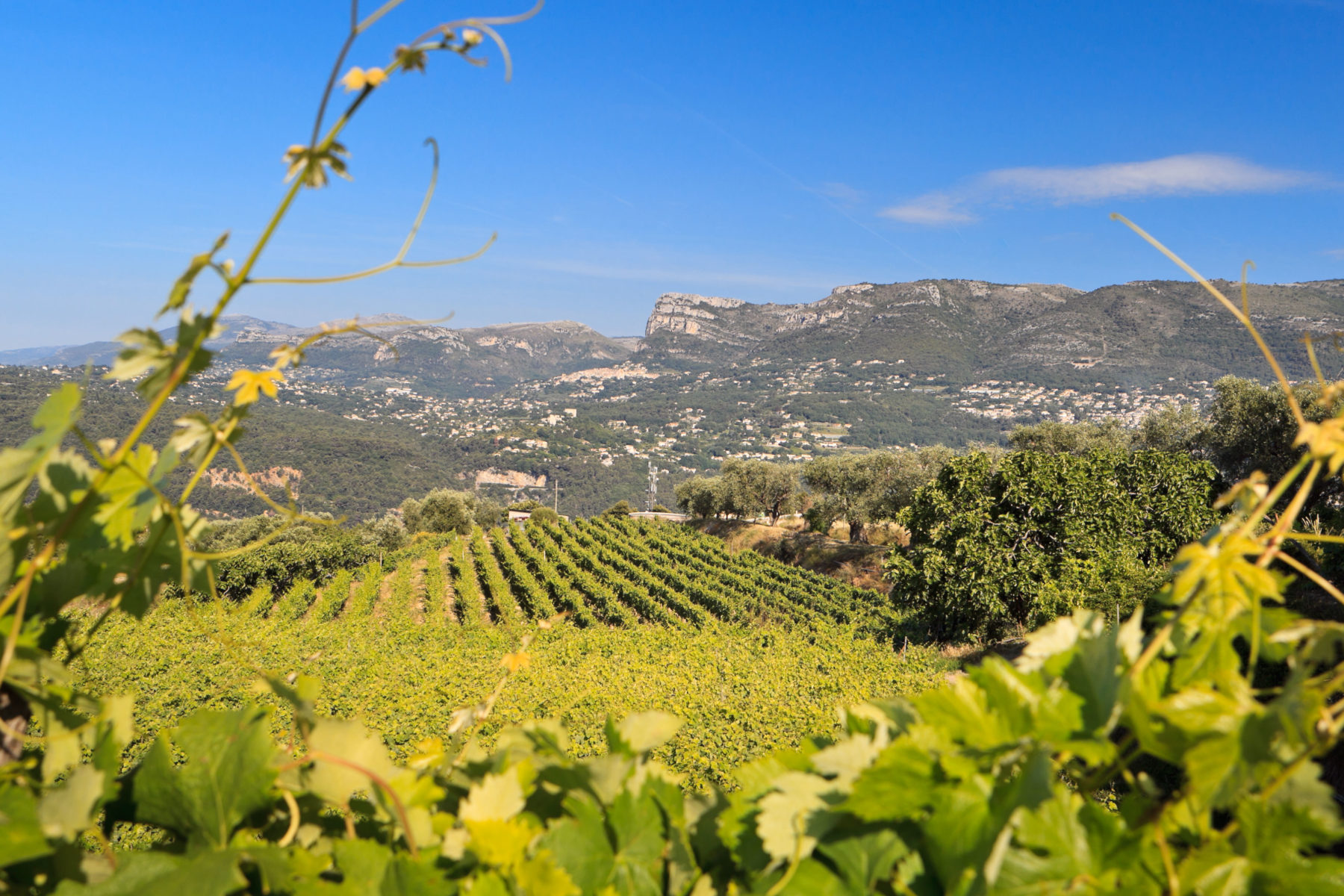
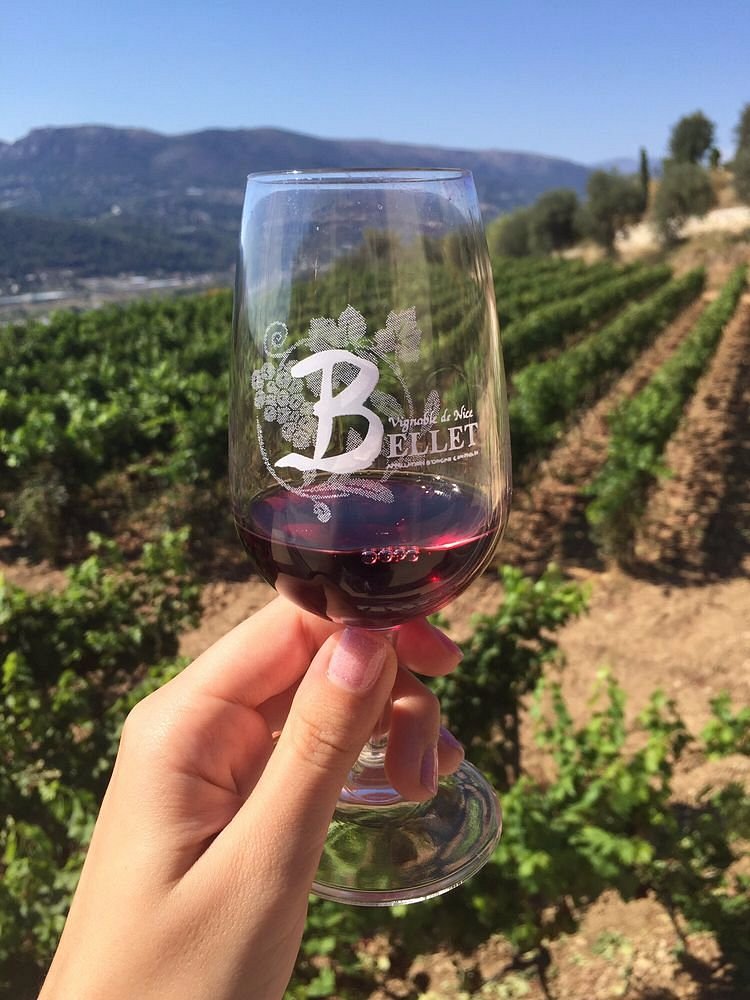
The Bellet wine appellation lies within the city limits of Nice

The hills above Nice are filled with jaw-dropping villas and bougainvillea-framed panoramas of the Mediterranean.  These hills are also home to France’s smallest urban wine appellation, Bellet.   Comprising less than 150 acres of vines with fewer than 10 producers, Bellet wine is well known to locals but unknown to the world since it rarely leaves the area---the mere 120,000 bottle production is snatched up by Riviera wine-lovers and restaurateurs in-the-know.

 The Bellet area has been making wine for < 1500 years

Formed in 1941, the tiny Bellet appellation has a unique terroir.  At an altitude varying from 600-1,200 feet above sea level, vines often cling to the hillsides in terraced vineyards.  Manual harvesting is the only possibility in these inhospitable conditions.  Soil, washed down from the Alps for millenniums, a mix of sand and rocks, provides a perfect drainage system for grapes.  Furthermore, Bellet is less than three miles as the bird flies from the Mediterranean so this allows its vines to  recuperate at night when the marine influence brings coolness to the hot, dry daytime temperatures.

                 Wine-Knows will be visiting Bellet this autumn....there is only one spot available!

Bellet produces red, white and rosé wines.  White grape varieties include Chardonnay and Rolle (aka Vermentino in nearby Italy).  These two are often blended together creating a spectacular white not seen elsewhere in France.  For reds, Grenache  (one of southern France’s greatest grapes, e.g. Chateauneuf du Pape), is mixed with unknown native Riviera varietals such as Braquet and Folle Noire.   

"I love cooking with wine....sometimes I even put it in the food."   Julia Child

Wine-Knows will be visiting the Bellet appellation during its Week in Provence at the villa where Julia Child wrote her masterpieces, Mastering the Art of French Cooking.    There is only one seat remaining.  For more information about this special “Julia” trip, visit our website:

http://www.wineknowstravel.com/julia-2022-1-itinerary-2/


Tuesday, March 22, 2022

Tantalizing Turmeric

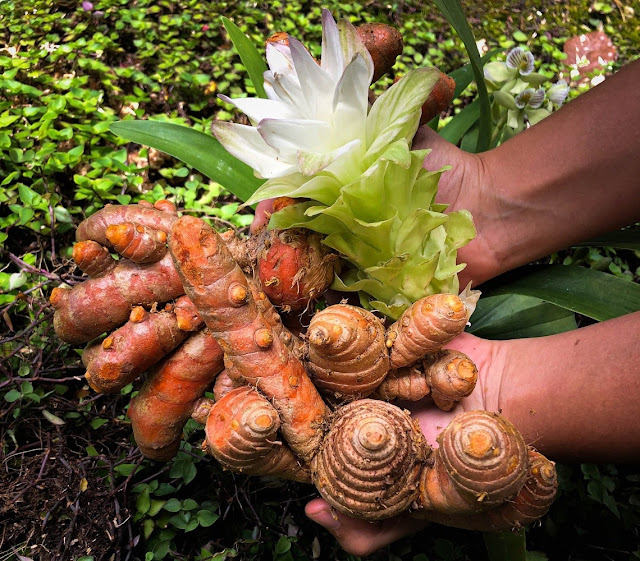
                                               Turmeric is the root of a flowering plant

Google turmeric and you’ll be presented with 62 million articles in a nano second.   Turmeric has recently been widely touted as a food supplement for its supposed anti-inflammatory properties.   This article, however, looks at turmeric solely from a culinary standpoint.

                                                   Ginger & turmeric are cousins 

Turmeric is a member of the ginger family.  It’s easy to see the familial resemblance between these two as fresh turmeric root looks similar to ginger root.  However, once peeled, the interior of these two is quite different in that turmeric is bright orange.   Most likely native to India, turmeric is what gives curry its vibrant yellow-orange color.

Turmeric is actually the quasi root of a flowering perennial plant.  It requires warm temperatures and lots of water.  The hot and humid weather of India and South Asia offer perfect conditions and turmeric grows wild in their forests.   It’s no wonder that the cuisines of both India and the countries of southern Asia are replete with recipes that utilize turmeric.   However, turmeric is also widely used in Middle Eastern cooking and North African recipes.


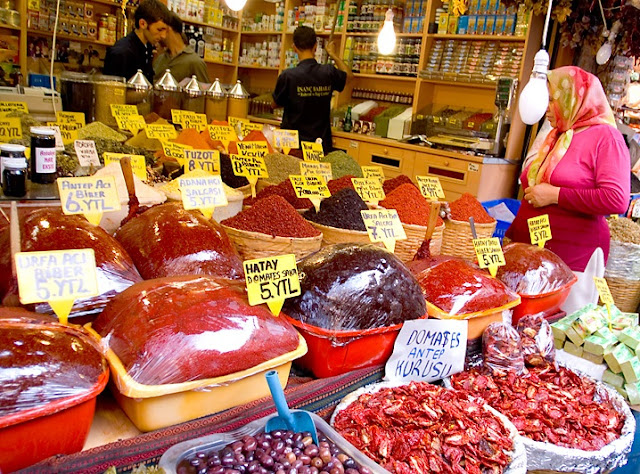
                             Many different turmerics are available in this Istanbul market 

Most turmeric is used in the form of a dried, ground powder to impart an intense color.  It is the principal ingredient in curry powders.  Turmeric gives not only color but provides a pungent earthy, mustard-like flavor.   Although used mostly in savory dishes, it is also used in sweet dishes such as ice-cream and baked products like cakes.  Similar to its cousin ginger, turmeric can also be used fresh in items such as Asian pickles.

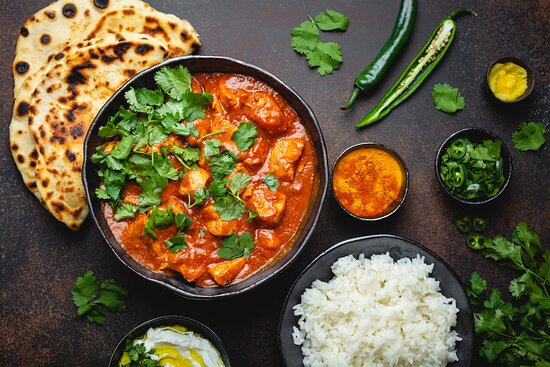
                         This crowd pleaser, Chicken tikka masala, is the turmeric bomb*

My favorite use of turmeric is in one of my most beloved recipes, chicken tikka masala:

 https://cafedelites.com/chicken-tikka-masala/


*compliments of TripAdvisor 

Saturday, March 12, 2022

Best Buys on Expensive Wine Lists

          This Michelin 2 star restaurant in Sicily provided an unforgettable evening for Wine-Knows

The best value on a pricey wine list is always a wine you bring from home (we’ve paid as much as $75 for corkage, but it’s been worth it to us to enjoy a bottle of an older red that has been decanted for a couple of hours.)   However, that isn’t what this article is about.   Instead, the article addresses those times when bringing a bottle to a fine dining experience isn’t feasible (e.g. European restaurants don’t allow).  How does one quickly peruse a 50 plus page wine list to find the reasonable hidden gems?  I’ve got a few tricks up my sleeve to help.


First, however, if you’re looking for a varietal such as Cabernet Sauvignon, you can stop reading this article now.   Cabernet is one of the most expensive items on a wine list regardless of its country of origin.   The same goes for Chardonnay and Pinot Noir.  Instead of varietal, change your vision to style of wine.  If you want a big bold red, then my method can help you.   If you want a complex white, my experience can also assist you to find the perfect alternative white, often for considerably less.

3 Michelin star George Blanc's list in the 1980's had 10 pages of Burgundian reds

I can help you find both well-crafted white and red wines, but you have to know where and how to look.   All upmarket wine lists are laid out differently.   In Europe the format is more homogenous.  Typically, for example, a European Michelin star sommelier has his/her wine listed by geographical area (e.g. Bordeaux, Burgundy, Champagne, Tuscany, Rioja).    In New World fine dining, the wine list can in the same regional order used in Europe, or wines can be listed by varietal.  This means that red Bordeaux appears together with Cab from California and with the Super Tuscans from Italy.    Or that white Burgundies & California Chars are all listed under Chardonnay.

     A Wine-Knows client poses with the sommelier in a Michelin star restaurant near Bordeaux

So, the first thing you must do is to quickly peruse the sizeable wine list to ascertain how it is laid out:  wine region or grape?   This should only take a minute or two.  Once you understand the format, you’re ready to get down to business.


Below are often times the two best white values on a Michelin-star level wine list:

Alsace’s Whites:

First, be aware that this eastern area of northern France produces both dry and sweet wines.  Make sure you confirm with the sommelier which one is which.

Alsace makes several whites.  I suggest you tell the sommelier what you’re ordering for dinner and ask for his/her help in selecting which varietal will pair best with your meal.  If the wine list is formatted by grape, check out Pinot Gris (or if you’re ordering a spicy dish, try Gewurztraminer or Riesling).

  Pinot Gris or Gruner would have paired beautifully with this Michelin star seafood appetizer in Spain

Austria’s Gruner Veltliner:

The star of Austria’s show is the Gruner Veltliner grape.  Don’t worry about pronouncing it, just enjoy it.  Gruner Veltliner (often referred to as simply “Gruner”) is the darling of many sommeliers because of its food-friendliness and its significant quality/price.   This dry wine might become one of your new value faves.

       Michelin star dining will be featured on Wine-Knows' Christmas market tour December 6-16


For the two best red values on a Michelin-star level wine list consider these:

Bierzo, Spain’s Mencia:

Bierzo is a small wine region in northern Spain near the Portuguese border.  Mencia is its super-star red grape.  This is a powerhouse red is chocked full of flavor and structure.  If you’re looking for a complex medium body red, look no further.  You’ll be stunned at the favorable price.

                 Wine-Knows enjoy a pre dinner aperitif at 3 star Auberge de Ill in France

Argentina’s Malbec:

Malbec is one of the five grapes allowed by law in the blend of Bordeaux’s red wines.   In Argentina, however, Malbec is often made as its own varietal---although it can also be blended.   Regardless if it’s blended or not, Argentina’s Malbec deserves your attention.  Some of the more expensive ones are aged in oak and can offer an alternative to a pricey Bordeaux for meat lovers.


Remember to think out of the box.  Regardless of the number of pages, every wine list has gems to be snagged....you just need to find them.
Tuesday, March 1, 2022

Germany’s Wine Renaissance

                         Germany is now the world's 3rd largest producer of Pinot Noir

The last few decades German wines have changed dramatically.  In the mid 1980’s  I attended an intensive one week course at the illustrious German Wine Academy on the Rhine River in Geiseheim.   During that course I was exposed to some of the best wines made in Germany.   Most of the wines were sweet whites.  There were a few dry whites, and reds were an after-thought.   Not true today in the least.

                     This well regarded 17th century winery is now focusing on dry whites

Significant changes in German wines have shifted the industry on its axis.  First,  the most striking change has been from sweet to dry wines.   German wines today are more in line with the modern day trend of dry, food-friendly wines.  Second has been a switch to higher quality.  Many German wines produced in the last quarter of the 20th century were insipid, overly processed and overly sweet.   Riesling, one of the world’s greatest varietals, got a very bad name from poorly produced German wine.  The new high quality German wines have no relationship to the past.

             Germany's modern more healthy cuisine pairs with both dry white & red wine

There are many reasons contributing to Germany’s new wine approach.  A warming climate has allowed Germany to make fuller-bodied, more complex wines.   Next, the newer generations of winemakers who are well aware of the global trend for dry wine,  are equally quality focused.  Lower quality varietals like white Muller-Thurgau are being replaced with the Mercedes of red grapes, Pinot Noir.   This Pinot may the country's sleeping giant as the varietal, known locally as Spatburgunder, is garnering international recognition.

                         Pinot Noir was brought to Germany from nearby Burgundy, France

Germany is on the move and is increasingly becoming a player on the world-wide market of quality dry wines, both white and red.  Last year, for example, Germany changed its wine laws and introduces a hierarchy for dry wines that closely parallel the EU system that is based on terroir.  

            Many modern day yuletide traditions such as the Xmas tree come from Germany

Wine-Knows will be conducting its first trip to Germany for the country’s world famous Christmas Markets December 6-16.  We’ll be visiting several German wineries to learn about their new trend for producing high quality dry wines.   Come learn with other Wine-Knows about these new wines that are winning world-wide awards. 

www.WineKnowsTravel.com


Monday, February 21, 2022

Alsace’s Unsung Hero Wines


                                       Alsace makes both high quality still & sparkling wines


Forbe’s  called Alsatian wine, "The best, and best value, white wines you've never drunk."  Alsace, a relatively unknown and unfashionable wine region for most Americans, forms France's northeastern border with Germany.  Perhaps Alsace's misconceived association with German sweet wines is the cause for discerning USA wine lovers to miss out on the dry sensational wines of Alsace?   

 Alsatian wines are some of the best values on planet earth
 

Wine from Alsace is a phenomenal bargain.   When dining at a Michelin star I always turn to the Alsatian wine section of the wine list.   First, I love these wines---and so do knowledgeable sommeliers who understand their food-friendly beauty.  Second, because of the lower demand for these unknown gems, prices for Alsatian wines represent some of the best values on a wine list. 

                                     Alsace is a treasure trove for well crafted white wines
       

There are three main white grapes in Alsace:

Pinot Gris

You may know this grape by its Italian name, Pinot Grigio.  While they are the same grape, the varietal reaches rock-star status in Alsace.  Alsatian Pinot Gris is often a full bodied wine with tropical and stone fruit flavors.  Citrus is often present, as is a spicy nuance. 

Gewurztraminer

     This grape may be another reason why Alsatian wines is not fashionable:  no one can       pronounce it (plus this varietal is often associated with its sweet German counterpart).  Dry Gewurztraminer can be quite seductive:  think luscious aromatics like an intoxi- cating perfume.  In addition to floral notes (often roses), there’s also an exotic layering of passion fruit or lychee.    

     Riesling

     Like Gewurztraminer, Riesling is also a highly aromatic grape.   In Alsace young            Riesling flavors can range from lemon/lime to pineapple, apricot and nectarines,            and are often laced often with floral aromas.  The varietal’s high acidity make it an        especially food-friendly choice.

                  The Christmas "marches" in Alsace are some of the most special in Europe

Wine-Knows will be visiting Alsace this year (December 6-16) during the region's world-famous Christmas markets.   With roots in the Middle Ages, modern day Christmas markets are some of the most magical celebrations in all of Europe.  Why not join us to learn about Alsatian wine, and experience Europe like you've never seen it before?

http://www.wineknowstravel.com/christmas-market-itinerary/


Thursday, February 10, 2022

Wine on the Rocks

                                         Rocks can be instrumental in making a complex wine

This is not an article for novices on wine coolers or putting ice in your wine.  It is an article for serious wine lovers on the important role that rocks can have in a vineyard.  Rocks can be instrumental in the difference between a ho-hum wine, and some of the best wines on the planet.   Perhaps the most famous wine rocks are those of Bordeaux and the Rhone (especially Chateauneuf du Pape).   But, many other world-class wines owe part of their greatness to rocks.

                                     Galets can vary from pebble-sized to larger rocks

The French actually have a specific term for these vineyard rocks. They are called “galets.”   Galets can vary anywhere in size from several pounds to large pebbles.  Regardless of size, however, rocks are integral to the growth of vines and their fruit in several ways.  Rocks absorb heat from the daytime sunshine and then slowly release the heat back during the night.  During cold winters this is important so that vines don’t freeze.  During cool summer evenings, on the other hand, heat retention and heat transmission are critical for vine’s growth and fruit ripening.


Rocks can also be critical for drainage.  Vines need proper drainage in order to produce quality fruit.   Layers of pebbles or even smaller sized rocks can create a perfect drainage system and allow the vine to send its roots downward to seek water and nutrition for the plant.   In this search downward through the vineyard’s stratum, the plant also brings back nuances from the earth that create complexity in wine.


                                                   "Graves" is all about it's "gravel" soil

Rocks are an important part of the vineyard’s terroir.  In the case of Bordeaux’s left bank and Chateauneuf du Pape, both of these wine districts lie beside large rivers.  In Bordeaux, millenniums of granite from the Pyrenees have been washed downward and were deposited in vineyards when rivers overflowed their banks.  Graves, one of Bordeaux’s premium districts, actually takes its name from the word for “gravel.”  Graves' vineyards are littered with rocks that have been broken down by the water's churning action as the rivers carry rocks toward the Atlantic.      

     This Chateauneuf du Pape vineyard is located a croissant's toss from the Rhone River

The Rhone wine region lies beside the Rhone River.  Alpine rocks have been washed down via the Rhone for ages.  Chateauneuf du Pape is the flattest part of the region, hence, its vineyards are laden with galets from the Rhone’s flooding.   On the other side of the world in New Zealand, there’s the Gimblett Gravels wine district, an area known for its world-class red wines.  The Gimlett Gravels are located in an old river bed filled with rocks.  In this case, the river actually changed course and left in its wake a perfect terroir for growing wine grapes:  several feet of deep gravels.   


If you're looking for a novel idea for a wine-tasting, why not consider a "Wine on the Rocks" soiree?