Showing posts with label Middle Eastern seasoning. Show all posts

Tuesday, March 22, 2022

Tantalizing Turmeric

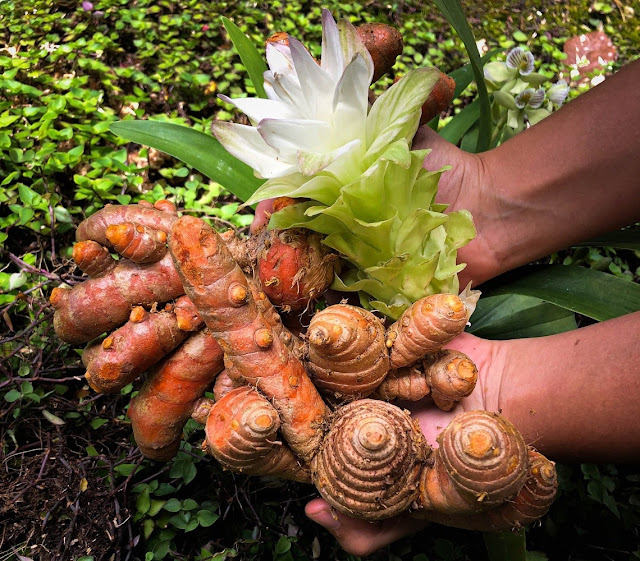
                                               Turmeric is the root of a flowering plant

Google turmeric and you’ll be presented with 62 million articles in a nano second.   Turmeric has recently been widely touted as a food supplement for its supposed anti-inflammatory properties.   This article, however, looks at turmeric solely from a culinary standpoint.

                                                   Ginger & turmeric are cousins 

Turmeric is a member of the ginger family.  It’s easy to see the familial resemblance between these two as fresh turmeric root looks similar to ginger root.  However, once peeled, the interior of these two is quite different in that turmeric is bright orange.   Most likely native to India, turmeric is what gives curry its vibrant yellow-orange color.

Turmeric is actually the quasi root of a flowering perennial plant.  It requires warm temperatures and lots of water.  The hot and humid weather of India and South Asia offer perfect conditions and turmeric grows wild in their forests.   It’s no wonder that the cuisines of both India and the countries of southern Asia are replete with recipes that utilize turmeric.   However, turmeric is also widely used in Middle Eastern cooking and North African recipes.
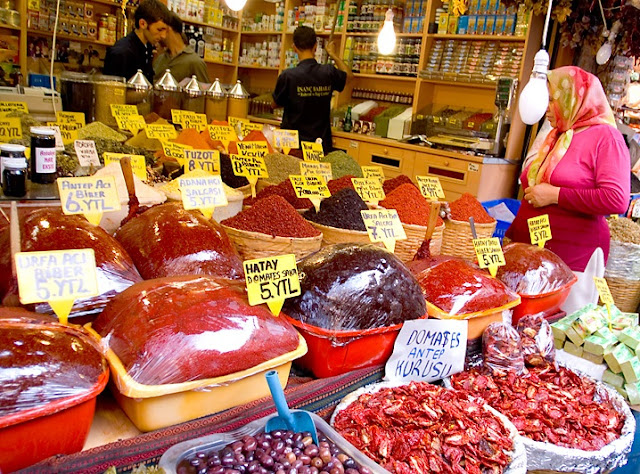
 

                             Many different turmerics are available in this Istanbul market 

Most turmeric is used in the form of a dried, ground powder to impart an intense color.  It is the principal ingredient in curry powders.  Turmeric gives not only color but provides a pungent earthy, mustard-like flavor.   Although used mostly in savory dishes, it is also used in sweet dishes such as ice-cream and baked products like cakes.  Similar to its cousin ginger, turmeric can also be used fresh in items such as Asian pickles.
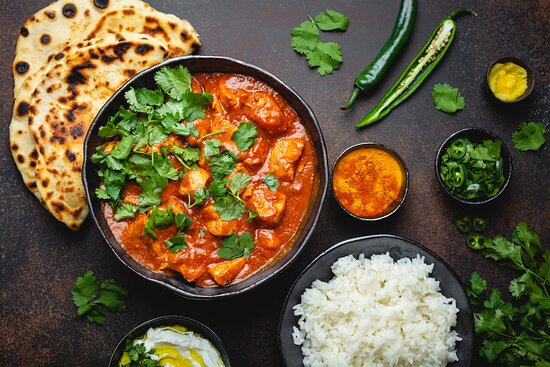
                         This crowd pleaser, Chicken tikka masala, is the turmeric bomb*

My favorite use of turmeric is in one of my most beloved recipes, chicken tikka masala:

 https://cafedelites.com/chicken-tikka-masala/


*compliments of TripAdvisor 

Wednesday, April 21, 2021

The Hottest New Foodie Item

               Dukkah is an aromatic condiment that changes even the mundane to a super-star
 

This culinary item had me at “hello.”   Wine-Knows took a group to New Zealand last year just before the pandemic knocked the world off its axis.  On a private boat charter in search of New Zealand’s prized green lip mussels (the world’s largest),  the onboard chef prepared a just-plucked-from-the-sea mussel lunch.   Also on the table was a bottle of country’s gold medal winning olive oil and a strange ground mixture that none of us recognized at all.  It was dukkah  (pronounced duke-ah).

The chef explained that we were to dip the freshly baked bread in the olive oil, and then into the dukkah.  One bite and all 15 Wine-Knows’ pairs of eyes were saucer-sized.   By the end of the charter we had eaten three bowls full of dukkah and would have eaten four, but that was all the chef had made.  So what is dukkah?


                Small pieces of pita with dukkah, avocado & extra nuts is a killer app

Dukkah (also spelled dukka & duqqa), is an aromatic condiment made of pulverized nuts and seeds, with a blend of spices and herbs.   It comes from Egypt where its name means “to pound.”    In Egypt, the condiment is made by pounding all of the ingredients together with a traditional mortar and pestle (however, I’ve discovered that a food processor delivers excellent results). 


        Ingredients vary from Eqyptian chef to chef but they are combos of these nuts, seeds & spices

Dukkah is made from items commonly found in every Egyptian home: 

                       ~ some type of nut (think hazelnut, almonds, and/or pistachios)

                        ~ common herbs such as fennel seeds, cumin

                        ~ sesame seeds

Dukkah has become so popular that is now located in the Merriam-Webster Dictionary.  Even Trader Joe’s has jumped on the Dukkah bandwagon (3.3 oz for < $4), as has the spice giant McCormick.    But, if you want the read-deal, blow-your-mind homemade version, watch the video at the end and make your own.  It’s easy and quick to make, and the difference will astound you.  (BTW:  make a double batch as it’s addictive).

            Olive oil, dukkah & hummus with a loaf of  great bread makes the perfect quartet
 

There are unlimited ways to use dukkah.   Google it and you’ll come up with nearly a half million recipes with dukkah as an ingredient.   It can be used in main dishes, as well as with roasted veggies and salads.  Dukkah adds big-time aeromatics, great texture and intoxicating flavors.  That being said, I love to serve it in the virginal way that I first experienced it----with a great loaf of bread and an artisanal olive oil.  

https://www.youtube.com/watch?v=Xt-7c-l7K68