Thursday, October 27, 2022

Why do Wines Have a Peppery Smell/Taste?

                   Syrah is one of the most well known grapes for its peppery characteristics

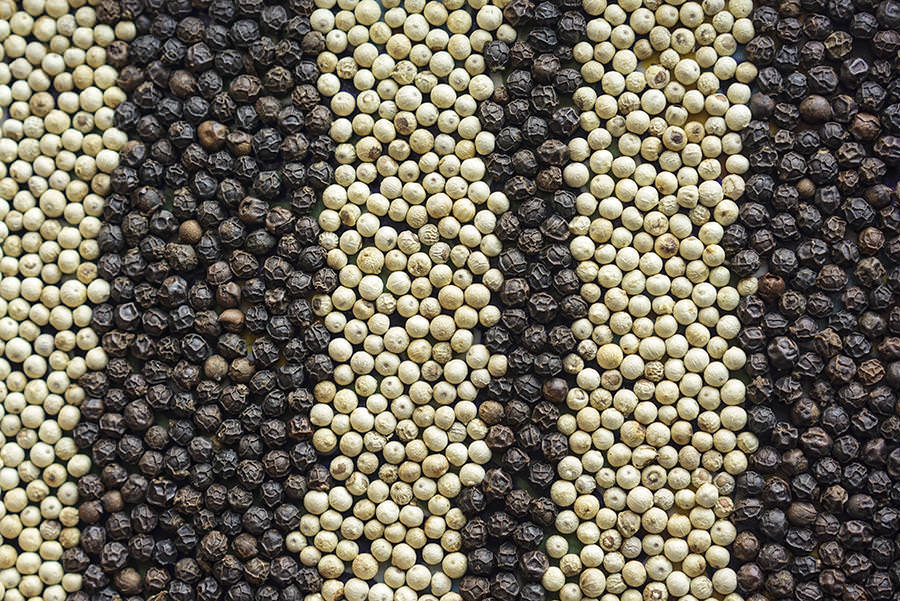
If you’re a Syrah lover (especially those produced in warm climates such as the Rhone Valley), then you’re most likely more than aware of this varietal’s pepper nuances.   There’s a scientific reason for this pepper and it has do with a chemical called rotundone.  This same substance, rotundone, not only appears in Syrah grapes but occurs in both white and black peppercorns.  Unlike many parts of a grape that are changed during the fermentation process, rotundone survives fermentation and ends up in your glass creating a spicy, peppery character.


Rotundone is a relatively newly discovered compound.   It was identified only fifteen years ago by researchers who were on a quest to investigate the science behind the peppery smell in wine.  The chemical, present in the skins of grapes, is found in miniscule amounts.  But, rotundone is such a  powerful aromatic compound that one teaspoon can cause an Olympic size pool to smell like the inside of a pepper grinder.


Both the white pepper smells of cool weather Syrahs, as well as the black pepper of Syrah grown in warmer terroirs are due to rotundone.   And, it’s not only limited to Sryah grapes.  In fact many varietals including Cabernet Sauvignon, Grenache, Pinot Noir and even the white varietal Gruner Veltliner have been discovered to have rotundone.  Interestingly, the rotundone chemical is also present in marjoram and even some cocoa powders, and the smell is also present in well-aged leather.


Sunday, October 9, 2022

Are Michelin Stars Worth the Hype?

       Michelin stars used to be awarded for setting, tablescape, artwork, flowers, service & wine list

I was in France for >6 weeks  recently and dined at a series of Michelin star restaurants.  My mission was to answer the following question:   do these pinnacles of gastronomy still deserve my heart and my credit card?   Let me shed a little light on my quest.

The criteria for receiving a Michelin star has changed since my first star dining experience >40 years ago in Paris.  For example, ambiance used to be a big criteria, but the last ten years Michelin stars have been awarded to pubs, sushi bars, and even noodle joints.  Elements of fine dining, likewise, are no longer vital to receive a coveted Michelin star.  Food is the touchstone (regardless of setting) with items such as use of quality ingredients, the chef's mastery of culinary techniques, consistency of food, and value being some of Michelin's current star criteria.

This reversal in Michelin's star measures may explain why the last few years that my  Michelin star dining experiences have resulted in disappointment.   Beforehand, I have been wowed with luxurious trappings such as elegant floral arrangements, gorgeous china & cutlery, top notch stemware, flawless service, fabulous linens, and a mesmerizing wine list.  All of this was before I took my first bite.  In the past the food had nearly catapulted me out of my comfortable silk upholstered chair.  Over the past few years my experience at Michelin stars, however, have not moved me more than an inch or two…mostly because the chair was bare bones and not at all comfortable.

Over the course of 6 weeks I dined in two different one star Michelins, and two restaurants that had been awarded two stars.  All were luxurious old world dining experiences with all the bells and whistles for what Michelin stars used to be.  The cost for food varied from $150-300 per person (wine was extra).  I am happy to say, they were all worth the hype.   All were deserving of their catapulted ranking.  Food at all were the stars of the show, and the chefs were all pushing the creativity angle.  Service was superior.   Both  of the two star Michelins had wine lists that were nearly 100 pages.

All four restaurants were worthy of my credit card and my admiration.  I've listed the four below in the order in which I dined.  I would dine in all of them again in a heart beat.  I've also noted my remarks noting their most worthy features:

  • Restaurant Lalique, Sauternes (two stars).   MOST CREATIVE
  • Les Terrailiers, Biot (one star).  BEST VALUE
  • Des Rois, Beaulieu sur Mer (one star)   MOST DAZZLING SETTING
  • Chevre-D'Or, Eze (two stars)   MOST ENCHANTING


Wednesday, September 28, 2022

Favorite Outdoor Markets of Provence

              Provence's ethereal Cavaillon melon is a foodies' dream...you can smell it 50 yards away

The French Riviera is part of the larger region of Provence.  Nearly every town in Provence has a weekly market.  Vendors take their bounty to Vaison on Tuesday, Nyons on Thursday, Valbonne on Friday, and then to the grand-pere of them all, Isle sur Sorgue on Sunday.   Some, like Isle sur Sorgue, are huge affairs with tour busses full of mesmerized tourists jockeying with locals for a taste of the area’s famous Cavaillon melon.  Others, such as the Riviera's tiny Valbonne, are more intimate affairs that take over the small village’s central square turning it into a colorful theater stage filled with culinary gems & the area’s handicrafts.

              Shoppers in Vaison must cross this ancient Roman bridge to enter the city for its market

Vaison-La-Romaine

Located in the northern part of Provence (30 miles northeast of Avignon), Vaison makes my list because its a two-for-one:  significant Roman ruins plus a fabulous market.   As its name implies, Vaison was a famous “Roman” town.  Rich ruins of the Roman occupation dating before the birth of Christ marry with a charming medieval town to create a picture-perfect backdrop for the market.


Olive-centric gift shop in Nyons showcases products made from or about olives

Nyons

Not far from Vaison, is another market I really enjoy.  Nyons is the epicenter for Provence’s famous olive production.  In fact, these olives are so renowned that they have their own appellation (A.O.C).  While all Provençal markets feature the ubiquitous local olives, Nyons takes olives to an entire different level:  there are stalls specializing in EVOO cosmetics featuring a cornucopia of lipsticks, body creams, shampoos & conditioners, and soaps in every color of the rainbow.   Other sellers tantalize you with food products ranging from tapenade to an unforgettable multi-layer hot potato gratin oozing with cheese, carmelized onions, local olives and lardons (France’s bacon)---all cooked in a super-sized paella pan in a wood-fired oven.


        Tantalizing Provencal fabric abounds in the form of tablecloths, napkins, runners & placemats

Isle sur Sorgue

This town, called the "Venice of Provence," is enchanting.  Built along the winding waterways of the Sorgue river, Isle sur Sorgue is a cluster of small “islands” all connected to one another with tiny foot bridges.  Always on Sunday, this market is packed with weekenders who come for the city’s outdoor antique market and uber fresh local produce.   Word of warning:  go early (before 9).  The last time I visited it took nearly 30 minutes to find a parking place, and another 30 minutes to walk from the outskirts into the center.

Valbonne is tiny, but knocks it out of the park for an extraordinary experience

Valbonne

In some ways I’ve saved the best for last.  In spite of the fact that this is the smallest market of the four, in many ways it’s the most magical.  Located 10 miles from the Riviera's jet-set Cannes, Valbonne is a pedestrian-only town of 13,000.   The entire village is a medieval jewel box so it’s no wonder why it often used as a movie set (e.g. French Kiss with Meg Ryan).   Valbonne’s weekly market, held on the charming central square, also spills over onto the cobblestoned side streets and arcaded alleyways leading away from center.   Once you finish with the market, head to these charming backstreets where you'll see another side of the French Riviera.


 Viva Provence!

Tuesday, September 20, 2022

A Foodies’ Stroll Through Nice

                                 The Cours Saleya is Nice's epicenter for food-lovers


Tomorrow I'll arrive on the Riviera for two weeks at Julia Child’s villa with two different groups of food-lovers.
  One of the area’s foodie highlights is the historic center of Nice, just steps from its elegant beach promenade.  There’s no better place to begin a foodie trek than the Cours Saleya, the city’s open air market.  Since pretty much anything can be grown in the French Riviera’s favorable climate, the autumn produce here is a cacophony for the senses.


The Cours Saleya is filled with food stalls that have been owned by the same family for generations.   One of my favorite vendors is a woman selling socca, a crepe-like snack made from garbanzo beans.  While there are several folks selling socca, the best one is made from the lady who cooks it in a giant cast-iron skillet over a wooden fire.  Originally from neighboring Italy (the border is only twenty-something miles), socca has become a classical Niçoise specialty.


                                     Chevre is synonymous with the French Riviera

Provence is famous for its goat cheese and the Cours Saleya has every size and shape for sale, from small hearts to large pryamids, from small discs to big logs.  There’s goat cheese made with the herbs of Provence, or cheese covered with black ash to protect it during the ripening process.   Other renditions include those wrapped in aromatic chestnut leaves, or even chevre studded with Provence’s black truffles.


                  Olives were brought to Nice before the birth of Christ by the Greeks & Romans

The olive is the other classical food symbol of Provence’s Riviera and the Cours Saleya is replete with vendors selling everything olive.  Like goat cheese, olives come in multiple renditions from the colossal green picholine to the teeny-tiny  “Nicoise” varietal.  These petite olives are only grown in this area of France and are prized for their nutty, intense savory flavor.   Also, there are many merchants who will tempt you with samples of tapenade, a pungent olive paste.   Anything and everything goes here for tapenade:  there’s tapenade from every type of olive, but there’s also tapenade made with roasted artichokes & herbs of Provence, tapenade infused with dried tomatoes, tapenade with figs & rosemary, and tapenade mixed with grilled aubergines (eggplant).


                           The Alziari shop is like a museum paying tribute to the olive

A block or so from the Cours Saleya there’s another olive experience I recommend.   The Alziari family has been producing “Grand Cru” olive oil in Nice since 1868 and their retail shop is worth seeing.  More of a museum than a store, it’s chocked full of history.   Up until twenty years ago, olive oil was sold in bulk and shoppers brought in their own containers to be filled from a giant stainless steel vat in the store.  Today, Alziari has become an international upmarket brand and is sold in the US at high-end foodie retail shops and online.


            Located across from Nice's Opera House, Maison Auer deserves a standing ovation 

A one minute walk from Alizari will take you to the next must-visit foodie emporium, La Maison Auer.  This opulent jewel-box of a shop is the Versailles Palace of chocolate and candy.   Run by the same family for five generations, Auer has been making irresistible edibles since 1820.   Exquisite packaging makes for the perfect gift to bring a foodie friend back home.  

Next in this three-part series will be an article on the best of Provence's outdoor markets.


Saturday, September 10, 2022

Authentic Flavors of the French Riviera


                Restaurant Arcades, featuring only authentic Niçoise recipes, is a dying breed

I can think of no better way to begin this month's three-part segment on the French Riviera than with an overview of the tastes of this magical area.  I’ll be flying to Nice soon and I’m already contemplating what I’ll order for my first night's dinner.   Fifty years ago Julia Child wrote about the restaurant in which I’ll be dining.   Julia lamented that Les Arcades in Biot was one of the last bastions of true Niçoise cooking on the French Riviera.  Les Arcades is still owned by the same family as it was when Julia visited.  Having dined at Les Arcades over twenty times, I couldn’t agree more that its menu today is even more of a rarity.  This article will explain Niçoise cuisine and why it has become an endangered species.

                  Arcade's roasted red peppers with anchoiade sauce is going to be my starter

Nice’s culinary profile is a true fusion cuisine of its past conquerors.  It begins with the Greeks who arrived on the Riviera by boat 600 B.C.  They brought with them olives & olive oil, as well as a ubiquitous fish soup (now known as bouillabaisse).  The Romans, who arrived 500 years later on foot with their own olives & olive oil, named this area “Provencia.”  Not only did the name stick (Provence) but so did these Roman dishes:

 ~  Anchoiade:  a thick anchovy paste made with olive oil, vinegar & garlic.  It's used to flavor everything. 

~ Fougasse:  a baked flatbread very similar to ancient focaccia baked in outdoor community ovens.

                       Pissaladière, mostly served by the slice, is a great Niçoise on-the-go lunch

 ~ Pissaladière:  thin crusted bread topped with carmelized onions,  olives, anchovies & olive oil.

But the Romans are not the only Italian influence on Nice’s gastronomic ways.  The French Riviera was part of Italy’s House of Savoy from 1388 to 1860.  During this nearly 500 year period, Italian foods became even more prominent in this French area.  Here’s a sampling of Italy’s gifts to the French Riviera:

  •   Pesto became pistou
  •   Farinata (Italy’s chick pea pancake) became socca
  •  Tuna salad from the area of Genoa became Salade Niçoise

                          Niçoise olives are very tiny black bundles of super-charged flavor

To understand Niçoise cooking there are a two important cornerstones.  First, is olive oil.   Second, Niçoise cuisine is difficult to master because it’s so simple.  This means that every ingredient must be of the highest quality, seasoning must be just right, and the execution flawless.  There are no complicated sauces to hide any mistakes.   Mess up one thing and the dish quickly falls apart.

                  The above authentic Niçoise salad is far more simple than today's version 

So why is Niçoise cuisine a dying art-form?  The French Riviera receives five million tourists annually and they come from every country in the world.  Tastes are changing and restaurants reflect this globalization of food; for example there are > 200 Asian restaurants in Nice and > 400 Italian restaurants.  Sushi and pizza have become more popular than bouillabaisse.  Eating habits are changing, e.g. fast food is becoming more common.  Many travelers also equate French food with complicated rich sauces, so super simple French dishes are often an oxymoron.   Finally, while nearly every seaside restaurant on the French Riviera has a Salad Niçoise on its menu not even these salads are truly Niçoise---the authentic version does not include potatoes, green beans or lettuce!      


Stay tuned for the following two articles in this Riviera trio:  A Foodie’s Stroll Through Historic Nice, and Provence's don't miss outdoor markets.


Monday, August 29, 2022

10 Facts You May Not Know About Bordeaux

                                     Wine is an integral part of Bordeaux's every fiber

Every wine lover most likely knows many things about Bordeaux wines, however, some may not know the following ten tidbits:

1.  Unlike Burgundy which names its wines based upon the actual plot of earth on which the grapes are grown, Bordeaux wine names are based upon the chateau that owns the land. 

                       Conspicuously absent from all Bordeaux front labels is the grape variety

2.  Grape varietals never appear on the front label of Bordeaux wine.  Often times, however, grape varieties are displayed on the back label.  

3.  Bordeaux law dictates which grapes can be grown in the region.

4.  Before  the 1960’s Bordeaux was known for white wine production.  In 1956 one of the worst frosts ever recorded killed many vines.  The region was replanted with red grapes because they were more frost resistant, and also red wine commanded a higher price.

The auditorium in Frank Gehry's "City of Wine" in Bordeaux is named after Thomas Jefferson

5.  Thomas Jefferson was particularly fond of Bordeaux wine.  As the American Ambassador to France he visited the region on several occasions and bought beaucoup cases of its wines for himself & colleague George Washington.

Botrytis not only dehydrates grapes but changes the chemical structure creating new flavor profiles

6.  Russia's Czar was also a devotee of Bordeaux wine.  In 1859 he dispatched his brother to to buy wine at Chateau Yquem.  By accident the brother was served an 1847 Sauternes, a vintage so terrible that it was not sold as the vintage had been attached by a fungus.  Thus began the Czar's love affair with sweet wine attacked by botrytis.  The wine was immediately rebranded to "Noble Rot."

7.  The most famous vineyards currently in Bordeaux's Medoc used to be swamps.  It was only after the area was drained by Dutch engineers in the 17th century that the Rothschild banking family purchased land in the Medoc.  The rest is history.

8.  Bordeaux is one of the few regions in France that does not produce commercial cheese.

                     Bordeaux is a huge wine region that is divided into several sub-regions

9.   Bordeaux is the world's largest fine wine district.  (It is 8 times larger than Napa.) 

10.  Bordeaux is located on the same latitude as Oregon, Piedmont (Italy), and the southern hemisphere's New Zealand.


Wednesday, August 17, 2022

In Bordeaux It's All About Blending


This is the third article in a four part series on Bordeaux.  Last week we touched upon the fact that due to global warming the wine laws of Bordeaux have been expanded to include six new grape varietals.   Legally, however, these new varietals can only be a maximum of 10% of the blend.    The question is, did you know that most  all Bordeaux wines are blends?

Blending is used to enhance the complexity and texture of wine.   Blending is an art, and the winemaker’s goal is to ensure that each component builds a complimentary profile of fruit, texture and mouth-feel.  Different grape varieties contribute differing attributes to the blend.  Like a great chef, the winemaker must have an excellent palate.


        Cab Sauv's thick skins contain lots of tannin &  pigments that impact structure & color
  
Let’s examine the five historical red grape varietals of Bordeaux for what they add to the blend:
  • Cabernet Sauvignon is a powerhouse grape that contributes structure via its solid backbone of tannins and acids.  Cab’s broad range of flavors include black fruits (berries & cherries), black pepper, tobacco, licorice & violets.
  • Merlot is a far softer grape than Cab.   If Cabernet is King, Merlot is the more feminine Queen.  Merlot is responsible for a sensual texture and mellowness.  It adds flesh to Cab’s tannic backbone and dampens its harsh acidity.  Merlot flavors are often red-fruits (plums & berries) and chocolate.

When blended together, Merlot and Cabernet Sauvignon are two varieties that complement each other to produce a wine that is greater than the sum of its parts.

               Cab Franc has fathered many grapes, the most famous of which is Cab Sauvignon                                                                          

  •   Cabernet Franc is one of the parent grapes of Cabernet Sauvignon (the other is Sauvignon Blanc).  Cab Franc is lighter in color than its offspring and contributes flavors such as raspberry, cassis and violets.  Cab Franc is the third most prevalent grape in Bordeaux blends after Cab Sauv and Merlot.  While its presence in blends may be small in terms of percentage, its impact can be significant.

  •  Malbec is an inky dark grape that adds structure to the blend.   The grape’s flavor profile is plum-like.  Malbec is often only a percent or two of a Bordeaux blend.  In some Bordeaux blends, however, Malbec is not even present.
  •  Petite Verdot is usually a very small amount of the blend.  The grape is fickle so it has fallen out of favor with many winemakers.  When it is used it is often added as a final nuance for its floral (violet, lilac, lavender) and savory (sage and dried herbs) notes.

         Wine-Knows coming to Bordeaux this September will participate in a blending seminar