Saturday, September 10, 2022

Authentic Flavors of the French Riviera


                Restaurant Arcades, featuring only authentic Niçoise recipes, is a dying breed

I can think of no better way to begin this month's three-part segment on the French Riviera than with an overview of the tastes of this magical area.  I’ll be flying to Nice soon and I’m already contemplating what I’ll order for my first night's dinner.   Fifty years ago Julia Child wrote about the restaurant in which I’ll be dining.   Julia lamented that Les Arcades in Biot was one of the last bastions of true Niçoise cooking on the French Riviera.  Les Arcades is still owned by the same family as it was when Julia visited.  Having dined at Les Arcades over twenty times, I couldn’t agree more that its menu today is even more of a rarity.  This article will explain Niçoise cuisine and why it has become an endangered species.

                  Arcade's roasted red peppers with anchoiade sauce is going to be my starter

Nice’s culinary profile is a true fusion cuisine of its past conquerors.  It begins with the Greeks who arrived on the Riviera by boat 600 B.C.  They brought with them olives & olive oil, as well as a ubiquitous fish soup (now known as bouillabaisse).  The Romans, who arrived 500 years later on foot with their own olives & olive oil, named this area “Provencia.”  Not only did the name stick (Provence) but so did these Roman dishes:

  Anchoiade:  a thick anchovy paste made with olive oil, vinegar & garlic.  It's used to flavor everything. 

~ Fougasse:  a baked flatbread very similar to ancient focaccia baked in outdoor community ovens.

                       Pissaladière, mostly served by the slice, is a great Niçoise on-the-go lunch

 ~ Pissaladière:  thin crusted bread topped with carmelized onions,  olives, anchovies & olive oil.

But the Romans are not the only Italian influence on Nice’s gastronomic ways.  The French Riviera was part of Italy’s House of Savoy from 1388 to 1860.  During this nearly 500 year period, Italian foods became even more prominent in this French area.  Here’s a sampling of Italy’s gifts to the French Riviera:

  •   Pesto became pistou
  •   Farinata (Italy’s chick pea pancake) became socca
  •  Tuna salad from the area of Genoa became Salade Niçoise

                          Niçoise olives are very tiny black bundles of super-charged flavor

To understand Niçoise cooking there are a two important cornerstones.  First, is olive oil.   Second, Niçoise cuisine is difficult to master because it’s so simple.  This means that every ingredient must be of the highest quality, seasoning must be just right, and the execution flawless.  There are no complicated sauces to hide any mistakes.   Mess up one thing and the dish quickly falls apart.

                  The above authentic Niçoise salad is far more simple than today's version 

So why is Niçoise cuisine a dying art-form?  The French Riviera receives five million tourists annually and they come from every country in the world.  Tastes are changing and restaurants reflect this globalization of food; for example there are > 200 Asian restaurants in Nice and > 400 Italian restaurants.  Sushi and pizza have become more popular than bouillabaisse.  Eating habits are changing, e.g. fast food is becoming more common.  Many travelers also equate French food with complicated rich sauces, so super simple French dishes are often an oxymoron.   Finally, while nearly every seaside restaurant on the French Riviera has a Salad Niçoise on its menu not even these salads are truly Niçoise---the authentic version does not include potatoes, green beans or lettuce!      


Stay tuned for the following two articles in this Riviera trio:  A Foodie’s Stroll Through Historic Nice, and Provence's don't miss outdoor markets.


Monday, August 29, 2022

10 Facts You May Not Know About Bordeaux

                                     Wine is an integral part of Bordeaux's every fiber

Every wine lover most likely knows many things about Bordeaux wines, however, some may not know the following ten tidbits:

1.  Unlike Burgundy which names its wines based upon the actual plot of earth on which the grapes are grown, Bordeaux wine names are based upon the chateau that owns the land. 

                       Conspicuously absent from all Bordeaux front labels is the grape variety

2.  Grape varietals never appear on the front label of Bordeaux wine.  Often times, however, grape varieties are displayed on the back label.  

3.  Bordeaux law dictates which grapes can be grown in the region.

4.  Before  the 1960’s Bordeaux was known for white wine production.  In 1956 one of the worst frosts ever recorded killed many vines.  The region was replanted with red grapes because they were more frost resistant, and also red wine commanded a higher price.

The auditorium in Frank Gehry's "City of Wine" in Bordeaux is named after Thomas Jefferson

5.  Thomas Jefferson was particularly fond of Bordeaux wine.  As the American Ambassador to France he visited the region on several occasions and bought beaucoup cases of its wines for himself & colleague George Washington.

Botrytis not only dehydrates grapes but changes the chemical structure creating new flavor profiles

6.  Russia's Czar was also a devotee of Bordeaux wine.  In 1859 he dispatched his brother to to buy wine at Chateau Yquem.  By accident the brother was served an 1847 Sauternes, a vintage so terrible that it was not sold as the vintage had been attached by a fungus.  Thus began the Czar's love affair with sweet wine attacked by botrytis.  The wine was immediately rebranded to "Noble Rot."

7.  The most famous vineyards currently in Bordeaux's Medoc used to be swamps.  It was only after the area was drained by Dutch engineers in the 17th century that the Rothschild banking family purchased land in the Medoc.  The rest is history.

8.  Bordeaux is one of the few regions in France that does not produce commercial cheese.

                     Bordeaux is a huge wine region that is divided into several sub-regions

9.   Bordeaux is the world's largest fine wine district.  (It is 8 times larger than Napa.) 

10.  Bordeaux is located on the same latitude as Oregon, Piedmont (Italy), and the southern hemisphere's New Zealand.


Wednesday, August 17, 2022

In Bordeaux It's All About Blending


This is the third article in a four part series on Bordeaux.  Last week we touched upon the fact that due to global warming the wine laws of Bordeaux have been expanded to include six new grape varietals.   Legally, however, these new varietals can only be a maximum of 10% of the blend.    The question is, did you know that most  all Bordeaux wines are blends?

Blending is used to enhance the complexity and texture of wine.   Blending is an art, and the winemaker’s goal is to ensure that each component builds a complimentary profile of fruit, texture and mouth-feel.  Different grape varieties contribute differing attributes to the blend.  Like a great chef, the winemaker must have an excellent palate.


        Cab Sauv's thick skins contain lots of tannin &  pigments that impact structure & color
  
Let’s examine the five historical red grape varietals of Bordeaux for what they add to the blend:
  • Cabernet Sauvignon is a powerhouse grape that contributes structure via its solid backbone of tannins and acids.  Cab’s broad range of flavors include black fruits (berries & cherries), black pepper, tobacco, licorice & violets.
  • Merlot is a far softer grape than Cab.   If Cabernet is King, Merlot is the more feminine Queen.  Merlot is responsible for a sensual texture and mellowness.  It adds flesh to Cab’s tannic backbone and dampens its harsh acidity.  Merlot flavors are often red-fruits (plums & berries) and chocolate.

When blended together, Merlot and Cabernet Sauvignon are two varieties that complement each other to produce a wine that is greater than the sum of its parts.

               Cab Franc has fathered many grapes, the most famous of which is Cab Sauvignon                                                                          

  •   Cabernet Franc is one of the parent grapes of Cabernet Sauvignon (the other is Sauvignon Blanc).  Cab Franc is lighter in color than its offspring and contributes flavors such as raspberry, cassis and violets.  Cab Franc is the third most prevalent grape in Bordeaux blends after Cab Sauv and Merlot.  While its presence in blends may be small in terms of percentage, its impact can be significant.

  •  Malbec is an inky dark grape that adds structure to the blend.   The grape’s flavor profile is plum-like.  Malbec is often only a percent or two of a Bordeaux blend.  In some Bordeaux blends, however, Malbec is not even present.
  •  Petite Verdot is usually a very small amount of the blend.  The grape is fickle so it has fallen out of favor with many winemakers.  When it is used it is often added as a final nuance for its floral (violet, lilac, lavender) and savory (sage and dried herbs) notes.

         Wine-Knows coming to Bordeaux this September will participate in a blending seminar


Friday, August 5, 2022

Important Changes in Bordeaux


                           Old world Bordeaux chateaux are preparing for global warming 

This is the second article in a four-part series on Bordeaux.  Today's article addresses what’s new in Bordeaux?   In many ways that’s an oxymoron as typically there is nothing new in this tradition-centric wine district.   For example, there’s only been one change in the Classification System of the Left Bank in the last 167 years, and that was when Mouton Rothschild was elevated to a First Growth in 1973.   But, there’s been a mammoth change recently.

French law has always dictated which exact grapes can be grown in Bordeaux---if it’s not on the approved list it’s against the law.  Up until last year, the only red grapes that were allowed to be grown for >100 years were the following five:


1.     Cabernet Sauvignon

2.     Merlot

3.     Cabernet Franc

4.     Malbec

5.     Petite Verdot


Similarly, white grapes grown in Bordeaux have legally been restricted for over a century to the following three:

1.     Sauvignon Blanc

2.     Semillon

3.     Muscadelle

                 Bordeaux's grapes are now ripening weeks earlier than they did a few decades ago

Bordeaux has long been worried about global warming’s effect on grapes.  For the past ten years, the wine industry has invested beaucoup Euros in research to investigate potential new varietals that will fare better in higher temperatures.  Based upon this research, Bordeaux’s wine laws were recently changed to include the following grapes---all of these reds and whites have demonstrated to be more heat tolerant.


  • Touriga Nacional:  (Red)  native to the Iberian peninsula where summer temperatures often soar beyond 100 degrees
  • Arinarnoa: (Red) a Bordeaux hybrid created from crossing Petite Verdot & Merlot
  • Marselan:  (Red) another Bordeaux lab grape created by crossing Cabernet Sauv with Grenache
  • Castets: (Red)  almost extinct varietal grown in France’s Southwest
  • Alvarinho:  (White) Portugueese / Spanish varietal
  • Liliorila:   (White) a crossing between Chardonnay and obscure French grape called Baroque

Currently, Bordeaux laws limit the above varietals to a maximum of 10% of the blend.  Those coming to Bordeaux for September's harvest tour may have a chance to barrel taste these new varietals.


Thursday, July 28, 2022

Bordeaux’s Best Kept Secret

                       Most white Bordeaux comes from the sub-region called Entre Deux Mers

This article is the first in a four part series on Wine-Knows' September trip to Bordeaux.  

White Bordeaux?  That’s an oxymoron for many.   Production of white wine accounts for a mere 10% of Bordeaux’s total (and 3% of this is sweet wine from Sauternes), thus, it’s not surprising that a dry white Bordeaux is even less known.  Indeed, Bordeaux’s dry white is rare, with little of the miniscule amount produced ever making it across the Atlantic.  Dry white Bordeaux is definitely worth seeking out, and when you find it you’ll be astonished at the inexpensive price. 

                                     Entre-deux-Mers is just east of the city of Bordeaux
 

Most dry whites produced in Bordeaux come from the Entre Deux Mers sub-region of the wine district.   One of the top from this area is Chateau Marjosse which can be found online for about $15 a bottle (and the chateau’s owner is the managing director of Cheval Blanc and Yquem).    Other stars of Entre Deux Mers include Thieuley and Haut Garriga, both under twenty bucks.

                      Chateau Roqufort in Entre Deux Mers produces a stunning Bordeaux Blanc

Bordeaux’s dry white is a blended wine made from mainly two grape varietals,  Sauvignon Blanc and Semillon.  Sauv Blanc is often the majority of the blend, which is not surprising since this grape originated in Bordeaux.  Contributing citrus notes and a mineral profile, Sauv Blanc forms a solid acid backbone for the area’s whites.   Semillon, on the other hand, is responsible for the unctuous texture of white Bordeaux.  Moreover, Semillon’s deep golden color also adds to the wine’s color by intensifying the hue. 

As dry white Bordeaux remains relatively unknown in the US, there is little demand and prices are downright a steal for the quality.  Why not have a Bordeaux Blanc party and spread the secret?


Sunday, July 17, 2022

Seductive Sarlat

               Sarlat is located in the Dordogne river valley only 100 miles inland from Bordeaux


France's medieval village of Sarlat, a tangle of pedestrian-only cobblestoned lanes, secret squares and beautiful honey-colored stone buildings, is sure to seduce.
  It’s no wonder why this enchanting town is a favorite location for film directors (>20 movies have been made here including Chocolat).   Sarlat is just the right size for travelers in that there are a host of services available for visitors, but small enough that it still offers the feel of a romantic getaway, especially after day trippers return home and twinkling lights appear in this Hollywood-set city.

                                 Sarlat is France's epicenter for goose & duck products

Although I have visited Sarlat at least 10 times, it’s the kind of place that one never tires of returning.   Located a few hours inland from Bordeaux in the area of the Cro Magnon caves, Sarlat is the perfect spot to unwind from jet lag.  The town is a stroller’s dream with all kinds of nooks and crannies---ancient alleyways wind throughout town and beg for exploration.  While the beautiful main street is usually filled with visitors, the equally charming back streets are often empty.   

          Sausages come in every flavor (L to R): pheasant, nuts, mushrooms, & duck


Sarlat is a gourmand’s paradise.  The region surrounding Sarlat (Perigord) is one of the epicurean centers for French gastronomy:   foie gras farms, walnut orchards, and forests filled with truffles & wild mushrooms.  The area’s many culinary treasures are palpable during the city’s outdoor markets on Wednesdays and Saturdays.  Local cheeses, honey, a cornucopia of fresh produce, sausages, foie gras of both ducks and geese in every conceivable preparation, endless walnut confections, and bottles of earthy walnut oil all compete for hungry shoppers’ attention.

             Rotisserie chickens are accompanied by potatoes cooked in duck fat with onions & fresh herbs

I've timed by upcoming September visit to Sarlat so that my stay includes Saturday, their largest outdoor market.  I intend to fill my suitcase with Perigord's tantalizing delicacies.  But, I'm equally looking forward to Sarlat's mid-week nights when the village feels its most alluring.


Wednesday, July 6, 2022

Croatia Wines Sweep International Awards

                               Korcula Island boasts two of Europe's highest scoring wines

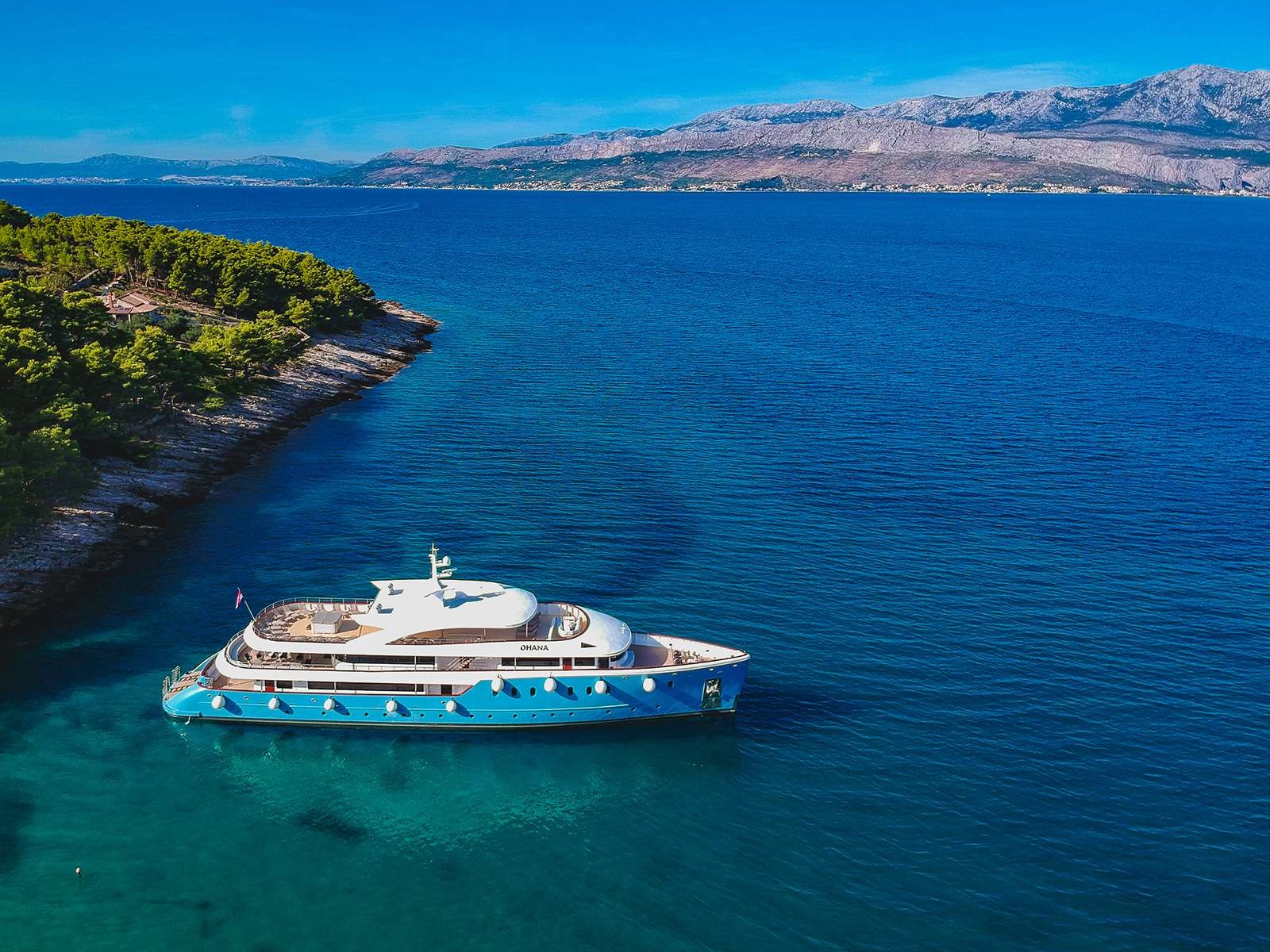
Wine-Knows' leasing of a private yacht in Croatia next year couldn’t be more perfectly timed.   Decanter Magazine (the European equivalent of Wine Spectator) has released its annual World Wine Awards, the globe’s largest and one of the most influential wine competitions.  Decanter has a rigorous analysis process where wines are judged by panels of hundreds of experts including wine critics, retailers and winemakers.  Croatia’s wines were some of the highest-scoring wines of the entire competition.

                         We'll board our yacht next September--- only 1 or 2 spaces are available

I’ve got even better news for the “hottie yachties” with confirmed spots on the Croatian yacht:   the stars of Decanters awards were all coastal wines from Croatia.   But, the story keeps getting better:  two of the three wines with nearly perfect scores (97 out of 100) are from an island that Wine-Knows will be visiting on the yacht, Korcula.   Another winner’s circle Decanter wine is from Hvar island…which Wine-Knows will also be visiting. 

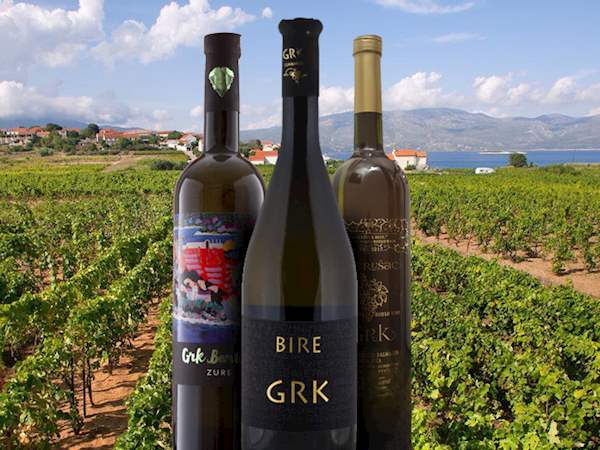
                                             This producer's GRK stole the show

It isn’t by chance that Wine-Knows’ itinerary includes both of these islands.  Korcula has long been known for production of under-the-radar but world-class wines.   The island’s stunning wines remain basically unknown for a mixture of reasons.  First, production is small.  Second, the wines are made from native grape varietals that are only grown on Korcula.  Third, who would buy a wine made from a grape they can’t even pronounce such as “Grk?”   Wine-Knows would!  We love the complex white wine made from this unknown grape!

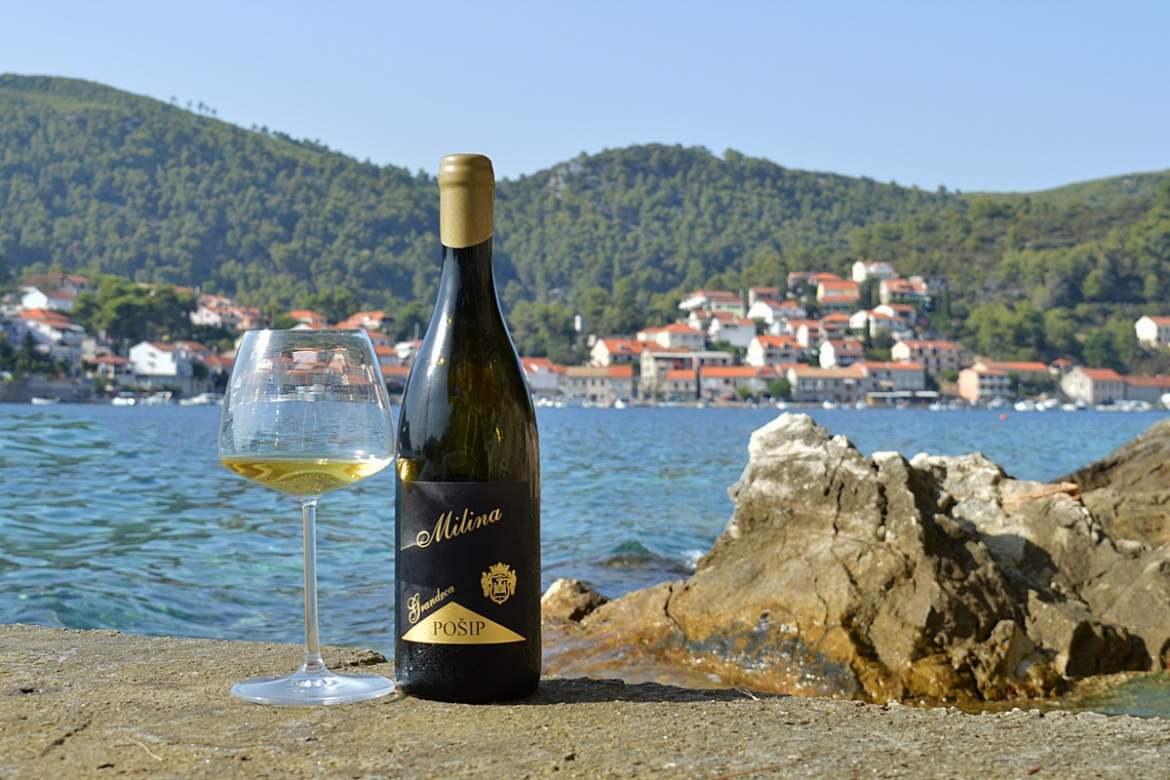
                                 Like Grk, Posip is a grape varietal only grown in Croatia

Korcula, however, isn’t a one-trick wine pony.  Another 97 point Decanter wine is made from the Posip grape, an indigenous varietal to coastal Croatia. The white wine made from Posip can be rich and exotic.  On the reconnaissance trip to select the yacht, a Posip wine from Korcula really rocked my world.  While it wasn’t on Decanter’s final list, it still remains indelibly etched in my wine memory bank.

                         One of Croatia's 10 Michelin star restaurants is located on Korcula

But, Korcula island isn’t just about exemplary wine.  It’s also a foodies’ paradise:  Korcula boasts one of the few Michelin star restaurants in Croatia, and its olive oil and cheeses are well known.  Perhaps the island’s most famous claim to fame, however, is the fact that it was the birthplace of 13th century explorer Marco Polo.

                      Plavac Mali, indigenous to Croatia, is the parent grape of Zinfandel

Hvar island is home to another of Decanter's highest scoring wines.   Unlike the two Korcula whites, this award-winner is a red wine made from the only-grown-in-Croatia grape, Plavic Mali.  DNA research has shown Plavic Mali to be one of the parents of Zinfandel (the other being Dobricic, another native grape from Croatia).  Age-worthy Plavic Mali produces complex rich reds.

                           The doorway to a private Croatian yacht awaits 1-2 more travelers

While the second week on the yacht is sold out with a full waiting list, there is a spot for one or two persons on the first week, September 2-9, 2023:

http://www.wineknowstravel.com/croatia-itinerary/