Friday, March 19, 2021

Zinfandel in California


California offers some rock-star Zins from several different regions

Last week’s Blog discussed the Zinfandel grape's country of origin.   Long thought to be native to California, DNA science shows that Zin was actually birthed in Croatia.  We’ll switch gears in this article to why the varietal has been such a success in California.

Zinfandel grapes thrive in California’s warm weather.  The tricky part is that its thin-skins don’t do well in hot temperatures because they tend to shrivel.  Another issue for California’s winemakers is tempering Zin’s propensity to create high alcohol wines.  Remember that during fermentation sugar converts to alcohol, so riper grapes create higher alcohol wines.

                          California has several Zinfandel vineyards that are >100 years old
                                
California Zins are often times described as “jammy.”  This is because of the fruit's high sugar levels caused in part by the state’s warm climate.   Zinfandel in California can often times move into the blackberry jam category which comes from fully ripe grapes.  Less ripe fruit translates to strawberry flavors in Zin.

                                    Peppery arugula is a good pairing with peppery Zin

All Zins are also known for their spicy characteristics, but California’s hot temperatures enhance these flavors.  Spice is due to this grape’s chemical structure.  Compounds called “rotundones” contribute this spice flavor.  Spiciness can vary from gentle white pepper to more the pronounced spiciness of black pepper.  The warmer the weather, the spicier the flavor.   Because of this Zins are a perfect pairing with spicy BBQ sauces, and spicy cuisines such as Indian & Mexican.  

California has seven wine regions that are noted for top-level Zins.   Listed in alpha order, these areas all offer warm days but cooler nights, ideal for vinifying a great Zin.  All except one is located in cooler northern Cali, and all but two are located close to the coastline to take advantage of the cooling sea influence.  

  •     Amador:   located in the foothills above Sacramento, this area has a  reputation for big, full-bodied Zins with matching alcohol levels.
  • Dry Creek (Sonoma County) located between the Pacific and Napa Valley, this small appellation produces some really well-crafted Zins.
  •    Lodi:  this area has some of the oldest Zin vines in the state & benefits from the cooling breezes of the delta waterways.
  • Mendocino County:  these highly rated Zins have the benefit of the cooling nearby Pacific.
     The Russian River flows directly into the Pacific & both bodies of water cool these vineyards
9
  • Russian River:  this is the coolest region of the seven. Ripening is sometimes an issue, but with the right temps, Zins here can be wonderful.
  • Santa Cruz Mountains:  cooled by both the nearby Pacific and its mountainous elevation, these Zins have complexity & depth.
  • San Luis Obispo:  the most southerly of all the best Zin districts, SLO also benefits from hot days & cooler maritime-influenced nights.

Why not a have a Zin weekend to welcome Spring which is just around the corner?  Just be mindful, Zins have higher alcohol levels so drink accordingly.


Friday, March 12, 2021

Zinfandel’s Origin Will Surprise You!

           Wine-Knows will be chartering a private yacht in 2023 on the coast where Zin originated

Are you thinking Italy….or perhaps France?  You’re right in that the origin is Europe, but DNA analysis shows that the Zinfandel grape originated in Croatia.  In fact, genetic scientists studying ancient grapes have uncovered evidence that Croatia once had an entire family of native grapes closely related to Zinfandel.   As Zinfandel is now associated with California,  how did this grape travel nearly 7,000 miles to the West Coast of the US from Croatia?

                                       Zinfandel is native to this beautiful area of Croatia

It is thought that the first entry of Zinfandel into the US was to New York in the 1820’s.  It was then brought westward to California during the state’s 1850’s Gold Rush.   During the last part of the 19th century when Zinfandel was being planted in California, ironically, Croatia was in the midst of a vineyard pandemic….most every single variety was destroyed due to a destructive bug call “phylloxera.”   In fact, phylloxera annihilated nearly all vineyards in every country of Europe.

                     Croatia has >1,000 miles of coastline & 1,200 islands to explore

In the late 1990’s when plant scientists began studying the origin of different grape varietals, Croatia only had a few plantings remaining of its indigenous Zinfandel.  To be exact, there were only 9 vines and they were found by accident in an old vineyard.  Since this discovery, the country has been planting more Zin to capitalize on this heritage, however, the most planted grape in Croatia today is Plavic Mali, and Zinfandel is one of this grape's parents.

              WineKnows will stop at this island---the birthplace of Marco Polo & terrific wine 

In olden times vineyards were planted with an array of different grapes.   All grapes were mixed next to one another---often times the person planting the vines didn’t even know what varietal it was.   Somewhere along the way Zinfandel crossed with the obscure red grape, Doboric, and birthed Croatia’s current popular variety, Plavic Mali.   

                                    Your aperitif is waiting for you in September 2023!

Next week’s Blog will discuss how Zinfandel has adapted in California, as well as how its Croatian roots translate into the glass.     In the meanwhile, to learn more about the 2023 yacht trip on Croatia's coastline, here's the itinerary:

http://www.wineknowstravel.com/croatia-itinerary/


Friday, March 5, 2021

Why is Diurnal Shift So Important?

         The Bordeaux wine region has a sizeable diurnal shift 

On all Wine-Knows’ tours to the world’s greatest wine regions the term diurnal shift comes up several times.  It is always mentioned during WineKnows’ opening seminar, and most winemakers discuss it at least once during the tasting of their wines.  This blog will discuss how this phenomenon is responsible for separating the top wine districts  from those producing simple table wines.

First, let’s review what the diurnal shift is.  Simply put, the diurnal shift is the difference between a vineyard’s daytime and nighttime temperature.  While the notion might be simple, however, this difference in temperatures dramatically effects the quality of a wine’s structure and complexity.

                           The Port region of Portugal also has significant day & night temps

A large diurnal difference helps grapes to ripen in a more balanced way, and therefore, to maintain the structure of the wine.  The warmer the day temperature, the better for sugar development.  The lower the temperature at night, the better it is for grapes to preserve their acid structure to balance these sugars.  Furthermore, a significant diurnal difference allows grapes to "rest" at night anf, thereby, to preserve their delicate aromas.

           Huge diurnal shifts appear in Argentina's premier wine district near the Andes 

World-class wine regions depend upon these large day-night temperature variations to make wines of deep complexity with great structure.   For example, the Napa Valley is <30 miles from the Pacific Ocean.  Daytime temps in the valley during summer can easily exceed 100 degrees, but the valley floor temps drop at nighttime due to the marine influence of cooling air from the ocean and nearby San Francisco Bay.  It’s not unusual to see a diurnal shift of 40 degrees.

The Central Valley of California (>150 miles further south), has similarly hot day temperatures during the summer grape ripening period.  In contrast to Napa, however, its nighttime temps remain warm as there are no large bodies of water to moderate the heat.   The Central Valley has little diurnal shift, hence, this is the main reason why its wines lack the complexity and structure of Napa.

                 World-class Rhone Valley wines are made in a climate with big diurnal shifts

Diurnal temperature swings are critical in making topnotch wines with great aromas and a balanced structure.   All of the world’s greatest wine regions have this day-night large temperature fluctuation.  Think of diurnal shift  as a winemaker’s dream.  


Friday, February 26, 2021

The First Wine to Circumnavigate the Globe

Most Sherry in Spain is bone-dry & used as an aperitif or with a 1st or 2nd course

The 500th anniversary of Ferdinand Magellan’s around the world voyage was celebrated in 2019.   In 1519 Magellan set sail in a fleet of five ships from southern Spain.   King Carlos I of Spain financed most of the voyage in an attempt to outmaneuver the Portuguese who had locked in the eastern route to spice-laden Indonesia.   

In the course of preparing for this 500th year celebration, historians uncovered a 200 page document detailing the supplies loaded on the fleet before it sailed.  This original manuscript lists 250 casks of Sherry (166,500 bottles).  In today’s dollars, the price would be approximately $80,000.  Magellan spent more on Sherry than he did on armaments to protect his men. 

It’s no surprise that the first wine to circumnavigate the globe was Sherry.  One of the world’s oldest wines, Sherry has been part of the world’s greatest empires and civilizations.  Enjoyed by the Phoenicians (who brought the original grapes for Sherry to Spain), and then by the Greeks, Romans, Moors, Spanish and the British.  During the period when Magellan set sail, Sherry was one of the world’s most popular wines.

                                   The town of Jerez is the capital of Sherry production
 

Sherry is also produced in the south of Spain very near the area from which Magellan sailed, so this may have also influenced why it was chosen.   Since then laws were enacted in the 1930’s to prevent Sherry from being made anywhere else but a small area surrounding the city of Jerez (not far from the straits of Gibraltar).  While many Americans associate Sherry with a sweet wine, there is an entire portfolio of bone-dry Sherry.  In fact, in Spain the most popular Sherry is completely dry with no trace of sugar.

Wine-Knows will be visiting the Sherry wine countryside this October on our tour to Seville (55 miles from Jerez), and Granada.  There are only four spaces remaining.  Home to the flamenco and mind-dazzling Moorish architecture, this part of southern Spain is the most fascinating in all of the country.

http://www.wineknowstravel.com/granada-and-seville-itinerary/

Friday, February 19, 2021

Spain’s Iconic Ham

Spain's ham is coveted by gourmet chefs around the globe

When it comes to food from Spain, there is nothing more classical than Spanish ham (jamón).  Take it from someone who eats very little red meat, Spanish hams are nothing short of magnifico!  And, they are not even remotely related to any ham we have in the US.  This is because the process of producing ham in Spain is very different.  It’s not only lengthy (can take up to three years), but there are technical differences such as labor- intensive traditional curing methods which have been handed down from generation to generation.

Spain’s connection to pork can be traced back to its rural past.  Pigs were extremely important in country villages….so important that they could literally determine the fate of poor farming families.   Once the pig was ready for butchering, not one part of it could be wasted.  Refrigeration only came into being in the late 17th century; prior to that Spaniards had to have a way of preserving meat from ruin.  Out of necessity began the process of curing ham and this very method is still used today.  

The top quality Iberico ham can be *mucho* expensive

Approximately 40 million hams per year are produced in Spain.  They are a mainstay on any Spanish table.  There are two different categories of ham:

Jamón Serrano, which literally translates to “ham from the Sierra mountains,” is from the white pig.   This hybrid pig (a mix of centuries of a variety of mountain pigs) produces a good ham which is reasonable in cost.  Serrano ham accounts for the nearly 90% of ham sold in Spain.  Its aging time is a maximum of 15 months.

Jamón Ibérico, “Iberian ham” is from a pig that is thought to have been introduced to Spain by the Phoenicians nearly 1,000 years BC.  This ancient pig then interbred with Spanish wild boars resulting in a darker color breed.  Spaniards call this pig Pata Negra (black hoof).  

There are actually three levels of Jamón Ibérico which are categorized in accordance with quality based on the pigs’ diet:

  •  Jamón Ibérico de Bellota:  This is very top level quality.  It comes from Pata Negras that are allowed to roam free in oak forests.  The black-footed pig's diet of acorn, combined with aging for three years gives this meats its rich, complex flavor.
  •  Jamón Ibérico de Cebo, in contrast,  is the lowest level.  These same formerly wild boars that have bred with an ancient pigs are fed a diet of grain, and their meat is cured for a maximum of two years.  

  • Jamon de Recebo is the middle quality with the special breed being fed a diet of acorns mixed with grain.  The meat is then aged for at least two years.

             Jamón Iberico de Cebo with melon & mint is a perfect starter (or *is* the meal!)

The actual process of preserving ham in Spain is a dry-curing one---hams are hung in the open air for as much as five years for the country's finest quality.   It also involves salt, water, patience, humidity, varying ambient temperatures, and time.  Hams are dried and matured according to actual laws for aging minimums.   Unlike Italian prosciutto, Spanish hams are not covered with any other external ingredient other than salt in the very beginning.    

          A perfect bite tapa:  Jamón Serrano & roasted piquillo pepper with pistachios for crunch

Spanish ham is some of the best cured meat in the world.  Wine-Knows will be sampling all types of jamón on its two trips to Spain this September and October.  Travelers to the island of Mallorca (only 2 spaces available) will try jamón tapas, and those attending the Granada & Seville trip (4 spaces)  will taste both Jamón Ibérico and Jamón Serrano.  

www.WineKnowsTravel.com


Friday, February 12, 2021

A Perfect Way to Say Love on Valentine’s


                                                  Julia Child's pear tart screams amour

Any cupid should be thrilled to finish a Valentine’s Day meal with this delectable tart from Julia Child’s first cookbook, Mastering the Art of French Cooking.   What’s not to love about perfectly ripe pears that have been simmered in red wine, and then magically combined with an almond cream filling and a shortbread cookie crust?  

Julia Child composed this recipe in the late 1950’s at a villa in Provence in the south of France not from the Mediterranean Sea.   Pears still remain one of Provence’s prized autumn fruits.   Julia, however, may have first learned about pear tarts when she was a student in Paris at the prestigious Cordon Bleu during the late 1940’s.    After all, the “city of light” had been famous for its pear tarts since the turn of the century.

But, Julia’s version is not just any pear tart.  Madame Child ups the flavor ante by cooking her pears first in red wine with a stick cinnamon.   The result is a more intense flavor profile, and its bright lipstick-red color should appeal to young and old lovers alike for a special ruby red valentine dessert.   

In September 2022 Wine-Knows has leased the very villa in which Julia wrote her two hallmark cookbooks.  We have only two spots remaining.  For more details on this food and wine homage to Julia, check out our website:

http://www.wineknowstravel.com/julia-2022-1-itinerary/

BTW:  Julia’s pear tart recipe can be found on page 642 of Mastering the Art of French Cooking, Volume I.   If you don’t have a copy, there are several online versions, but the following one is almost a dead-ringer for Julia’s original.  (Note:  while I prefer bosc pears, any ripe pear will suffice.)    

https://moderndomestic.wordpress.com/2009/12/14/holiday-desserts-julia-childs-pear-tart/


Wishing you a love-filled Valentine's....


Friday, February 5, 2021

Best-Ever Broccoli

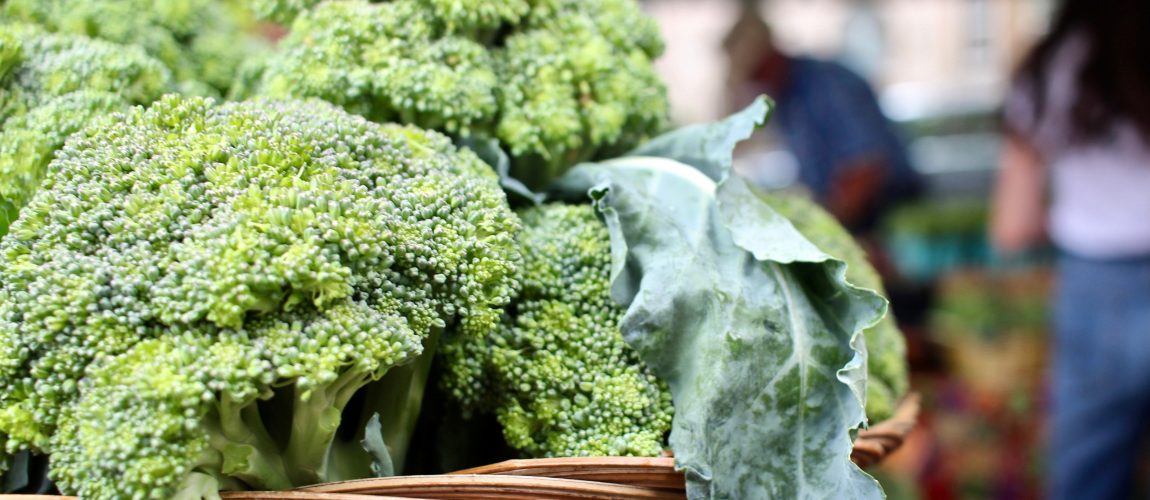
                            A just-plucked-from-the-garden gift was the inspiration 

Supermarkets and farmers markets are now full of fresh emerald green broccoli.  It was, however, a dear friend who loves to garden (thank you, Conni) who brought me a gorgeous wicker basket full of her broccoli that inspired me  to look for a new recipe.  While I love this vegetable, I’ve never found a healthy broccoli recipe that is irresistible….until now.   Broccoli is very nutritious (extremely high in Vitamin C and K), so I hate to cover it up with layers of cheese, or oodles of sour cream and butter.  Not only have I found a healthful rendition, but this recipe is so luscious that you’ll swear it must be unhealthy.

First, a few facts about broccoli that may surprise you.  Broccoli is Italian in origin ---it’s name actually means “flowering top of a cabbage,” which makes sense as it belongs to the same family as cabbage.    Next, broccoli raab (also called rappini), is not actually part of this family but instead is part of the turnip family.  Last,  broccoli is a cousin of cauliflower.

I scoured magazines and the Internet for low carbohydrate and low fat recipes using broccoli.  This recipe received rave reviews and 100% of cooks would make it again (always a positive sign for me).  Yes, the sample size was small but I gave it a whirl as I had all of ingredients in my home.  The result was magic:  deep and complex flavors.  Moreover, the recipe was fairly easy and used only 5 ingredients other than broccoli and salt. 

Best-ever broccoli

The recipe is out of last February’s Bon Appetit, however, if you don't have the magazine it is now posted on Epicurious.com.  Although I always have Parmigiano-Reggiano in my frig, I didn’t even use it as I wanted to taste a virginal rendition.  (Didn’t miss it, although I’m sure it would have even been more unctuous with a few gratings.)

https://www.epicurious.com/recipes/food/views/big-flavor-broccoli